 Save
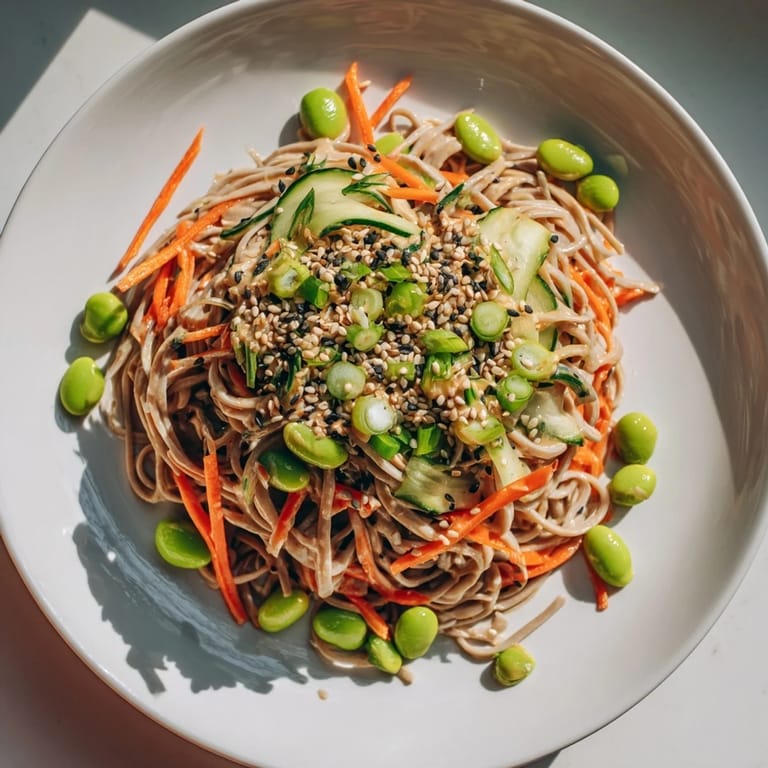
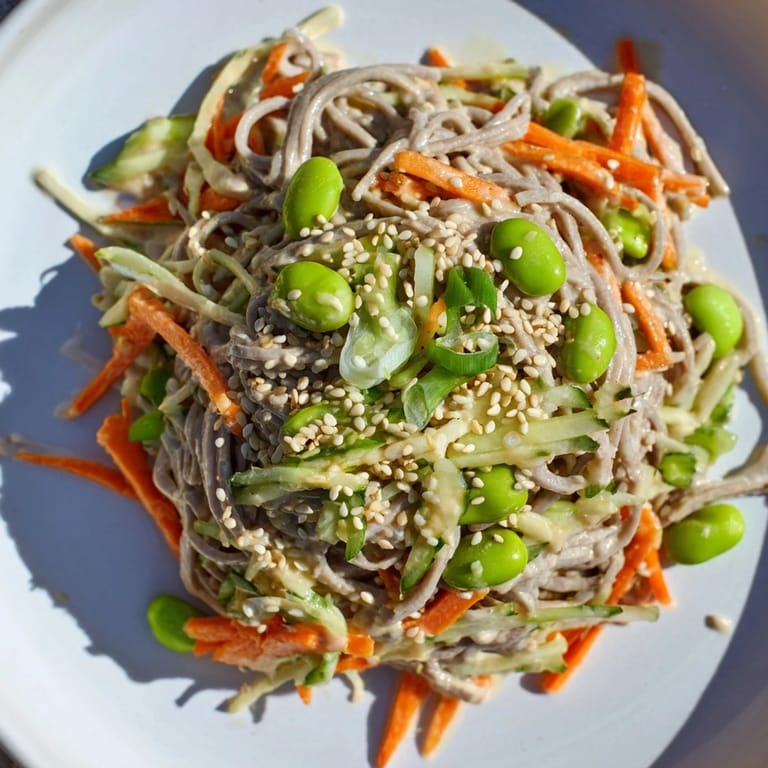
Save My friend Sarah brought this to a summer potluck, and I watched it disappear within minutes—people kept circling back for more, drawn by the nutty sesame aroma and those jewel-bright vegetables. She passed the recipe to me that evening with a laugh, saying she'd finally cracked the ratio that made the dressing silky instead of gloppy. The first time I made it, I was skeptical about tahini in a cold noodle dish, but that first cool, creamy bite changed my mind completely. Now it's my go-to when I need something that feels both indulgent and light.
I made this for my partner's work lunch last Tuesday, and he texted me mid-afternoon saying his coworkers kept asking what smelled so incredible. There's something about toasted sesame that fills a whole kitchen, and the ginger-garlic combo lifts it beyond ordinary. He asked if I could make it twice a week, which honestly felt like the highest compliment a home cook can receive.
Ingredients
- Soba or thin spaghetti (250 g): Soba noodles have a lovely earthy flavor, but regular spaghetti works just as well and costs less—choose whatever you have or prefer.
- Cucumber (1 medium, julienned): The raw crunch against soft noodles is essential; don't skip this or substitute cooked vegetables.
- Carrots (2 medium, julienned): Slice them thin so they're tender to bite through, and their natural sweetness balances the sesame.
- Edamame (1 cup, cooked and cooled): These add protein and a slight pop of texture; frozen edamame works perfectly and saves time.
- Spring onions (2, thinly sliced): Add them just before serving so they stay bright and slightly sharp.
- Toasted sesame seeds (2 tbsp): Buy them already toasted—it's one of the few shortcuts worth taking because the flavor is instant.
- Tahini (3 tbsp): This is the soul of the dressing; stir it well before measuring because it can separate.
- Soy sauce (2 tbsp): Use tamari if anyone eating this needs gluten-free, and note that it's slightly saltier than regular soy sauce.
- Rice vinegar (1 tbsp): The gentle acidity keeps the dressing bright; don't substitute with regular vinegar or it'll become too sharp.
- Toasted sesame oil (1 tbsp): A little goes far, and it's what makes this taste authentically nutty.
- Honey or maple syrup (1 tbsp): This rounds out the sesame and ginger beautifully; taste as you go and adjust.
- Fresh ginger (1 tsp, grated): Use a microplane or the small holes on a box grater so it distributes evenly.
- Garlic (1 clove, minced): One clove is enough; more will overpower the delicate sesame flavor.
- Water (2–3 tbsp): Add gradually—the dressing should pour freely but cling to the noodles.
Tired of Takeout? 🥡
Get 10 meals you can make faster than delivery arrives. Seriously.
One email. No spam. Unsubscribe anytime.
Instructions
- Bring the noodles to a rolling boil:
- Fill a large pot with water and bring it to a boil while you gather everything else. The noodles will cook faster than you think, usually in under 10 minutes—set a timer so you don't accidentally overcook them.
- Drain and cool the noodles completely:
- Once they're tender, drain them in a colander and rinse under cold running water, stirring gently so they separate. Spread them on a plate or baking sheet to cool faster; warm noodles will wilt your vegetables and make the salad mushy.
- Whisk the dressing into a smooth pour:
- In your largest mixing bowl, start with the tahini and whisk it with the soy sauce and vinegar until smooth—this breaks up the tahini. Add the sesame oil, honey, ginger, and garlic, then whisk until everything is combined and creamy, adding water a tablespoon at a time until it flows easily.
- Toss everything together gently:
- Add the cooled noodles, cucumber, carrots, and edamame to the dressing and toss with your hands or two spoons, turning it from the bottom up so everything coats evenly. This takes less time than you'd think—maybe 30 seconds—so you don't crush the vegetables.
- Finish with freshness and a final chill:
- Sprinkle with spring onions and toasted sesame seeds right before serving, or cover and refrigerate for up to 10 minutes if you want the flavors to settle. The longer it sits, the more the noodles absorb the dressing, which some people love and others find too intense.
 Save
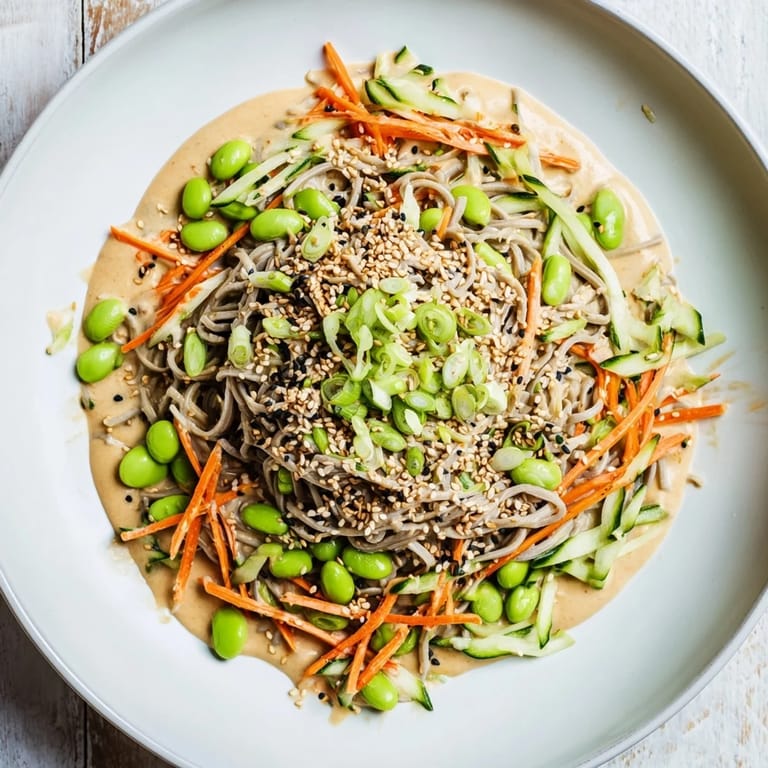
Save What strikes me most about this salad is how it bridges seasons—it's crisp and cooling in summer heat, but also grounding when made with autumn carrots. My grandmother once said that the best dishes make you feel nourished and refreshed at the same time, and this one does exactly that.
Why the Sesame-Ginger Combination Works
Sesame and ginger are partners in East Asian cooking for a reason: ginger's warmth and slight spice cuts through sesame's rich, almost buttery flavor, making the dressing taste complete rather than heavy. The tahini base means you get all that sesame depth without the oiliness you'd feel from too much oil. When you add rice vinegar's gentle brightness, something almost magical happens—the flavors seem to expand on your palate instead of sitting flat.
Playing with Vegetables and Proteins
The beauty of this salad is that it adapts to whatever looks good at the market or sits in your crisper drawer. Bell peppers, snap peas, shredded cabbage, radishes, and julienned beets all work beautifully and add different textures and sweetness levels. If you're adding protein, shredded cooked chicken, crispy tofu, or even canned chickpeas make it more substantial without changing the flavor balance—just toss them in with the vegetables so they get coated in that creamy dressing.
Storing and Serving Your Best Version
This salad actually improves within the first day as the noodles soften slightly and absorb the dressing flavor. I like to store the components separately if I'm making it ahead—noodles and vegetables in one container, dressing in another—then combine them about an hour before eating. That way, if you want to add fresh cilantro or crispy elements, you can do that right at serving time instead of having them go soft. The salad keeps for about three days in the refrigerator, though the vegetables lose their snap after that.
- Keep the sesame seeds and any crunchy garnishes separate until the last moment.
- If the dressing thickens too much while stored, thin it with a splash of water when you serve.
- Always taste and adjust the dressing one more time before serving, because flavors can shift as everything sits together.
 Save
Save This salad has become my answer to 'what should I bring' because it travels well, feeds a crowd, and makes people feel like you spent hours in the kitchen when you really spent 20 minutes. Every time I make it, I'm grateful for friends who share recipes and for discovering that sometimes the simplest dishes are the ones we return to again and again.
Common Questions
- → Can I use gluten-free noodles for this dish?
Yes, rice noodles or gluten-free soba alternatives work well to keep the dish gluten-free without losing texture.
- → How can I make the dressing vegan-friendly?
Replace honey with maple syrup or agave nectar to ensure the dressing is fully vegan while maintaining sweetness.
- → What protein options complement this salad?
Edamame adds plant-based protein, and options like shredded cooked chicken or tofu can be included for added protein.
- → How should I store leftovers?
Store in an airtight container in the refrigerator for up to 2 days. Toss gently before serving again.
- → What garnishes enhance flavor and texture?
Fresh herbs like cilantro or mint, crushed peanuts or cashews, and lime wedges add brightness and crunch.
- → Can the dish be served warm?
It's best served chilled or at room temperature to fully enjoy the refreshing and vibrant flavors.