 Save
Save My neighbor showed up one autumn afternoon with a container of this couscous, steam still rising from the lid, and I was completely unprepared for how the smell alone—cinnamon, cumin, and something almost honeyed from the apricots—would make me want to learn her method immediately. She laughed when I asked for the recipe, saying it was just something she threw together when she needed color on the table and didn't want to fuss. That casual confidence stuck with me, and now whenever I make it, I'm chasing that same effortless warmth.
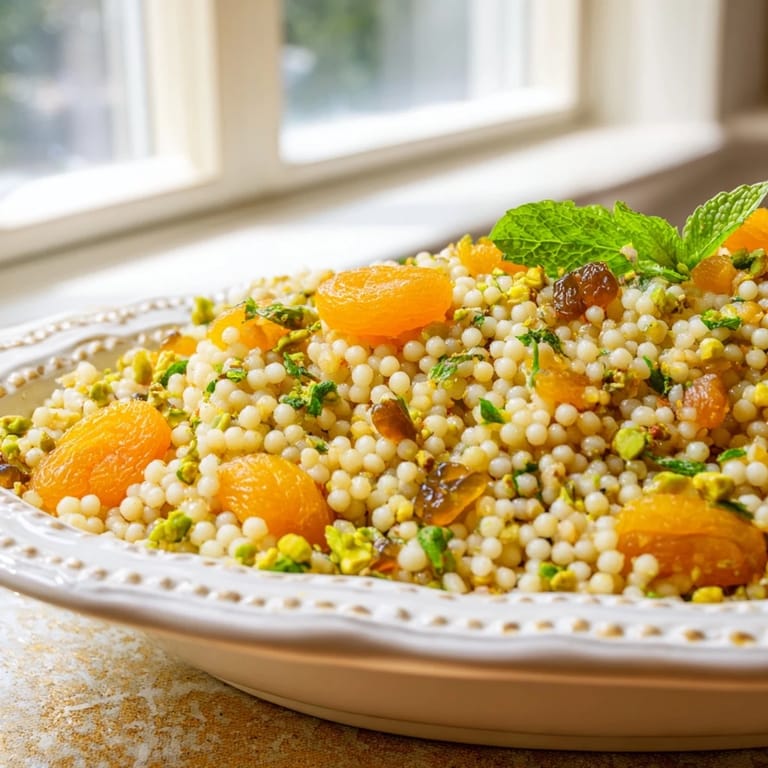
I made this for a potluck once when I was running late, and it arrived at the table still warm, the pistachios catching the light like little jewels. People kept coming back for more, and halfway through the evening, someone asked if I'd made it myself or bought it from some fancy place. That moment—realizing I'd created something that felt both humble and special—is when this dish became more than just a side.
Ingredients
- Couscous: Use regular (not pearl or Israeli) couscous for that tender, fluffy texture that absorbs the broth perfectly without becoming gummy.
- Vegetable or chicken broth: The broth is where all the flavor lives, so don't skimp on quality—it makes the difference between good and unforgettable.
- Dried apricots and raisins: The sweetness plays beautifully against the warm spices and creates little pockets of chewiness throughout.
- Almonds and pistachios: Always toast them yourself if you can; the moment they hit a dry pan and their oils release is the moment you know they'll actually taste like something.
- Olive oil: Just a couple tablespoons is enough to build the flavor base without making the dish heavy.
- Onion and garlic: Cook the onion slowly enough that it softens rather than browns—this matters more than you'd think.
- Spice blend (cumin, cinnamon, coriander, turmeric): These four create that warm, slightly sweet Middle Eastern backbone; if you only have some of them, don't skip the ones you have.
- Fresh parsley and mint: These aren't decoration—they brighten everything up at the last moment and keep the dish from feeling heavy.
Tired of Takeout? 🥡
Get 10 meals you can make faster than delivery arrives. Seriously.
One email. No spam. Unsubscribe anytime.
Instructions
- Start with the aromatics:
- Heat the olive oil over medium heat, then add the chopped onion and let it soften for a couple minutes until it becomes translucent and sweet-smelling. Once the garlic joins in, you'll know you're on the right track when the kitchen fills with that unmistakable aroma.
- Bloom the spices:
- Add all your spices to the softened onion and garlic, stirring constantly for just 30 seconds—this is brief but crucial, as it awakens the flavors without letting them burn. You'll see the mixture become more fragrant immediately, almost like it's come alive.
- Toast the dried fruit in the spices:
- Toss in the chopped apricots and raisins, stirring to coat them in the spiced oil, which softens them slightly and distributes flavor throughout. This step might seem small but it's where the fruit starts giving up its sweetness to the whole dish.
- Pour and boil:
- Add your broth and bring everything to a rolling boil, which should take just a couple of minutes. You'll see the liquid shimmer and the spices fully mingle with the broth.
- Combine with couscous and rest:
- Remove the pan from heat, quickly stir in the dry couscous, cover it tightly, and let it sit undisturbed for 5 minutes. This is when the magic happens—the couscous swells and drinks up every bit of broth, and you're essentially done.
- Fluff and fold:
- Use a fork to gently break up the couscous, working through it with light, lifting motions so nothing gets mashed. Then fold in the toasted nuts, fresh herbs, and a squeeze of lemon zest if you have it.
- Taste and finish:
- Before serving, give it a quick taste to check the salt and spices—they can vary depending on your broth, so trust your palate here.
 Save
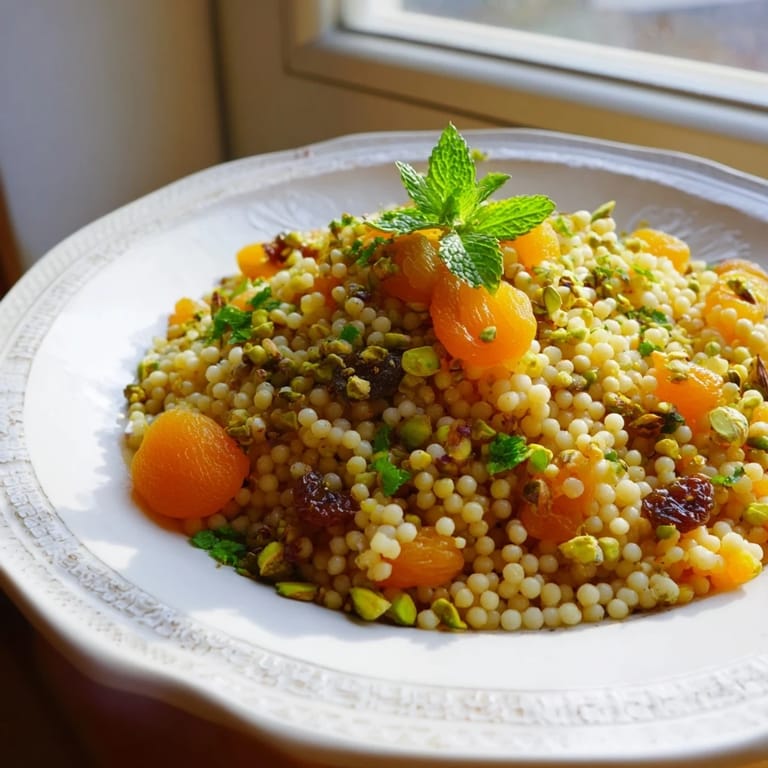
Save There was a Sunday when I made this for my sister who'd been going through a rough patch, and she sat at the kitchen counter while I cooked, just watching the kitchen fill with steam and spice. She said the smell alone made her feel cared for, which made me realize that food like this—warm, fragrant, nourishing—is sometimes exactly what someone needs without needing to say much at all.
Variations and Swaps
One of the best parts about this dish is how flexible it is once you understand the base. I've swapped out dried cranberries for apricots when that's what I had, stirred in cooked chickpeas for a protein boost when feeding people with bigger appetites, and even added fresh corn kernels in summer when the season calls for something lighter. The spice backbone stays steady while everything else can shift based on what's in your pantry or what you're craving.
Why This Works as a Side (and as a Main)
This couscous exists in this beautiful middle ground where it's substantial enough to stand alone if you're keeping things light, but also generous enough to support grilled chicken, lamb, or roasted vegetables without competing with them. I've served it alongside charred zucchini and it felt complete; I've also eaten it straight from the bowl on nights when I didn't feel like cooking more than one thing. The fact that it works both ways means you can make it once and eat it three different ways throughout the week.
Storage and Make-Ahead Tips
This reheats beautifully, which means you can make it ahead and warm it gently in a covered pan with a splash of water stirred through, or even eat it at room temperature the next day with a squeeze of fresh lemon. I've found that the flavors actually deepen slightly overnight as the spices continue to settle into the grains, so leftovers are genuinely as good as fresh.
- Store it in an airtight container in the fridge for up to three days, and let it come to room temperature before reheating to prevent drying out.
- You can make the spiced broth base the night before and just add the couscous in the morning for a quicker dinner prep.
- Don't add the fresh herbs until you're ready to serve, as they'll wilt if stored with the warm couscous.
 Save
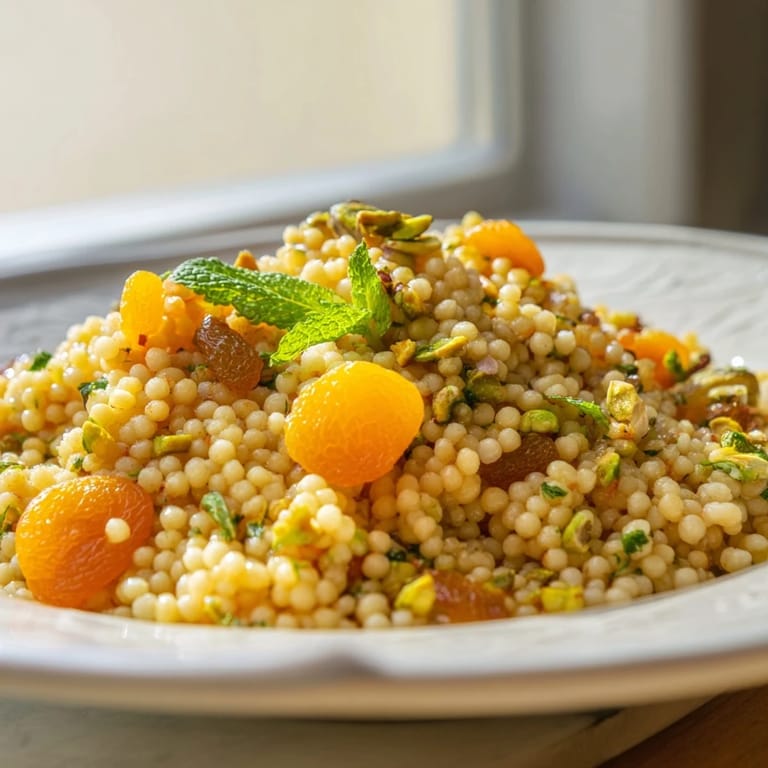
Save This dish has become my go-to when I want to cook something that feels special without the stress, and that quiet confidence has never let me down. Whether it's on a weeknight table or at a gathering, it carries that same warmth my neighbor shared with me all those months ago.
Common Questions
- → Can I make this ahead of time?
Yes, you can prepare this pilaf up to 2 days in advance. Store it in an airtight container in the refrigerator. Reheat gently in a saucepan with a splash of broth or water, or serve at room temperature for a grain salad alternative.
- → What can I substitute for the dried fruits?
Feel free to swap apricots and raisins for dried cranberries, cherries, dates, or figs. Use the same total quantity, and adjust sweetness to your taste. Different fruits will create unique flavor profiles while maintaining the dish's character.
- → How do I make this vegan-friendly?
Simply use vegetable broth instead of chicken broth. All other ingredients are naturally plant-based. For added protein, stir in cooked chickpeas or white beans during the last step of preparation.
- → Can I toast the nuts myself?
Absolutely. Toast raw almonds and pistachios in a dry skillet over medium heat for 3-5 minutes, stirring frequently until fragrant and lightly golden. This enhances their nutty flavor and adds superior texture compared to pre-toasted varieties.
- → What proteins pair well with this pilaf?
This pilaf complements grilled chicken, roasted lamb, seared fish, or roasted vegetables beautifully. For vegetarian mains, add cooked chickpeas, lentils, or serve alongside a fresh green salad with tangy vinaigrette.
- → Is this suitable for meal prep?
Yes, this dish reheats well and keeps for 3-4 days refrigerated. The flavors actually deepen overnight as the spices continue to infuse. Portion into containers and reheat when ready. Fresh herbs and lemon juice brighten the flavors upon serving.