 Save
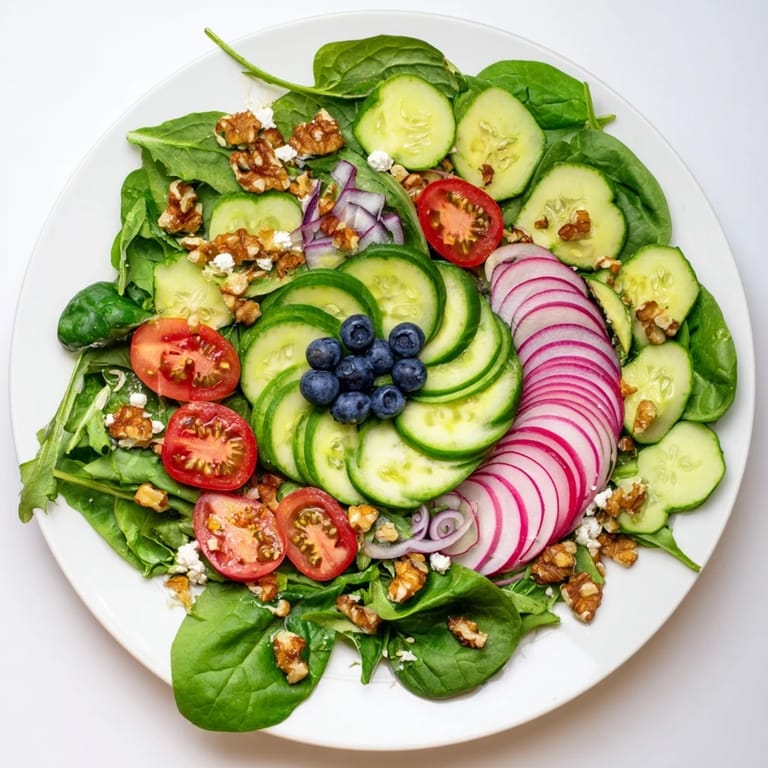
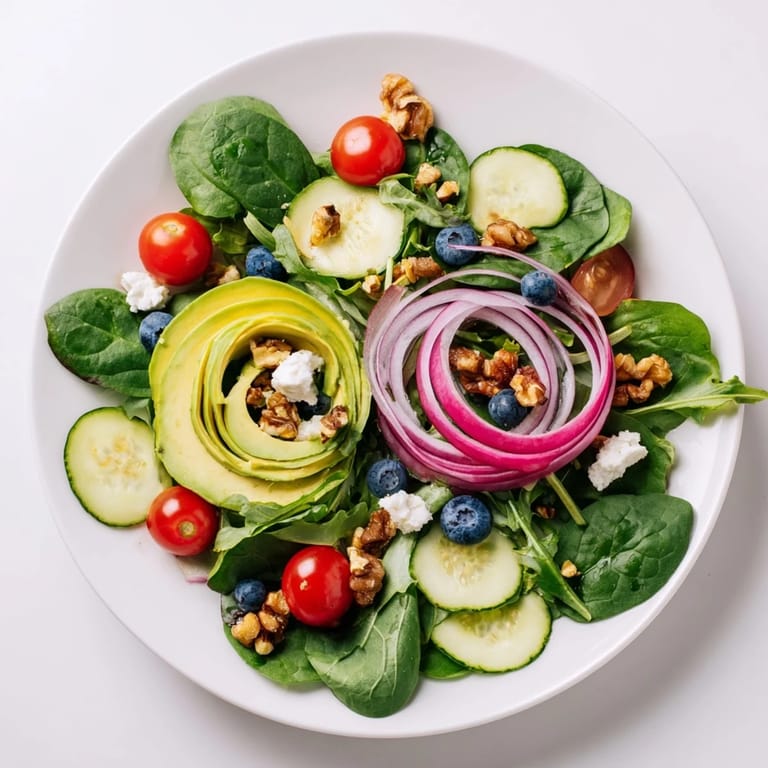
Save I discovered this salad by accident while reorganizing my kitchen and stumbling across an old book on nature's geometry. The golden spiral has always fascinated me—the way it appears in seashells, sunflowers, and spiral galaxies—and I wondered if I could translate that magic onto a plate. When I finally arranged those first ingredients in expanding arcs, something clicked. It wasn't just food; it was edible art that somehow tasted even better because your eye had traveled through it first.
The first time I served this to friends, I almost didn't plate it—I worried it felt too fussy, too designed. But watching everyone pause before eating, their forks hovering as they took in the spiral, I realized I'd created something that bridged the gap between nourishment and wonder. One friend asked if she could photograph it before touching it, and honestly, that made my entire week.
Ingredients
- Baby spinach leaves: These form your anchor, mild and tender enough to showcase the other flavors without fighting back.
- Arugula: Its peppery bite adds the first hint of personality; don't shy away from it, that sharpness is what catches your tongue.
- Cherry tomatoes, halved: Halve them so they nestle better into the spiral and release just a touch of juice into whatever bites near them.
- Cucumber, thinly sliced: The thinner you go, the more delicate the spiral looks; I use a mandoline and move slowly to keep my fingertips safe.
- Radishes, thinly sliced: These bring color and a subtle peppery crunch that deepens as the salad sits; don't arrange them too far ahead or they'll start to soften.
- Red onion, finely sliced: The red is visual gold in that outer ring, but slice it thin enough that it stays crisp rather than overpowering.
- Avocado, sliced: Add this just before serving or it'll brown; a light brush of lemon helps it stay that perfect pale green.
- Blueberries: They're not just garnish—their sweetness against the peppery arugula creates an unexpected harmony.
- Toasted walnuts, chopped: The toasting matters more than you'd think; it wakes up their flavor and adds a subtle crunch that anchors everything.
- Crumbled feta cheese: Choose a good feta with that creamy, salty punch; the sharper it is, the more it elevates the whole dish.
- Extra-virgin olive oil: This is where quality shows; a robust, grassy oil makes the dressing taste alive.
- Lemon juice: Fresh lemon is non-negotiable; bottled will leave you wondering why the salad tastes flat.
- Honey: Just a teaspoon bridges the gap between the sharp and the fresh, creating balance you'll feel but won't be able to name.
- Dijon mustard: The emulsifier that holds everything together while adding a subtle tang.
Tired of Takeout? 🥡
Get 10 meals you can make faster than delivery arrives. Seriously.
One email. No spam. Unsubscribe anytime.
Instructions
- Arrange the spinach base:
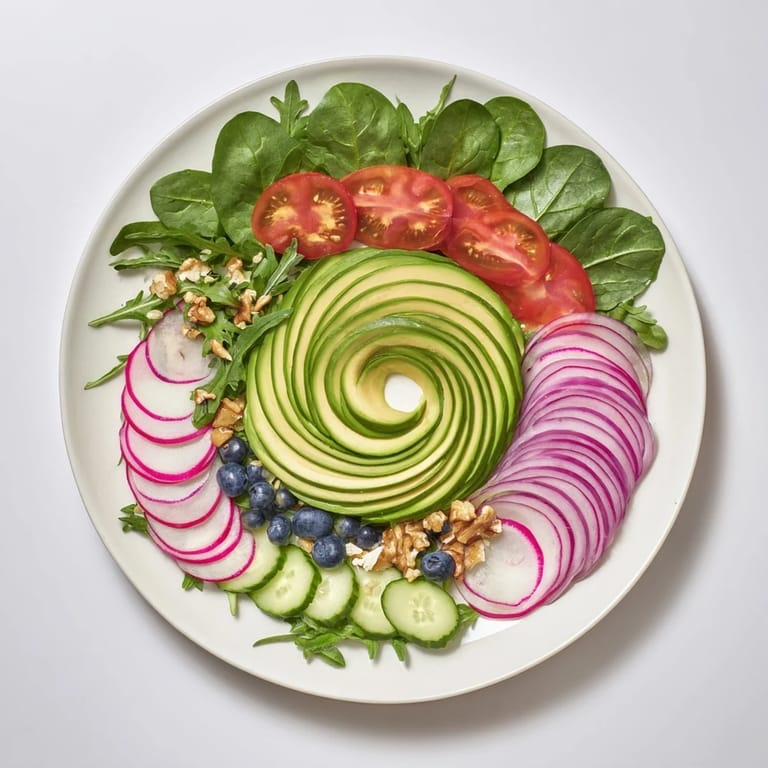
- Spread your baby spinach leaves on the large platter in a crescent, forming the innermost curve of your spiral. Press them gently so they stay put; this is your foundation, so take a breath and don't rush it.
- Layer the arugula:
- Fan the arugula leaves over the spinach, each one overlapping slightly and expanding outward. You're starting to see the spiral now, and that visual momentum will carry you through the rest.
- Build the expanding rings:
- Continue with cherry tomato halves in the next arc, then cucumber slices, then radishes, each section noticeably larger than the one before. Step back occasionally to check your proportions; the spiral should feel inevitable, not forced.
- Add the red onion accent:
- Arrange those thin red onion slices as a delicate outer ring, letting them arc across the edge. They should feel like punctuation, not a main character.
- Nestle the soft elements:
- Tuck avocado slices and blueberries into the spiral, spacing them so they add visual interest without disrupting the flow. Think of them as jewels you're placing intentionally, not just scattering.
- Top with nuts and cheese:
- Sprinkle the toasted walnuts and feta evenly across the entire arrangement. The toasted nuts should catch the light; the feta should scatter like snow across the greens.
- Whisk the dressing:
- In your small bowl, whisk the olive oil, lemon juice, honey, and mustard until they emulsify into something silky. Taste it on a spinach leaf before serving; adjust the lemon or honey until it tastes like spring.
- Finish with a gentle drizzle:
- Just before serving, drizzle the dressing across the spiral in thin lines that follow the curve. Too much too soon and your spiral dissolves into a pile; patience here pays off.
 Save
Save I made this for my mother's birthday lunch, and she kept turning the platter slowly, studying it like it was a map to somewhere. That moment—when food stops being just sustenance and becomes a conversation, a memory, a small act of devotion—that's when I knew this recipe was worth keeping.
The Math Behind the Beauty
You don't need to be a mathematician to arrange this salad, but understanding the spiral helps. Each section grows by roughly the same proportion, which means your eye naturally follows it and your fork naturally finds balance. The Fibonacci sequence appears everywhere in nature because it's efficient and harmonious, and the same principle applies to plating. When everything is proportioned this way, nothing feels crowded, and nothing feels sparse.
Making It Your Own
This recipe is a framework, not a prison. Love goat cheese more than feta? Use it. Have pistachios instead of walnuts? They'll add a softer crunch and a lovely pale green. The spiral works with whatever fresh vegetables you have on hand—the magic is in the arrangement, not in hitting exact ingredient marks. I've made versions with grilled chicken tucked into the spiral, with chickpeas for protein, even with shredded beets for a deeper color story.
Timing and Temperature
This salad thrives on being assembled just before serving, but you can prep ingredients hours ahead without losing quality. Keep your spinach and arugula in a damp towel in the fridge, store sliced vegetables in separate containers, and hold the avocado whole until the last moment. Bringing components to room temperature for 10 minutes before assembly somehow makes flavors taste more vivid and the whole experience more intentional.
- Prep all ingredients while the salad idea is still fresh in your mind; second-guessing yourself wastes energy.
- If you're feeding guests, arrange the salad on the platter 15 minutes before serving at the absolute latest.
- The dressing stays bright and emulsified longest when drizzled moments before the first fork touches the plate.
 Save
Save There's something deeply satisfying about creating something that's equally nourishing and beautiful, where the effort and the result feel genuinely connected. This salad taught me that good food doesn't have to be complicated to be memorable.
Common Questions
- → What does the Fibonacci fan arrangement mean?
The ingredients are placed in expanding arcs that mimic the golden spiral, creating a visually appealing and balanced presentation.
- → Can I add protein to this salad?
Yes, grilled chicken or chickpeas can be added for extra protein without altering the salad’s core balance.
- → What kind of cheese is used in this dish?
Crumbled feta cheese adds a tangy, creamy texture that complements the fresh produce and nuts.
- → How is the dressing prepared?
The dressing mixes extra-virgin olive oil, lemon juice, honey, Dijon mustard, salt, and pepper for a light, flavorful finish.
- → Are there any allergen concerns?
This dish contains dairy from feta cheese, tree nuts from walnuts, and mustard in the dressing; check carefully for sensitivities.