 Save
Save There's something almost magical about the sizzle that erupts when kimchi hits hot oil—that sharp, fermented scent filling the kitchen in seconds flat. My friend Sarah showed me this recipe during a lazy Sunday when we were both too hungry to order takeout, and honestly, it became the thing I make when I want something that feels indulgent but takes barely longer than a phone call. The beauty of kimchi fried rice is that it doesn't ask much of you, yet delivers so much flavor and comfort in return.
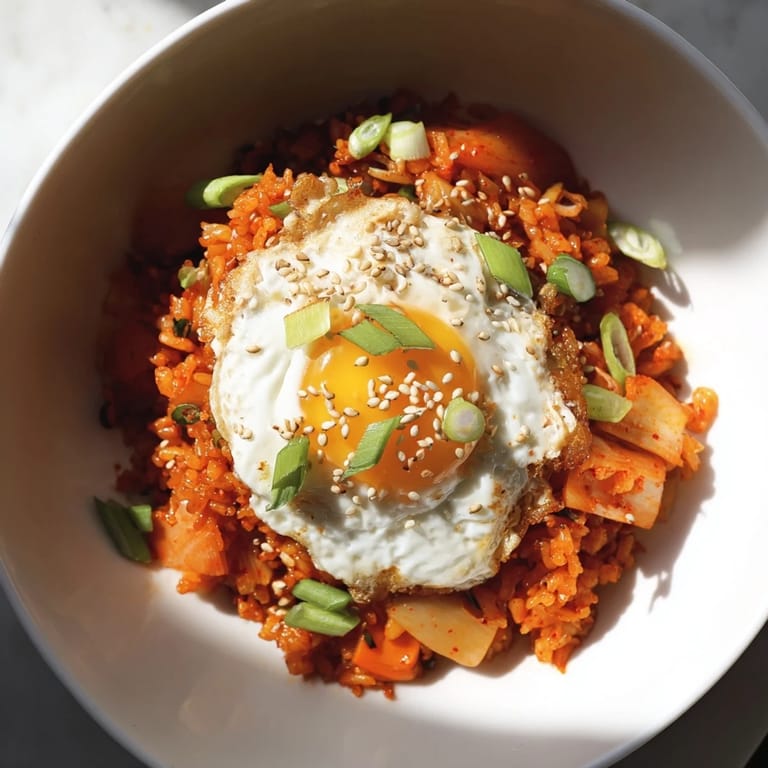
I made this for my roommate Marcus after he'd had a rough day at work, and watching his face light up when he took that first bite reminded me why cooking for people matters. The way the fried egg yolk broke into the rice, mixing with all that gochujang richness—he didn't even need to talk, just kept nodding and eating. Moments like that are why I keep a container of kimchi in my fridge at all times.
Ingredients
- Cooked short-grain rice (2 cups, preferably day-old): Day-old rice is your secret weapon because it's drier and won't turn mushy when it hits the heat; fresh rice will clump and steam instead of frying properly.
- Napa cabbage kimchi, chopped (1 cup), plus kimchi juice (2 tbsp): Choose kimchi that's been sitting in the jar for a few weeks—it develops deeper flavor and the funk you're actually craving.
- Yellow onion, finely chopped (½ cup): The onion sweetness balances the kimchi's intensity and adds body to the dish.
- Carrot, diced (½ cup): This vegetable gives you something to chew on and brings natural sweetness that plays nicely against the heat.
- Green onions, sliced (2), white and green parts separated: White parts cook with the vegetables for mild onion flavor, while green parts scatter on top for brightness and texture.
- Gochujang (1 tbsp): This Korean chili paste is where the soul of the dish lives—it's fermented, complex, and way more nuanced than regular hot sauce.
- Soy sauce (1 tbsp): The savory backbone that makes every bite taste deeper and more intentional.
- Toasted sesame oil (1 tsp): This isn't cooking oil; it's liquid gold that you drizzle at the end for aroma and richness.
- Sugar (½ tsp): Just enough to round out the spice and let the gochujang shine without harshness.
- Freshly ground black pepper (⅛ tsp): A whisper of pepper adds sophistication without overpowering anything.
- Vegetable oil (2 tbsp): Use a neutral oil with a high smoke point so it doesn't smoke up your kitchen.
- Toasted sesame seeds (1 tsp): These scatter on top for a nutty crunch that's absolutely worth the effort.
- Fried eggs (2, optional): The yolk breaking into the rice is optional but honestly, it transforms the whole experience.
Tired of Takeout? 🥡
Get 10 meals you can make faster than delivery arrives. Seriously.
One email. No spam. Unsubscribe anytime.
Instructions
- Wake up your pan:
- Get your large skillet or wok screaming hot over medium-high heat, then add 1 tablespoon of vegetable oil—you want it shimmering and almost smoking before vegetables hit the surface.
- Soften the aromatics:
- Throw in the chopped onion, carrot, and white parts of the green onions, stirring constantly for about 2–3 minutes until they lose their raw edge and smell incredible.
- Let kimchi take the stage:
- Add your chopped kimchi and those 2 tablespoons of juice, letting it sizzle and caramelize for another 2–3 minutes—this is when your kitchen smells like a Korean restaurant and you know you're doing something right.
- Build the sauce:
- Stir in the gochujang, soy sauce, kimchi juice, sugar, and black pepper, cooking for about 1 minute and making sure every vegetable piece gets coated in that spicy, savory mixture.
- Introduce the rice:
- Add your cold rice and immediately start breaking up any clumps with your spatula—this takes a bit of pressure but it's worth it because you want individual grains dancing in the pan, not a solid block.
- Let it all come together:
- Stir-fry for 3–4 minutes, keeping everything moving so nothing sticks and the rice absorbs all those bold flavors.
- Finish with finesse:
- Drizzle that precious sesame oil over everything, add the green parts of your green onions, and give it one final stir to combine.
- Fry your eggs (if using):
- Heat the remaining 1 tablespoon of oil in a separate smaller pan over medium-high heat and fry your eggs until the whites are set but the yolk is still runny.
- Plate and celebrate:
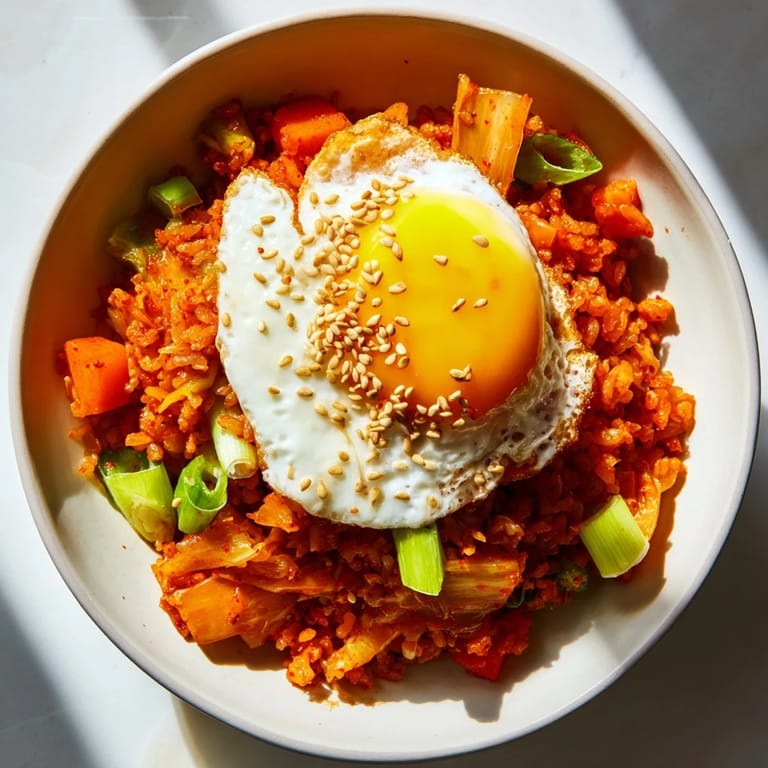
- Divide the kimchi fried rice between bowls, top each with a fried egg if you're going for it, scatter those sesame seeds everywhere, and eat while it's still steaming.
 Save
Save There was one morning when I made this for breakfast instead of dinner, and something about eating spicy, tangy fried rice with a runny egg yolk at 10 a.m. felt like I was breaking all the rules in the best way. It became a ritual after that—weekend mornings when neither of us wanted coffee, just this bowl and the knowledge that the day could start however we wanted.
The Science of Sizzle
The reason kimchi fried rice tastes so alive is because you're building layers of flavor through caramelization and fermentation. When the kimchi hits the hot pan, the natural sugars in the cabbage start to brown and concentrate, while the gochujang adds umami depth that makes every bite feel like it's been simmering for hours. The whole thing comes together in 15 minutes because you're using ingredients that are already flavor-loaded—there's no waiting for slow braises or lengthy reductions.
Rice Matters More Than You Think
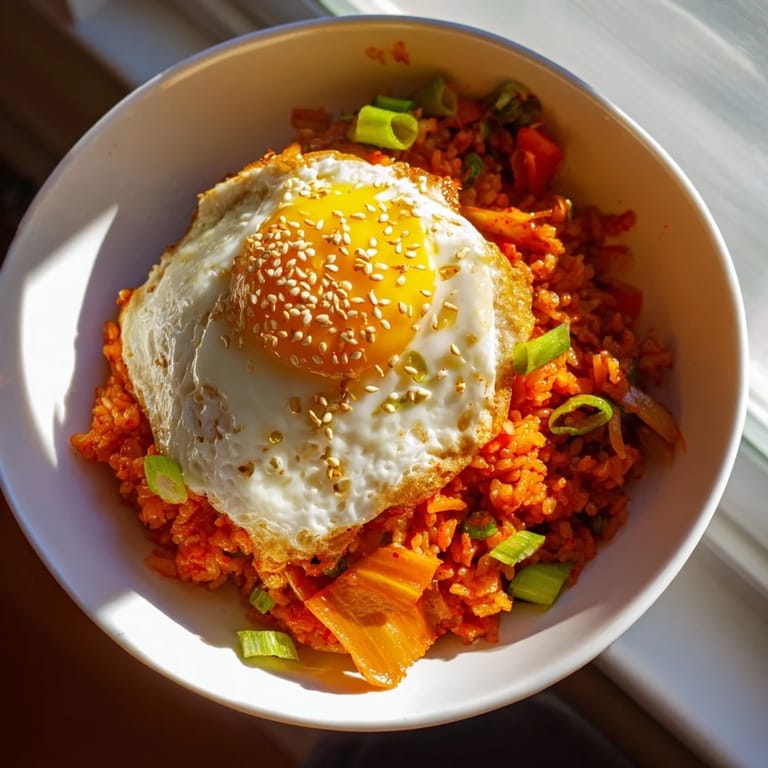
I learned this the hard way by using fresh rice from the rice cooker, watching it turn into porridge in my wok and feeling genuinely defeated. Day-old rice has been sitting in the fridge long enough for the moisture to evaporate slightly, which means each grain is firmer and stays individual when it fries. If you're in a rush and only have fresh rice, spread it on a plate and let it cool completely, or even put it in the freezer for 15 minutes to drive out some of that steam.
Customize Without Losing the Plot
The beautiful thing about this recipe is that it welcomes additions without falling apart—add diced tofu, shredded cooked chicken, or shrimp if you want protein, or throw in whatever vegetables are sitting in your crisper drawer. The gochujang and kimchi are strong enough characters to anchor the dish no matter what you add, which means you can make this once and never quite the same way twice. If heat isn't your thing, use less gochujang or offset it with a squeeze of lime juice at the end.
- Brown rice works beautifully if you're going for a whole-grain version—the nuttiness complements the kimchi perfectly.
- Save some kimchi juice to drizzle on top at the very end if you want more tang and spice in your final bite.
- Pair this with cold barley tea or a crisp lager if you have people coming over; both cut through the richness and make you want another bowl.
 Save
Save This recipe became my answer to the question, 'What do you want to eat?' because it's fast, bold, and always tastes like care. Every time I make it, I'm reminded that some of the best meals don't require fancy ingredients or hours—just good rice, fermented passion, and a hot pan.
Common Questions
- → Why should I use day-old rice?
Day-old rice has less moisture and separates better during stir-frying, preventing clumping and ensuring each grain gets evenly coated with sauce. If using fresh rice, spread it on a plate to cool completely before cooking.
- → Can I adjust the spice level?
Absolutely. Start with 1 teaspoon of gochujang and adjust based on your heat preference. The kimchi juice also adds spice, so reduce it for milder results or increase both for extra kick.
- → What proteins pair well with this dish?
Fried eggs are traditional, but diced tofu, cooked chicken, shrimp, or beef work beautifully. Add proteins during the initial sauté or place on top of the finished dish.
- → Is this dish vegetarian?
Yes, it's naturally vegetarian when using vegetable oil and omitting the fried egg. For vegan preparation, skip eggs or use plant-based alternatives.
- → How do I prevent the rice from sticking?
Use enough oil, ensure your pan is hot before adding ingredients, and break up rice clumps as you add them. Stir-fry continuously for 3-4 minutes to achieve separate, fluffy grains.
- → What can I substitute for gochujang?
Gochujang is essential for authentic flavor, but if unavailable, combine sriracha with miso paste for similar spicy-umami depth. Adjust quantities gradually to match desired intensity.