 Save
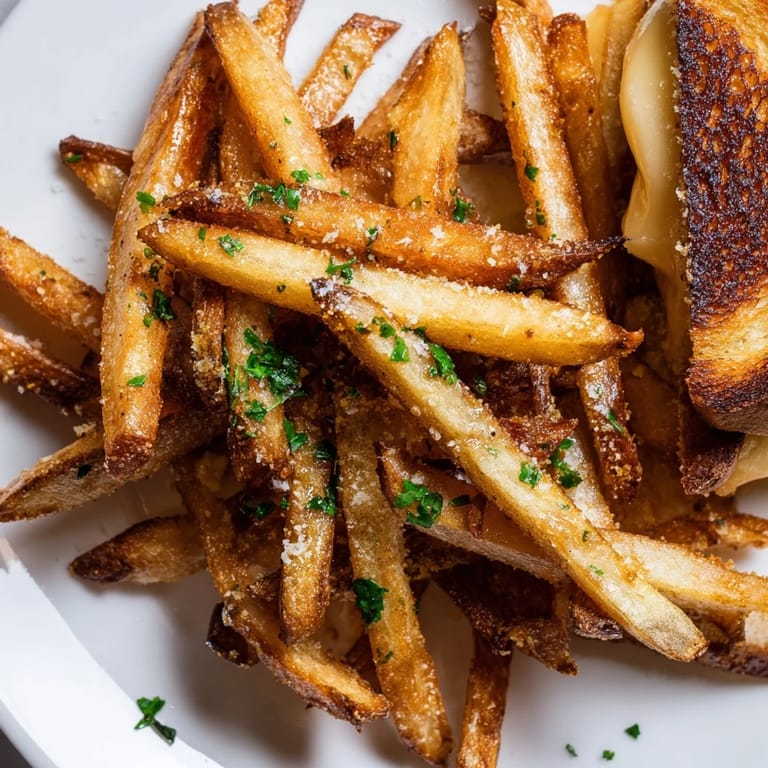
Save There's something about the smell of beef tallow hitting hot oil that takes me straight back to a Saturday afternoon when my neighbor challenged me to make fries better than the local diner. I'd never worked with tallow before, only vegetable oil, and honestly I was skeptical—until that first bite of impossibly crispy, golden fry that somehow tasted both rich and clean at once. That same day, I grilled cheese on the cast iron while the second batch fried, and the combination felt like the most natural pairing I'd never planned. Now it's the dish I make when I want to feel like I'm running a tiny, perfect diner in my own kitchen.
I made this for my sister during one of those surprise weeknight visits, and she devoured the fries straight off the paper towels before I could even plate them properly. She kept saying something about the taste being 'wrong in the best way,' which is exactly what happens when you use tallow instead of the usual shortcuts. We sat at the kitchen counter with melted cheese dripping onto paper plates, and no restaurant meal has ever felt quite as good as that moment.
Ingredients
- Russet potatoes: The starch content matters here—russets have just enough to create that contrast between creamy inside and shattering crust, and they're sturdy enough to survive two fryer dips without falling apart.
- Beef tallow: This is the secret ingredient that elevates everything, rendering clean beefy notes that oil can never touch—if you can't find it at a butcher counter, ask them to render it for you, or use beef fat trimmings.
- Kosher salt: Coarser than table salt so it doesn't dissolve into the hot oil and stick to the fries in clumps; season while they're still hot so it actually sticks.
- Sourdough bread: The slight tang plays beautifully against sharp cheddar, and the structure holds up to butter and heat without getting soggy or tearing.
- Sharp cheddar: You want enough bite to stand up to the richness of the tallow—mild cheese gets lost in the background.
- Unsalted butter: Softened ahead of time so it spreads evenly and toasts into golden brown patches that taste almost nutty.
- Mayonnaise: A kitchen trick that sounds weird until you taste it—the emulsion browns faster and deeper than butter alone, giving you a crispier exterior.
Tired of Takeout? 🥡
Get 10 meals you can make faster than delivery arrives. Seriously.
One email. No spam. Unsubscribe anytime.
Instructions
- Soak and dry your potatoes:
- Cut them into quarter-inch sticks and submerge them in cold water for at least thirty minutes—this removes enough starch that they won't stick together or absorb too much fat. Pat them bone-dry with paper towels when you're ready to fry, or the hot tallow will splatter and your fries will steam instead of crisp.
- First fry at lower temperature:
- Heat your tallow to 325°F and fry the potatoes in batches for four to five minutes until they're just tender but still pale. You're cooking them through without browning, building a foundation for the second fry to create that shattering exterior.
- Raise the heat and crisp them:
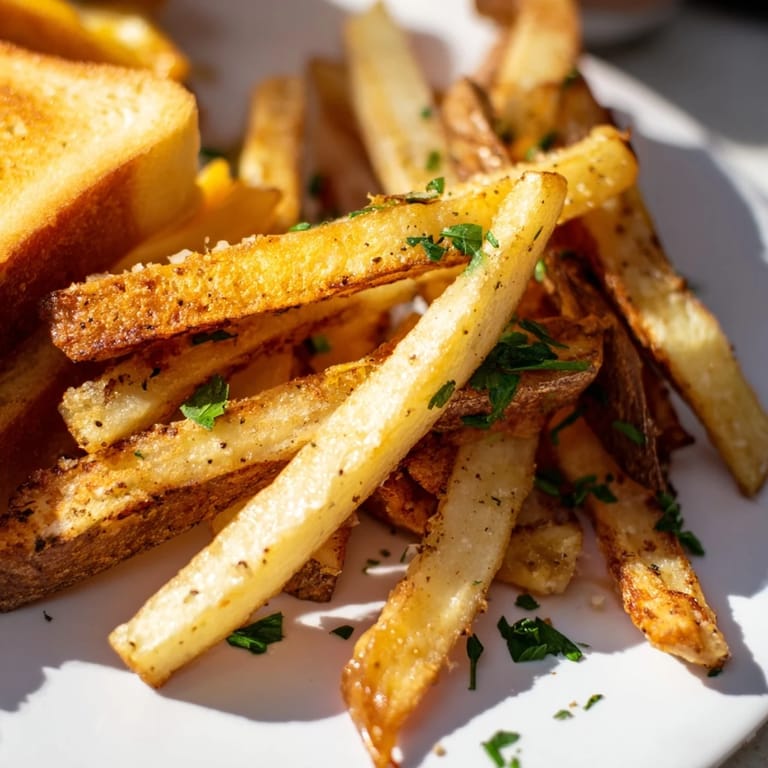
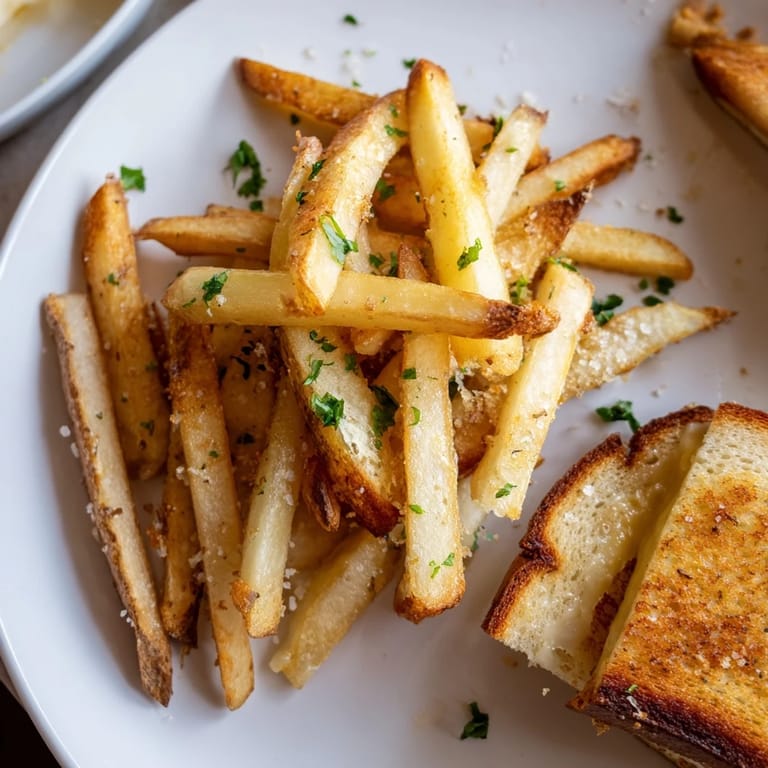
- Bring the tallow up to 375°F and fry the potatoes again, this time for two to three minutes until they turn golden and make actual cracking sounds. Drain on fresh paper towels and season immediately with salt and pepper while they're still hot enough that seasoning sticks.
- Spread butter and build your sandwich:
- Soften your butter beforehand so it spreads like a dream across one side of each bread slice—if you're using mayonnaise, mix it in or spread it separately on the same side. One or two cheese slices between two buttered slices, buttered sides facing outward so they can brown.
- Toast until golden and melty:
- Medium heat on your skillet or griddle matters—too hot and the bread burns before the cheese melts, too cool and you get pale bread that never crisps. Toast for three to four minutes per side, and press gently with a spatula to keep the bread and cheese in contact so they meld together.
- Plate and serve immediately:
- The fries lose their crispness fast once they cool, so bring everything to the table hot and eat right away.
 Save
Save There was a moment while eating this with my best friend where she stopped mid-bite and just nodded at me—no words, just understanding that we'd crossed into that rare territory where comfort food becomes a conversation. That's when I knew I'd figured out the formula: the richness of tallow, the chalkiness of good cheddar, the slight tang of sourdough, all working in harmony instead of just sitting on the same plate.
The Double-Fry Technique Explained
Most people think frying is frying, but professional kitchens have been using the double-fry method for decades because it works. The first fry at a lower temperature hydrates the potato and cooks it through without browning the exterior, then you let it cool for just a moment. The second fry at a higher temperature removes all remaining moisture from the surface and turns it golden and shatteringly crisp in seconds. It sounds like extra work, but it's actually the difference between eating a hot potato stick and eating an actual french fry—there's no comparison once you taste it.
Why Beef Tallow Changes Everything
Beef tallow is rendered beef fat, and it has a completely different flavor profile than vegetable oil. It's richer, with a subtle beefy note that somehow makes potatoes taste more like themselves instead of just being a vehicle for salt. The smoke point is also higher, which means your oil stays cleaner longer and doesn't break down into off-flavors during cooking. If you've ever had fries from a truly great burger joint, they were probably cooked in beef fat—you can taste the difference in every bite.
Building the Perfect Grilled Cheese
A grilled cheese is four simple ingredients, but the details matter more than anywhere else in cooking. Your bread needs enough structure to handle butter and heat without falling apart, the cheese needs enough personality to taste like something, and the butter needs to be soft enough to spread evenly so every part of the bread gets toasted equally. The mayonnaise trick is optional, but it's a game-changer if you want an extra-crispy, almost golden-brown exterior that tastes incredible.
- Always spread butter on the outside of the bread, not the inside where it will just soak in and make everything greasy.
- Medium heat is your friend—rushing with high heat burns the bread before the cheese melts, so be patient and trust the process.
- Press the sandwich gently with your spatula while it toasts so the cheese stays in contact with the bread and melts evenly throughout.
 Save
Save This is the meal I make when I want to feel like I'm cooking something that matters, something worth the small effort and the mental space it takes to do it right. There's real joy in that crispy exterior, that melted cheese, that moment when everything is still hot and perfect.