 Save
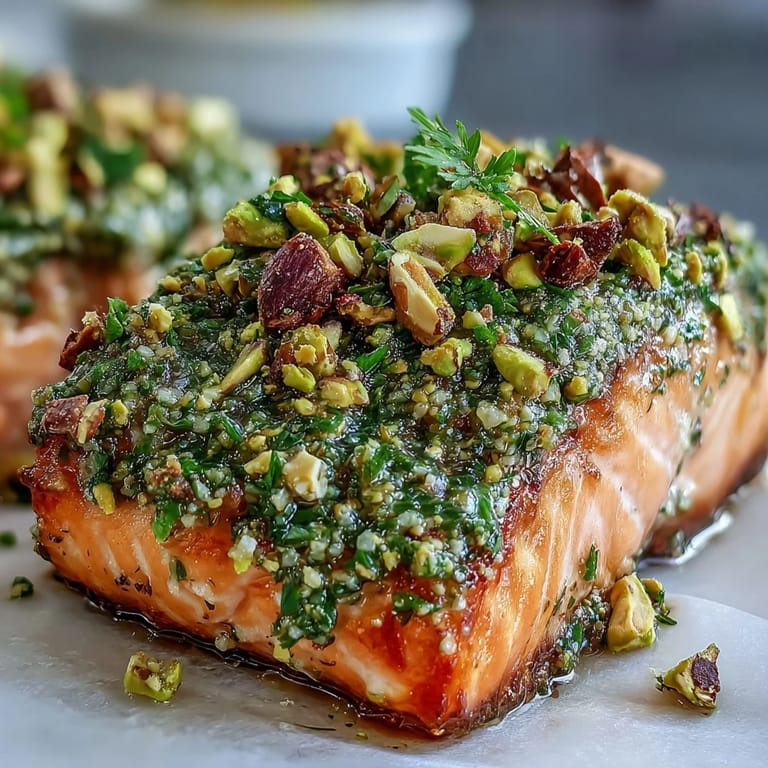
Save A friend once told me confit wasn't just for duck, and I laughed until she served me salmon so tender it barely held together on the fork. The oil bath transforms everything, turning firm fillets into something cloud-like and luxurious. I tried it the next week and forgot to check the temperature, nearly frying the poor fish instead of coaxing it into submission. Now I keep my oven low and my expectations high. This tahini crust came later, a happy accident when I had leftover pistachios and too much fresh herbs wilting in the drawer.
I made this for my sister's birthday last spring, and she still brings it up every time we talk about food. She's the kind of person who claims not to like fish, but she had two servings and scraped every bit of green crust off her plate. Watching her change her mind in real time felt like a small kitchen victory. The smell of warm herbs and toasted nuts filled the whole house that night. We ate outside with wine and good bread, and nobody wanted to leave the table.
Ingredients
- Salmon fillets: Choose center-cut pieces with even thickness so they cook at the same rate, and make sure they're completely boneless or you'll be picking pins out mid-bite.
- Olive oil: Use something decent but not your fancy finishing oil since you're heating it, and save the strained oil afterward for roasting vegetables or sautéing greens.
- Lemon zest: Only the yellow part, never the white pith, and it adds a quiet citrus note that doesn't scream but definitely whispers.
- Pistachios: Raw and unsalted work best, and chop them by hand instead of using a processor unless you want pistachio dust instead of texture.
- Tahini: Stir the jar well before using because the oil separates, and a smooth tahini makes all the difference in how the crust clings to the fish.
- Fresh herbs: Parsley, dill, and mint together create a brightness that dried herbs just can't touch, so don't skip this step even if it means an extra trip to the store.
- Garlic: Grate it finely or mince it to a paste so you don't bite into a chunk, because raw garlic can be aggressive if it's not evenly distributed.
- Honey: Just a teaspoon balances the tahini's bitterness and helps the crust stick without making it sweet.
- Ground cumin: Adds an earthy warmth that makes the whole dish feel more complete, like it was always meant to be there.
Tired of Takeout? 🥡
Get 10 meals you can make faster than delivery arrives. Seriously.
One email. No spam. Unsubscribe anytime.
Instructions
- Prep the Oven and Salmon:
- Set your oven to 100°C, which feels too low but trust it, and nestle the salmon fillets into a snug ovenproof dish so they support each other. Season them with salt, pepper, and lemon zest, then pour olive oil over until they're mostly submerged but not drowning.
- Confit the Salmon:
- Slide the dish into the oven and let it go for 25 to 30 minutes, resisting the urge to peek too often. The fish is done when it flakes easily and looks just opaque, with a texture more like butter than anything you'd normally call cooked.
- Make the Crust:
- While the salmon gently poaches, chop your pistachios until they're fine but still have some bite, then mix them with tahini, garlic, all three herbs, lemon juice, honey, cumin, and a good pinch of salt and pepper. Stir until it forms a thick paste that holds together on a spoon.
- Drain and Top:
- Lift the cooked fillets carefully out of the oil and set them on paper towels to blot off the excess, then let them cool just enough to handle. Spread a generous layer of the green pistachio mixture over the top of each fillet, pressing gently so it sticks.
- Serve:
- Arrange the salmon on a platter or individual plates, scatter extra herbs and lemon wedges around, and drizzle with a little more olive oil if you're feeling generous. Serve it warm, or let it come to room temperature if you made it ahead.
 Save
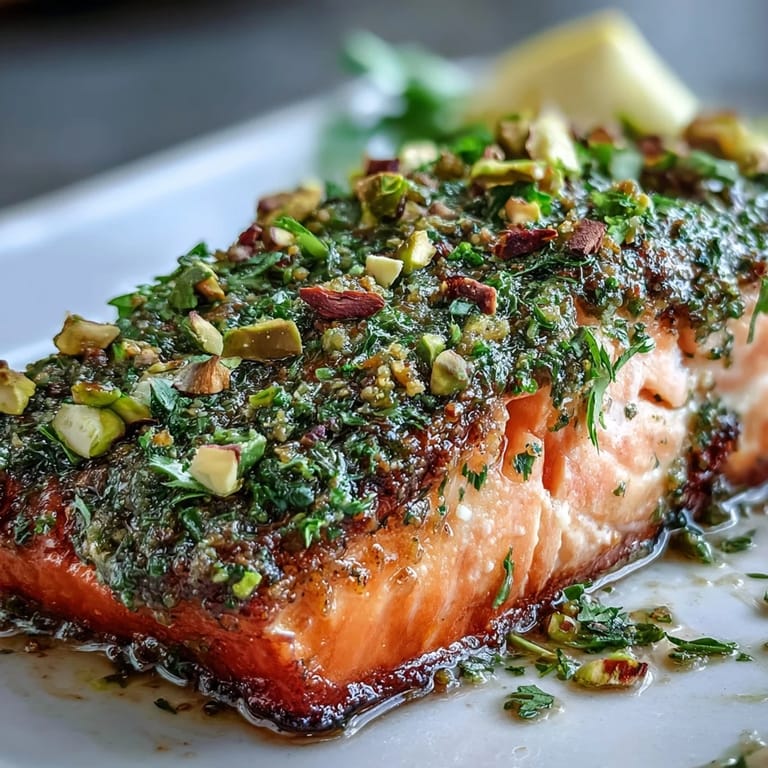
Save The first time I served this to a group, someone asked if I'd ordered it from a restaurant because it looked too perfect to be homemade. I didn't have the heart to tell them I'd almost panicked when the crust seemed too loose and I added extra pistachios at the last second. That improvisation became the standard, and now I can't imagine it any other way. Food has a way of becoming better than you planned, as long as you're willing to adjust on the fly.
Choosing Your Salmon
Look for fillets that are firm, bright, and smell like clean ocean, not fishy or off. I learned the hard way that previously frozen salmon works just fine for confit since the oil bath is so gentle, but avoid anything with a lot of white albumin streaks because those can ooze during cooking. Skinless fillets make serving easier, but if you can only find skin-on, just peel it off after confiting when it slips right away. Thickness matters more than weight, so aim for pieces that are about the same height so they finish cooking at the same time.
Storing and Reusing the Oil
Once the salmon is out, let the oil cool completely before straining it through a fine mesh sieve or cheesecloth into a clean jar. It'll keep in the fridge for weeks and carries a subtle fishy richness that's perfect for roasting root vegetables or sautéing greens, though I wouldn't use it for baking sweets. I used to throw it away until a chef friend looked at me like I'd committed a crime. Now I have a little jar labeled salmon oil that makes me feel like I'm running a much fancier kitchen than I actually am.
Serving Suggestions and Variations
This salmon shines alongside a simple arugula salad with lemon vinaigrette or a bowl of herbed couscous that soaks up any extra oil and tahini. I've also served it over roasted fennel and orange slices when I wanted something sweeter and more substantial. If you want extra crunch, stick the crusted fillets under the broiler for two minutes, but watch them closely because the nuts can burn in a blink.
- Swap pistachios for almonds or hazelnuts if that's what you have, though the flavor will shift slightly earthier.
- Add a pinch of red pepper flakes to the crust if you like a little heat threading through the herbs.
- Serve it cold the next day on toast with avocado and it turns into an entirely different but equally satisfying meal.
 Save
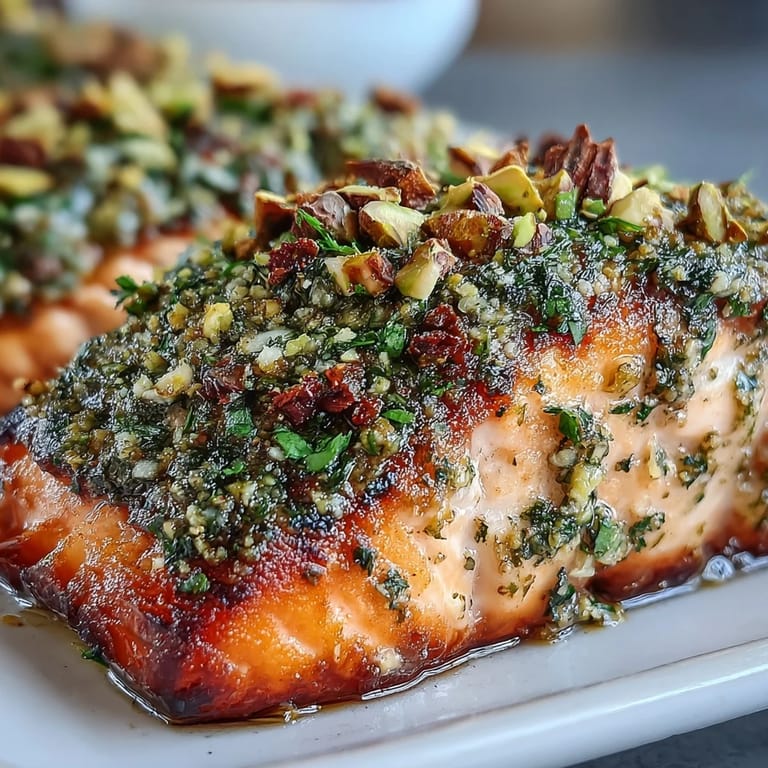
Save This dish taught me that slow cooking isn't about patience, it's about trust. Once you let the oven do its work and stop hovering, you end up with something far better than anything you could force.
Common Questions
- → What is confit cooking and why use it for salmon?
Confit is a gentle cooking method where food is slowly poached in fat or oil at low temperature. For salmon, this technique ensures the fish stays incredibly moist and tender, cooking evenly without drying out. The low oven temperature of 100°C allows the fish to cook gently in olive oil for 25-30 minutes.
- → Can I reuse the olive oil after cooking?
Yes, absolutely. Once the salmon is done, strain the confit oil through a fine-mesh sieve and store it in an airtight container in the refrigerator. This infused oil is wonderful for future cooking, salad dressings, or drizzling over vegetables.
- → What can I substitute for pistachios?
Almonds or walnuts work beautifully as alternatives to pistachios in the crust. Simply chop them finely and use the same quantity. Each nut brings its own flavor profile while maintaining the delightful crunch and texture of the topping.
- → How do I know when the salmon is perfectly cooked?
The salmon is ready when it turns just opaque throughout and flakes easily when tested with a fork. After 25-30 minutes at 100°C in the oil, it should be tender and moist. Avoid overcooking as the low temperature makes it forgiving but extended time can still dry it out.
- → Can this dish be made ahead of time?
Yes, this dish works wonderfully at room temperature. You can confit the salmon up to 2 hours ahead, then apply the tahini-pistachio crust just before serving. This makes it perfect for entertaining, as most preparation can be done in advance.
- → What sides pair best with this salmon?
A crisp green salad with lemon vinaigrette complements the rich salmon beautifully. Warm flatbread, couscous, roasted vegetables, or a simple cucumber and tomato salad also work wonderfully to complete this Mediterranean-inspired meal.