 Save
Save There's something about late summer that makes you crave this salad. I was testing recipes on a particularly warm Thursday when my neighbor appeared at the fence with an armful of just-picked tomatoes, and I realized I'd been overthinking Mediterranean food for years. The best version is the simplest one, where good ingredients speak for themselves, especially when you're eating outside with the sun still warm on your shoulders.
I made this for a small gathering once and watched people go quiet mid-conversation, which is always a good sign. My friend Marcus asked for the recipe, and when I told him it was mostly just good tomatoes and proper timing on the grill, he seemed almost disappointed that there wasn't some secret technique involved. That's when I understood this dish's real power: it trusts you to choose quality ingredients and then gets out of the way.
Ingredients
- Chicken breasts (2): Look for ones of even thickness so they cook uniformly; if they're much thicker than an inch, gently pound them down before marinating.
- Olive oil (for chicken): Regular olive oil works fine here since heat breaks down the delicate notes of extra virgin varieties.
- Lemon juice: Fresh-squeezed makes an actual difference in how the marinade tastes; bottled can taste thin and slightly chemical by comparison.
- Dried oregano: The Mediterranean heart of this dish; don't skimp or substitute with Italian seasoning unless you're truly stuck.
- Garlic clove: One minced clove is enough to flavor the chicken without overwhelming it; fresh garlic matters more than the amount.
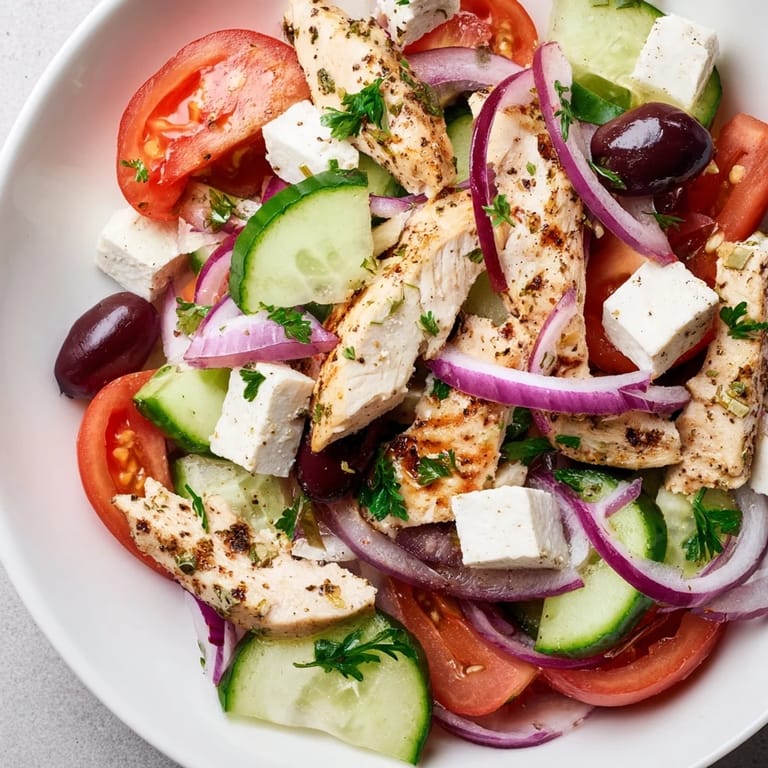
- Tomatoes (3 medium): Summer tomatoes are non-negotiable here; if you're making this in winter, consider waiting or using the best heirloom variety your market offers.
- Cucumber (1 large): English cucumbers have fewer seeds and a thinner skin, making them more pleasant than watery standard varieties.
- Red onion: The sharpness mellows slightly as it sits, so slicing it thin allows the flavor to integrate rather than dominate.
- Kalamata olives (¾ cup): Buy them from a bin if possible and pit them yourself; pre-pitted versions often taste slightly metallic from the processing.
- Feta cheese: Crumbly feta gives the salad texture; blocks cut into cubes create little pockets of salty richness that feel more intentional.
- Fresh parsley: Optional but worth including; it adds a subtle green note that balances the saltiness of everything else.
- Extra virgin olive oil (for dressing): This is where the good olive oil belongs, where its grassy or fruity notes can actually shine.
- Red wine vinegar: The acidity is gentler than white vinegar and complements the oregano beautifully.
Tired of Takeout? 🥡
Get 10 meals you can make faster than delivery arrives. Seriously.
One email. No spam. Unsubscribe anytime.
Instructions
- Mix and marinate the chicken:
- Whisk together the regular olive oil, lemon juice, oregano, minced garlic, salt, and pepper, then add the chicken breasts and turn them to coat. Even fifteen minutes makes a difference, but if you have thirty, the flavors will penetrate more deeply.
- Heat the grill properly:
- Get your grill or grill pan screaming hot over medium-high heat; you want to hear the chicken sizzle the moment it touches the surface. This creates those beautiful char marks and keeps the interior from drying out.
- Grill with patience:
- Place the chicken on the grill and resist the urge to move it around; let it sit for six to seven minutes, then flip once. You'll know it's done when the juices run clear and a meat thermometer reads 165°F if you want to be certain.
- Let it rest:
- This five-minute rest is when the meat relaxes and reabsorbs its juices, making each bite tender instead of slightly dry. Slice it against the grain for even more tenderness.
- Assemble the salad base:
- In a large bowl, combine the tomatoes, cucumber, red onion, olives, and feta cheese, keeping everything roughly the same size so each bite feels balanced.
- Dress it gently:
- Whisk the extra virgin olive oil, red wine vinegar, oregano, salt, and pepper together, then toss the salad gently so the dressing coats everything without crushing the tomatoes or crumbling the feta too much.
- Top and serve:
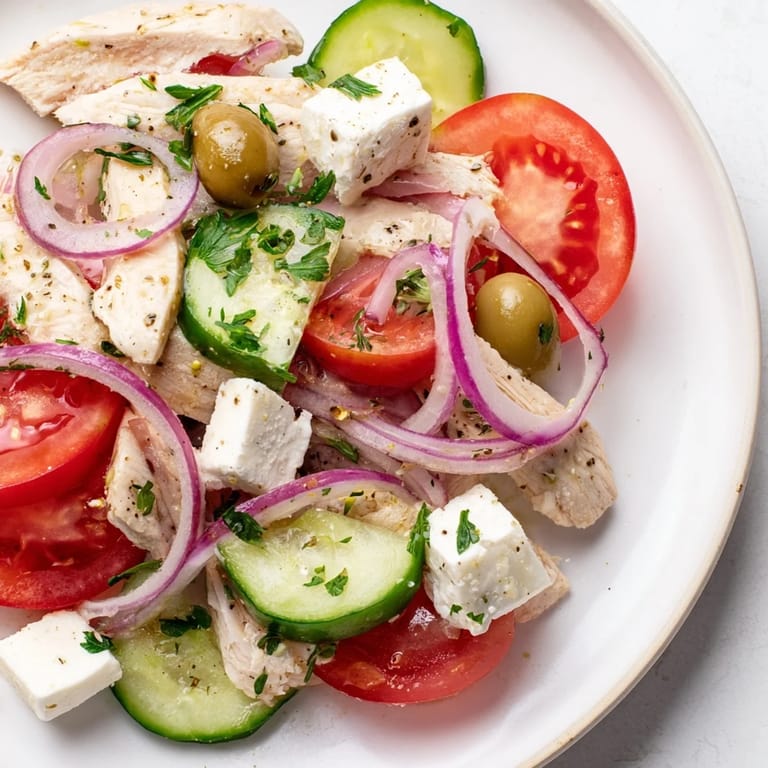
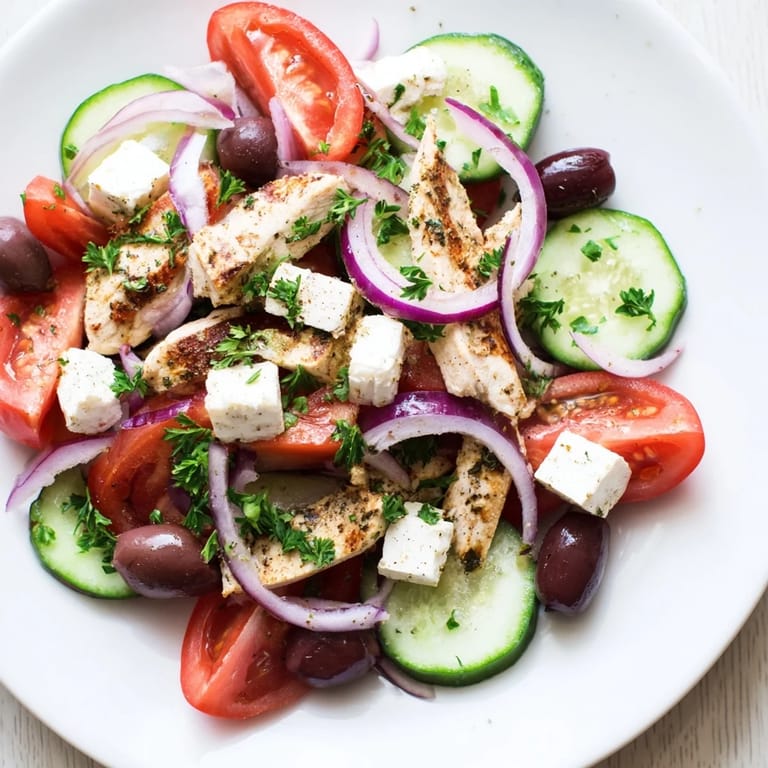
- Arrange the warm chicken strips on top, scatter fresh parsley over everything if using, and bring it to the table while the chicken is still warm. Have extra dressing nearby for anyone who wants more.
 Save
Save There was an afternoon when I made this for someone I was trying to impress, and I was nervous about whether it would feel like enough. Watching them go back for seconds and then ask about bringing it to a picnic the next week was the moment I realized how powerful simplicity can be. Sometimes the most elegant thing you can do in the kitchen is choose excellent ingredients and then trust them.
Timing and Temperature Matter
This is where most people falter without realizing it. Grilling chicken to the exact point where it's cooked through but still moist is partly technique and partly attention. The pan has to be hot enough that the exterior cooks before the interior dries out, and the chicken itself needs to be marinated long enough that seasoning actually penetrates the meat. I've learned to always check for doneness by pressing the thickest part; if juices run clear, you're there.
Building Flavor Through Layers
The dressing isn't meant to be a drowning sauce; it's more like a whisper that reminds everything else what it is. The oregano appears twice—once in the chicken marinade and once in the dressing—which might seem repetitive until you taste how the two instances create a flavor that feels cohesive rather than one-note. The lemon in the chicken and the vinegar in the dressing do similar work from different angles, each brightening everything without competing.
Variations and Flexibility
The beauty of Mediterranean food is its generosity; this salad is a template more than a mandate. I've made it with grilled shrimp on nights when I didn't have time to cook chicken properly, and it was equally good. Crumbled feta can be replaced with shaved Pecorino Romano if you want something sharper, or honestly left out entirely if dairy isn't your thing. The core idea—fresh vegetables, good olive oil, a protein cooked with herbs—stays constant while everything else can shift.
- Shrimp cooks in three to four minutes per side and absorbs the oregano marinade beautifully.
- If feta isn't available, good ricotta salata or even a creamy goat cheese creates a similar salt and richness balance.
- Grilled eggplant or zucchini can stand in for some of the vegetable bulk if you want to use what's in season.
 Save
Save This salad tastes like what summer should feel like: bright and nourishing and entirely unfussy. It's the kind of food that reminds you why people have been cooking with these ingredients around the Mediterranean for centuries.
Common Questions
- → What’s the best way to grill the chicken?
Marinate chicken breasts in olive oil, lemon juice, garlic, oregano, salt, and pepper for at least 15 minutes. Grill over medium-high heat for 6-7 minutes per side until juices run clear.
- → Can I substitute the chicken with another protein?
Yes, grilled shrimp or tofu are excellent alternatives to suit different dietary preferences while maintaining the dish's balance.
- → How can I enhance the flavors of the salad?
Adding capers or fresh dill can introduce extra layers of flavor. Fresh parsley garnish also adds brightness to the dish.
- → Is this dish suitable for gluten-free diets?
Yes, this meal is naturally gluten-free but always verify ingredient labels to avoid cross-contamination.
- → What pairs well with this salad for a fuller meal?
Serving with warm pita bread provides a more filling option, complementing the fresh, zesty elements of the salad.