 Save
Save My neighbor Kenji knocked on my door one rainy Tuesday holding a jar of white miso and a bag of soba noodles. He'd just returned from visiting family in Kyoto and insisted I try building a noodle bowl the way his grandmother did: layer by layer, tasting as you go. We stood in my tiny kitchen that evening, steam fogging up the windows, and I learned that miso broth isn't just seasoning, it's the soul of the bowl. That night changed how I thought about weeknight cooking entirely.
I made these bowls for my sister when she was studying for her board exams, surviving on cold pizza and anxiety. She sat at my counter, slurping noodles and sighing with relief between bites. The bok choy stayed crisp, the chicken was juicy, and she said the warm broth felt like a hug from the inside out. She texted me a photo of her passing score two weeks later with the caption: fuel matters.
Ingredients
- Boneless, skinless chicken thighs or breasts: Thighs stay juicier and forgive a minute or two of overcooking, but breasts work beautifully if you watch the clock closely.
- White miso paste: This fermented soybean paste brings salty, sweet, and savory notes all at once; store it in the fridge and it lasts for months.
- Low-sodium soy sauce: Balances the miso without tipping the bowl into overly salty territory, and you can always add more at the table.
- Rice vinegar: A splash of acidity brightens the marinade and keeps the flavors lively instead of flat.
- Honey or maple syrup: Just enough sweetness to round out the soy and miso, creating a glaze that caramelizes beautifully on the grill.
- Fresh ginger: Grate it finely so it melts into the marinade, releasing its warm, spicy aroma without leaving fibrous bits.
- Garlic: One clove minced adds sharpness and depth without overpowering the delicate miso.
- Toasted sesame oil: A teaspoon goes a long way; it adds nutty richness and makes your kitchen smell incredible.
- Soba noodles or whole wheat spaghetti: Soba has an earthy buckwheat flavor that pairs perfectly with miso, but whole wheat spaghetti is a worthy stand-in.
- Low-sodium chicken broth: Forms the base of your soup; taste it before you start because quality broth makes or breaks the bowl.
- Shiitake mushrooms: Sliced thin, they release umami into the broth and add a tender, meaty bite.
- Carrot: Julienned carrots cook quickly and add a pop of color and subtle sweetness.
- Baby bok choy: Halved lengthwise, the leaves wilt while the stems stay crunchy, giving you texture in every spoonful.
- Snow peas: Trim the ends and toss them in at the last moment so they stay bright green and snappy.
- Baby spinach or kale: Stir in off the heat and let residual warmth wilt the greens without turning them mushy.
- Soft-boiled eggs: The jammy yolk enriches the broth like liquid gold; time them carefully for that perfect center.
- Scallions: Sliced thin, they add a sharp, fresh bite that cuts through the richness.
- Toasted sesame seeds: Sprinkle them on top for a nutty crunch and a hint of elegance.
- Fresh cilantro or parsley: A handful of chopped herbs adds brightness and a garden-fresh finish.
- Nori: Cut into strips, it brings a whisper of the sea and a little chewiness.
- Chili oil or Sriracha: Drizzle as much or as little as you like for heat that wakes up every flavor.
Tired of Takeout? 🥡
Get 10 meals you can make faster than delivery arrives. Seriously.
One email. No spam. Unsubscribe anytime.
Instructions
- Mix the marinade:
- In a shallow bowl, whisk together miso paste, soy sauce, rice vinegar, honey, ginger, garlic, and sesame oil until the mixture is smooth and no lumps remain. The aroma alone will make you hungry.
- Marinate the chicken:
- Add the chicken and turn each piece to coat evenly, then cover and refrigerate for at least 30 minutes or up to 8 hours. The longer it sits, the deeper the flavor sinks in.
- Cook the noodles:
- Bring a large pot of water to a rolling boil and cook the soba noodles according to package directions until just al dente. Drain, rinse under cold water to stop the cooking, and toss with a few drops of sesame oil so they don't clump.
- Grill the chicken:
- Heat a grill pan or skillet over medium-high heat, shake off excess marinade from the chicken, and cook for 4 to 5 minutes per side until the internal temperature reaches 165°F. The edges should be golden and slightly caramelized.
- Rest and slice:
- Transfer the chicken to a cutting board and let it rest for 5 minutes so the juices redistribute. Slice into thin strips against the grain for maximum tenderness.
- Build the broth:
- In a clean soup pot, bring chicken broth and water to a gentle simmer, then whisk in the remaining miso paste until it dissolves completely. Taste and adjust if you want more saltiness or depth.
- Add the vegetables:
- Toss in mushrooms, carrots, bok choy, and snow peas, simmering for 3 to 4 minutes until just tender. Stir in spinach or kale off the heat and let it wilt naturally.
- Assemble the bowls:
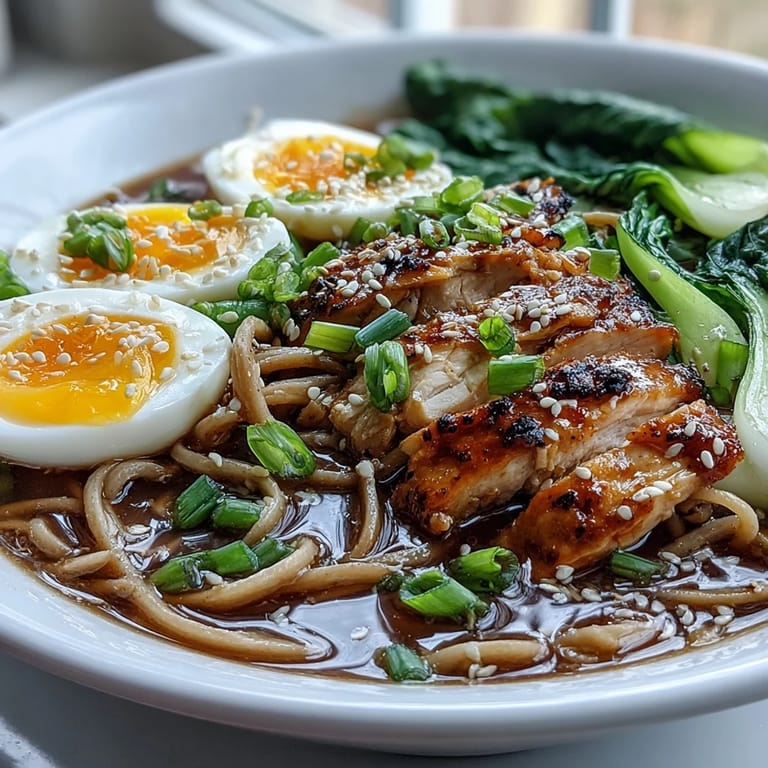
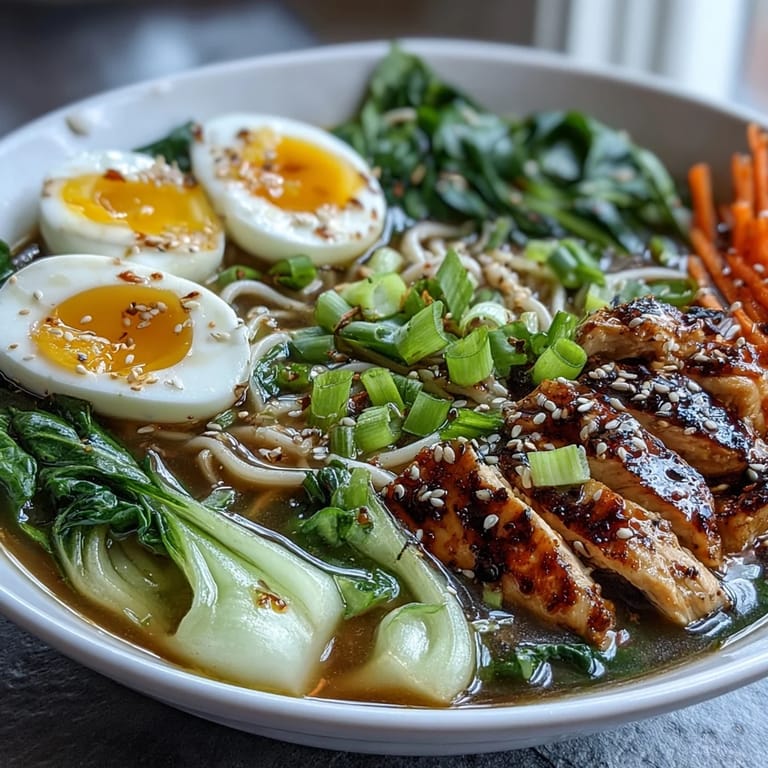
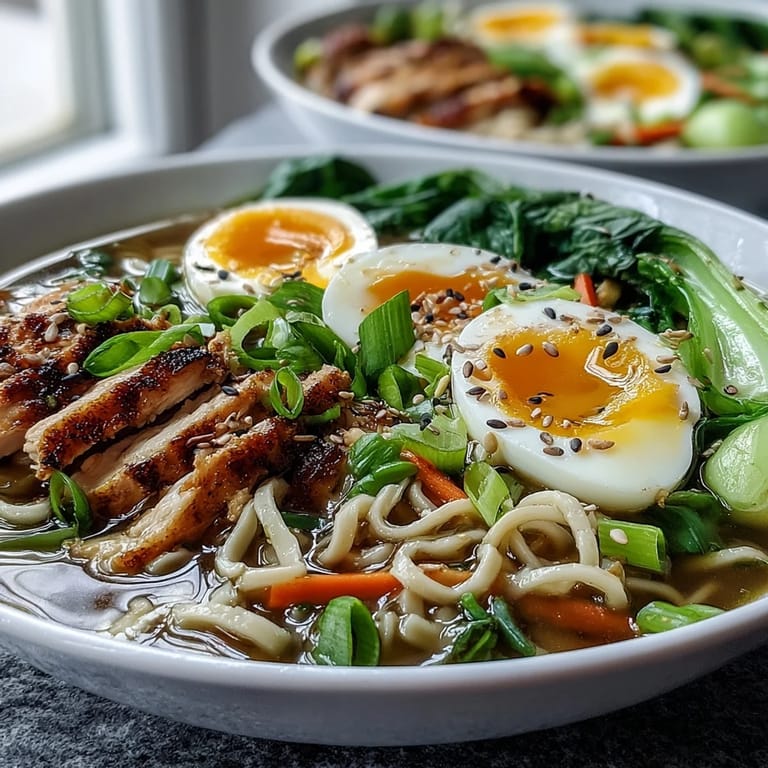
- Divide the noodles between two bowls, arrange the sliced chicken on top, and ladle the hot broth and vegetables over everything. The steam should rise in a fragrant cloud.
- Add the toppings:
- Top each bowl with soft-boiled egg halves, scallions, sesame seeds, cilantro, and nori strips. Drizzle with chili oil or Sriracha if you like heat.
- Serve immediately:
- Bring the bowls to the table while everything is piping hot. The noodles will soak up the broth if you wait too long, so dig in right away.
 Save
Save One winter evening, I set two bowls on the table for my partner and me, and we ate in silence except for the sound of slurping noodles and clinking spoons. Halfway through, he looked up and said this tastes like care. I realized then that cooking isn't just about feeding people, it's about giving them a moment to feel held.
Making It Your Own
If you want to make this vegetarian, swap the chicken for extra-firm tofu that's been pressed and marinated the same way, and use vegetable broth instead of chicken. You can also play with the vegetables based on what's in your crisper: broccoli florets, edamame, or snap peas all work beautifully. I've even added leftover roasted sweet potato cubes when I had them on hand, and the slight sweetness was a welcome surprise against the salty miso.
Storing and Reheating
Store the broth, noodles, chicken, and toppings separately in airtight containers in the fridge for up to three days. When you're ready to eat, reheat the broth gently on the stove, warm the chicken in a skillet or microwave, and pour everything over fresh or lightly warmed noodles. The noodles will turn soggy if they sit in the broth overnight, so keeping them separate is the secret to leftovers that still taste great.
Final Touches and Swaps
If you can't find soba noodles, whole wheat spaghetti or even rice noodles work in a pinch, though the flavor profile will shift slightly. For a gluten-free version, use 100 percent buckwheat soba or gluten-free noodles and swap soy sauce for tamari. The soft-boiled eggs are optional, but they add a luxurious richness that makes the bowl feel special even on a Tuesday night.
- Toast the sesame seeds in a dry pan for 30 seconds before sprinkling them on top for extra nutty flavor.
- Add a squeeze of fresh lime juice just before serving to brighten the whole bowl.
- Double the marinade and keep half in the fridge to use on salmon or pork chops later in the week.
 Save
Save These bowls have become my answer to long days, cold nights, and moments when I need something nourishing that doesn't require much thought. I hope they bring you the same kind of warmth they've brought me, one steaming spoonful at a time.
Common Questions
- → Can I make this vegetarian?
Yes, swap the chicken for extra-firm tofu and substitute vegetable broth for the chicken broth. Marinate the tofu using the same miso mixture for maximum flavor absorption.
- → How long should I marinate the chicken?
Marinate for at least 30 minutes, but for deeper flavor, refrigerate up to 8 hours or overnight. Bring the chicken to room temperature before cooking for even results.
- → Can I use different noodles?
Soba noodles work beautifully, but whole wheat spaghetti, udon, or rice noodles are excellent alternatives. For gluten-free options, use 100% buckwheat soba or gluten-free noodle varieties.
- → How should I store leftovers?
Store the broth separately from the noodles and toppings to prevent sogginess. Keep everything in airtight containers in the refrigerator for up to 3 days. Reassemble when ready to eat.
- → What vegetables can I substitute?
Broccoli, edamame, snap peas, or bell peppers work well in place of or alongside the listed vegetables. Adjust cooking times to ensure all vegetables remain tender-crisp.