 Save
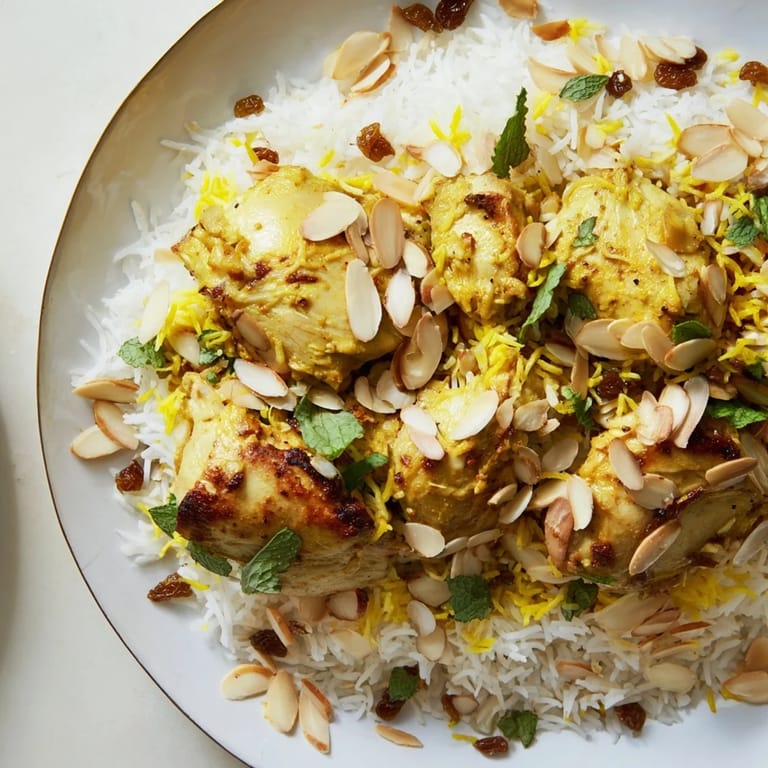
Save I discovered Kuwaiti biryani during a family gathering where my aunt spent the entire afternoon layering rice and meat with the kind of focus usually reserved for art projects. The kitchen filled with such intoxicating aromas—cardamom, cinnamon, saffron—that I found myself hovering nearby despite having nowhere official to be. When she finally pulled the pot from the oven and let it rest, the steam that escaped carried with it this promise of something extraordinary. That moment taught me that biryani isn't rushed; it's built with intention and patience.
I made this for friends who'd never tried biryani before, and watching their faces when they tasted it—that sudden quiet that happens when food surprises you—made me understand why this dish shows up at celebrations across the Gulf. One friend asked if I'd been cooking it my whole life, and I laughed because I'd learned it just the week before. That's the beauty of biryani: it tastes ancient and revered but becomes yours the moment you make it.
Ingredients
- Bone-in chicken or lamb (900g): The bones add richness during cooking and marinating; ask your butcher to cut pieces roughly the same size so they cook evenly.
- Plain yogurt (1 cup): This tenderizes the meat while infusing it with subtle tang; full-fat yogurt creates the silkiest marinade.
- Ginger-garlic paste (1 tbsp): Fresh paste makes all the difference here—it dissolves into the yogurt rather than staying grainy, creating a smoother coating.
- Spice blend (turmeric, cumin, coriander, chili powder, garam masala): Together these create biryani's signature warmth; don't skip toasting them lightly in a dry pan first if you have time, it deepens everything.
- Basmati rice (3 cups): Long, slender grains that stay separate; rinsing removes excess starch so you avoid a gluey result.
- Ghee or butter (5 tbsp total): This is where golden flavor comes from—ghee has a cleaner, more refined taste than oil, worth seeking out.
- Whole spices for rice (cloves, cardamom, cinnamon, bay leaf): These steep into the rice water, perfuming every grain without overpowering the dish.
- Onions (2 large): Caramelized onions are the secret backbone; low heat and patience turn them golden and sweet, adding complexity.
- Fresh herbs (coriander and mint): Chopped just before layering, they brighten the richness; dried herbs lose their magic here.
- Saffron threads soaked in warm milk: This creates a stained, fragrant drizzle that colors the rice pale gold and smells like luxury in a small dish.
- Nuts and raisins: Toasted almonds or cashews add crunch; raisins plump up slightly during cooking, offering pockets of sweetness.
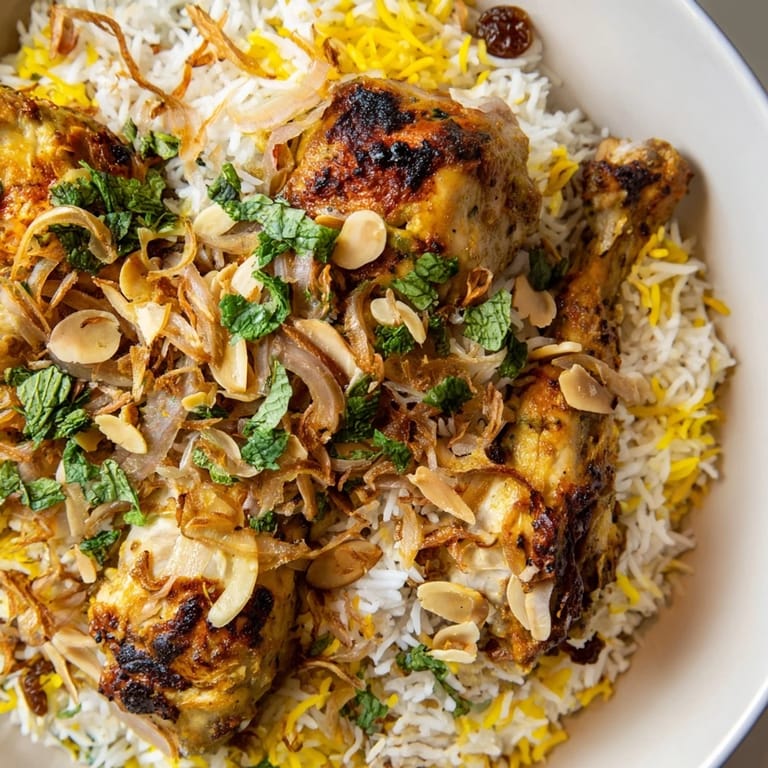
- Fried onions for garnish: These crisp bits scatter across the top, providing texture that contrasts with the soft rice.
Tired of Takeout? 🥡
Get 10 meals you can make faster than delivery arrives. Seriously.
One email. No spam. Unsubscribe anytime.
Instructions
- Marinate the meat:
- Combine yogurt, lemon juice, ginger-garlic paste, and all spices in a bowl, then add your meat and coat thoroughly. Cover and refrigerate for at least an hour, though overnight transforms it completely—the yogurt slowly tenderizes and the spices deepen.
- Prepare the rice:
- Rinse basmati rice under cold water until the water runs clear, rubbing the grains gently with your fingers; this removes surface starch. Soak for 30 minutes, which allows the rice to cook more evenly and prevents mushiness.
- Parboil the rice:
- Bring salted water to a rolling boil, add your soaked rice along with whole spices, and cook for just 6–7 minutes—you want it still slightly firm to the bite. The rice will finish cooking in the oven as it steams.
- Preheat and caramelize onions:
- Heat your oven to 180°C (350°F) and in a large ovenproof pot, warm ghee over medium heat. Add sliced onions and stir occasionally for 12–15 minutes until they turn deep gold and fragrant, almost sticky; this is where much of the flavor happens.
- Sear the marinated meat:
- Push the caramelized onions to the side, add the marinated meat, and let it sear for 5–7 minutes without stirring, allowing a flavorful crust to form. Then cover and cook gently for 20–25 minutes (chicken) or 35–40 minutes (lamb) until just tender but not falling apart.
- Layer the biryani:
- Over the cooked meat and onions, scatter half the fresh herbs, raisins, and toasted nuts, then add half the parboiled rice in an even layer. Repeat with remaining herbs, nuts, and raisins, finishing with the rest of the rice on top.
- Add the saffron accent:
- Pour the saffron-infused milk evenly over the top rice layer and dot with ghee, which will melt down and add richness as it bakes.
- Seal and bake:
- Cover the pot tightly with foil first, then place the lid on top to trap steam; this ensures the rice cooks gently and absorbs all the flavors below. Bake for 30–35 minutes until the rice is tender and fragrant.
- Rest and serve:
- Let the biryani sit undisturbed for 10 minutes after coming out of the oven—this allows flavors to settle and makes it easier to serve without breaking the rice. Gently fluff with a fork and crown with fried onions and extra fresh herbs if you have them.
 Save
Save My grandmother once said that biryani is where patience becomes flavor, and I finally understood what she meant the first time I resisted the urge to check on it while it baked. The sound of gentle steam hissing from beneath the foil felt like the dish was working its magic.
Why This Method Works
Biryani's magic lives in layers and timing, not complexity. By parboiling the rice first, you ensure it finishes cooking in the oven's dry heat rather than becoming soggy in liquid. The marinated meat releases its own moisture as it cooks, which gently steams upward through the rice. The caramelized onions and ghee create richness that coats each grain, while the saffron milk drizzled on top adds both color and a subtle floral note that ties everything together.
Customizing Your Biryani
While this version is traditional, biryani welcomes your preferences. Vegetarians swap meat for marinated paneer or mixed vegetables like potatoes, cauliflower, and peas, adjusting cooking times accordingly. If you love floral notes, add a few drops of rose water to the saffron milk—this is common in some Gulf kitchens and shifts the entire character beautifully. For heat lovers, increase the chili powder or add fresh green chilies to the marinade.
Serving and Storage
Biryani shines alongside cool, refreshing sides that balance its richness. Raita—a simple yogurt sauce with cucumber, mint, and a pinch of cumin—cuts through the spices beautifully, or serve with a basic cucumber-tomato salad if you prefer something lighter. Biryani actually improves the next day as flavors meld, so it's perfect for meal prep; store it in an airtight container in the refrigerator for up to three days and reheat gently with a splash of water in a covered pot.
- Serve with cool raita or a fresh salad to balance the richness of the spiced meat and ghee.
- Leftover biryani tastes even better the next day once all the flavors have had time to marry together.
- Reheat gently with a little water to restore moisture without drying out the rice.
 Save
Save Biryani is more than rice and meat—it's a celebration built in layers, a dish that rewards patience with flavor. Make it once and it becomes part of your kitchen story.
Common Questions
- → What type of meat works best in this dish?
Bone-in chicken pieces or lamb cut into serving sizes provide the best texture and flavor absorption during marination and cooking.
- → Can the rice be prepared in advance?
Yes, soaking and par-cooking the basmati rice beforehand helps control texture and allows for better layering with the meat and spices.
- → Which spices contribute most to the fragrance?
Cloves, cardamom pods, cinnamon, saffron, and garam masala combine to create the distinctive aromatic profile of this dish.
- → How is the layering technique important?
Layering partially cooked rice with marinated meat, caramelized onions, herbs, raisins, and nuts allows flavors to meld while maintaining distinct textures after baking.
- → Can this dish be adapted for vegetarians?
Yes, substituting meat with marinated paneer or mixed vegetables adapts the dish, preserving the aromatic layers and rich flavors.
- → What is the role of saffron milk in the dish?
Drizzling saffron soaked in warm milk over the top layer infuses a subtle golden color and delicate aroma enhancing the rice's flavor.