 Save
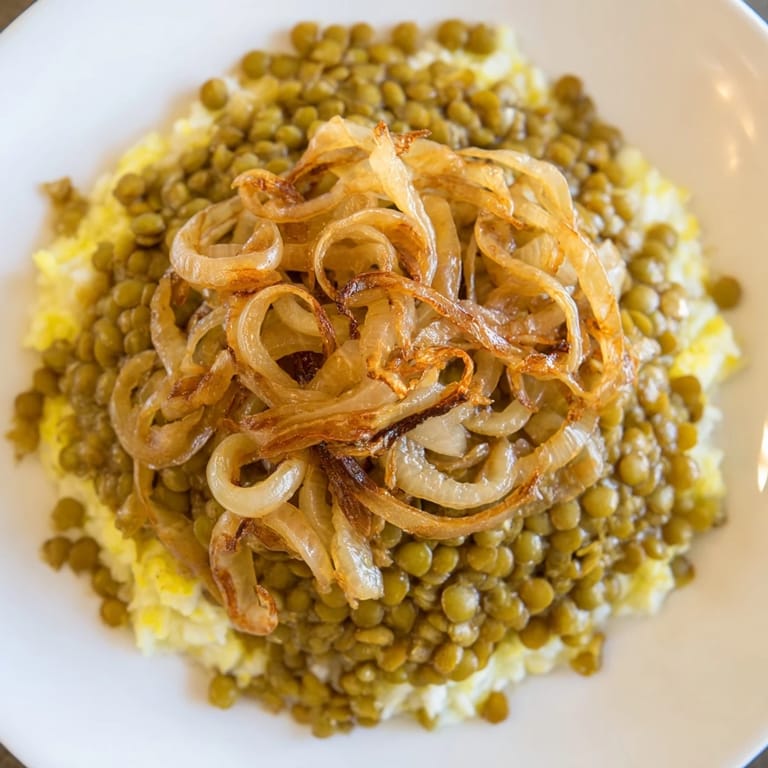
Save My grandmother kept a worn notebook of recipes in her kitchen drawer, and mjadra appeared on at least three different pages in her handwriting—each version slightly different, marked with notes from various seasons and moods. When I finally made it myself on a quiet Tuesday evening, I understood why. As the lentils softened and the rice began to absorb the warm spice-scented broth, the kitchen filled with a cinnamon-and-cumin perfume that felt like coming home to a place I'd only ever read about.
I made this for friends on a rainy evening when the conversation had dipped into comfortable silence, and I remember watching their faces when they took that first bite—the surprise that something so humble could be so satisfying. Someone asked for seconds before finishing their first bowl, and that's when I knew this wasn't just a recipe, it was a keeper.
Ingredients
- Brown or green lentils (1 cup): These hold their shape beautifully and don't turn to mush, which I learned the hard way with red lentils one afternoon.
- Long-grain rice (¾ cup): Basmati is ideal because each grain stays separate and doesn't get mushy, creating that perfect tender-but-distinct texture.
- Water or vegetable broth (4 cups): Broth adds flavor depth, but plain water lets the spices shine if that's what you prefer.
- Olive oil (5 tablespoons total): Use good quality if you can—it matters more here than in dishes where oil is just background.
- Ground cumin, allspice, and cinnamon: These warm spices are the soul of the dish; they work together like they've been waiting to meet in your saucepan.
- Bay leaf: Don't skip it and don't forget to fish it out at the end—it adds an almost-invisible elegance.
- Salt and black pepper: Start with less, taste as you go; the flavors deepen as everything cooks together.
- Yellow onions (3 large): The sweeter, softer they become after caramelizing, the better the whole dish tastes.
Tired of Takeout? 🥡
Get 10 meals you can make faster than delivery arrives. Seriously.
One email. No spam. Unsubscribe anytime.
Instructions
- Toast the lentils:
- Heat olive oil in your saucepan and let the lentils tumble in for a minute or two—you'll notice they smell toasted and earthier instantly. This small step makes an enormous difference in the final flavor.
- Start the simmer:
- Add your liquid and bring it to a boil, then drop the heat down and let it bubble gently for 15 minutes while you get to the onions.
- Caramelize the onions simultaneously:
- This is the magic part: while lentils cook, slice your onions thin and let them cook low and slow in olive oil with just a pinch of salt. Stir them now and then; they'll gradually turn golden, then amber, then deep bronze over about 25-30 minutes.
- Add the rice and spices:
- Once the lentils have had their 15-minute head start, stir in the rice, cumin, allspice, cinnamon, salt, and pepper. Everything mingles together and perfumes the whole pot.
- Cover and finish gently:
- Lower the heat, cover the saucepan, and let it steam quietly for 20-25 minutes until both rice and lentils are tender and the liquid has nearly vanished. If it looks dry before the rice is ready, splash in a bit more water—better cautious than crunchy.
- Fluff and finish:
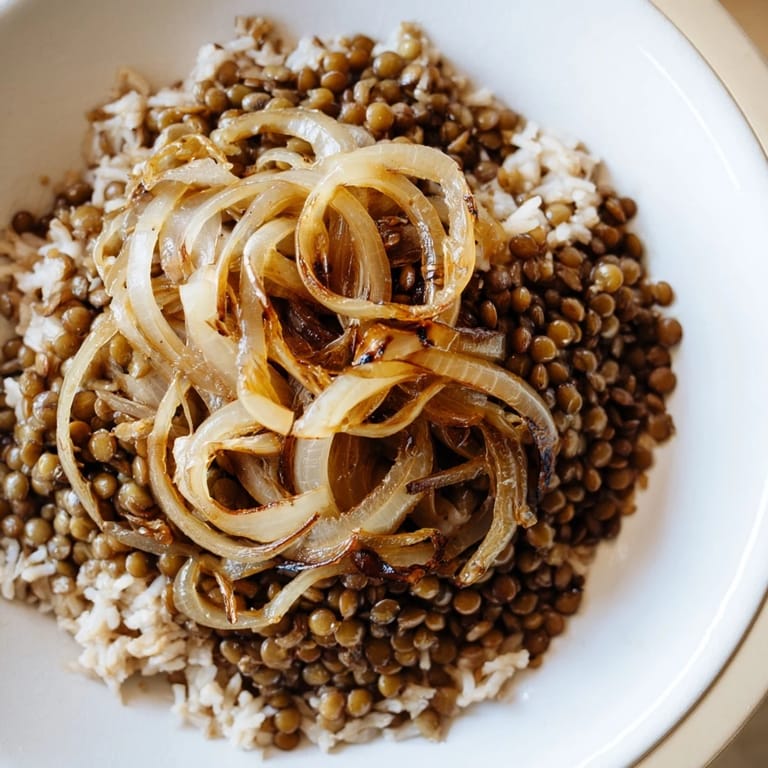
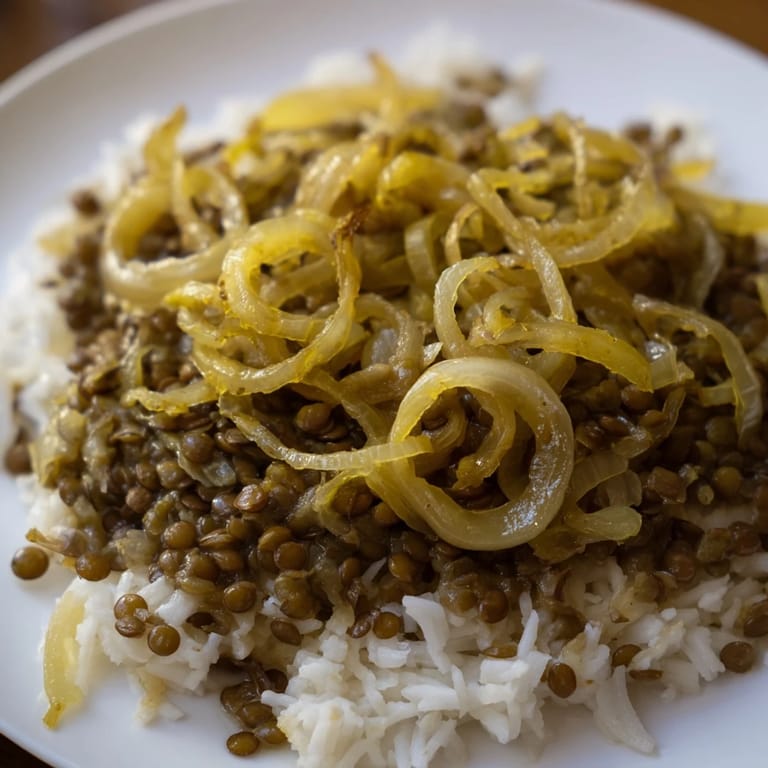
- Remove the bay leaf, give everything a gentle fluff with a fork, taste for seasoning, and transfer to bowls. Crown each serving with those caramelized onions piled high.
 Save
Save There's a moment near the end of cooking when the steam lifts off the saucepan and you catch the full aroma—lentils, cinnamon, caramelized onion sweetness all together—and you know something good is about to happen. That smell is the promise of the whole dish.
Timing and Prep
Start your onions first, even before the saucepan heat, so they have their full slow-cooking time while the grains go through their cycles. The beauty of this dish is that while the saucepan simmers on one burner, you barely need to tend the onions on another—just stir occasionally and let the Maillard reaction do its work. Everything finishes within a minute of each other if you time it this way, which feels efficient and also somehow intentional.
Serving and Company
Mjadra is generous—it works at a summer lunch with just a tomato salad, and it feels just as right on a winter evening as something warm and grounding. I've served it to people expecting something fancy and they're surprised by how satisfying it is, and I've made it for myself on ordinary nights when I needed something that tastes like it means something. The fact that it's naturally vegan and gluten-free is almost beside the point; people eat it and ask for the recipe regardless of dietary preference.
Variations and Swaps
If you use red lentils, they'll soften much faster and create a creamier texture—almost mushy in the best way—and you'll need to cut the lentil cooking time by about half. Some families add a pinch of dried mint or a handful of chopped parsley stirred in at the end, which brightens everything. You can serve it topped with dollops of plain yogurt or labneh if you're not strict about vegan, and a small bowl of fresh cucumber and tomato salad alongside transforms it from dinner into something more complete.
- Red lentil version cooks faster but feels softer and less structured than the brown or green lentil version.
- A squeeze of lemon juice over the top just before serving adds brightness without overwhelming the warm spices.
- Leftovers actually taste better on day two, once the flavors have settled and deepened together.
 Save
Save This dish arrived in my kitchen not as something I discovered, but as something that felt like it was already waiting there. Now I make it often, and it tastes like home every single time.
Common Questions
- → What type of lentils work best for this dish?
Brown or green lentils are ideal as they hold their shape well and have a gentle, earthy flavor that complements the spices.
- → Can I use regular rice instead of long-grain basmati?
Long-grain varieties like basmati are preferred for their light, fluffy texture, but other rice types may produce a stickier result.
- → How do I achieve perfectly caramelized onions?
Cook sliced onions slowly over medium-low heat with olive oil and a pinch of salt, stirring often for about 25-30 minutes until they turn golden and soft.
- → Is it necessary to add the bay leaf during cooking?
The bay leaf adds subtle depth to the flavor during simmering but can be omitted if unavailable.
- → Can I prepare the dish ahead of time?
Yes, leftovers keep well refrigerated up to four days and flavors deepen overnight.