 Save
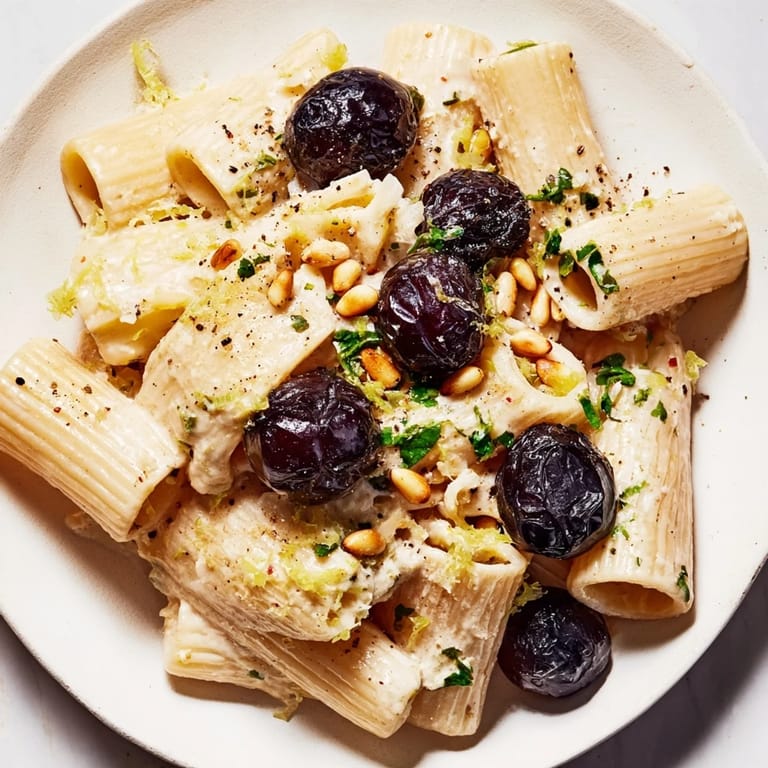
Save My neighbor handed me a bag of grapes one September afternoon, far too many to eat fresh. I tossed them on a sheet pan with olive oil and salt, not expecting much. What came out of the oven was something else entirely: jammy, caramelized little bursts of sweetness that tasted like autumn condensed into fruit. I folded them into pasta with ricotta and lemon that same night, and it became one of those meals I never wrote down but never forgot.
I made this for a small dinner once, and a friend who claimed to hate fruit in savory dishes went back for seconds without a word. She later admitted the grapes tasted nothing like she expected, more like roasted cherry tomatoes with a hint of honey. That night taught me that skepticism dissolves quickly when the food is good enough. Sometimes the best meals are the ones that surprise you into silence.
Ingredients
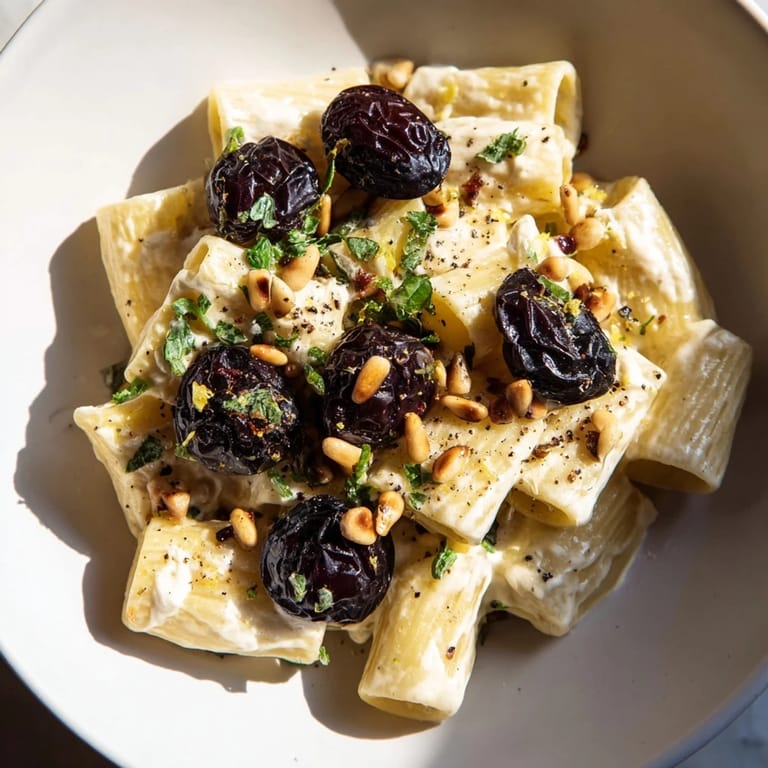
- Dried short pasta: Shapes like penne or rigatoni catch the ricotta and trap little pockets of roasted grape, making every bite balanced.
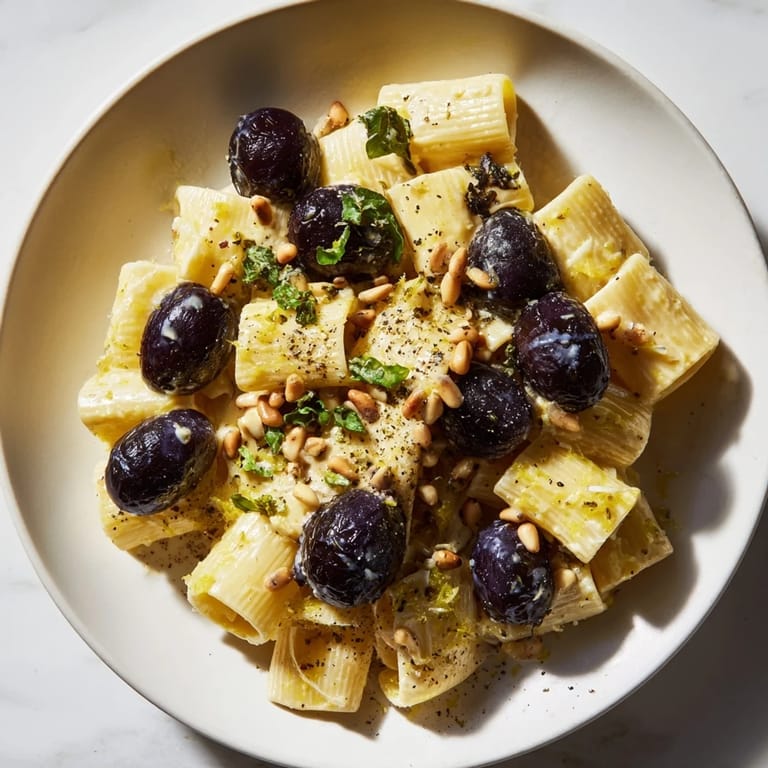
- Seedless red or black grapes: Choose firm grapes with tight skins, they hold their shape better under high heat and release just enough juice to coat the pasta.
- Fresh ricotta cheese: Use whole-milk ricotta if you can find it, the creaminess makes the sauce velvety without needing cream or butter.
- Lemon zest and juice: Brightness is essential here, it cuts through the richness and makes the roasted grapes taste even more complex.
- Fresh basil and parsley: Basil brings sweetness, parsley adds a clean herbal note, together they keep the dish from feeling one-dimensional.
- Toasted pine nuts: Optional but worth it, they add a buttery crunch that contrasts beautifully with the soft grapes and creamy ricotta.
Tired of Takeout? 🥡
Get 10 meals you can make faster than delivery arrives. Seriously.
One email. No spam. Unsubscribe anytime.
Instructions
- Roast the grapes:
- Spread them on parchment in a single layer, drizzle with olive oil, and season with salt and pepper. Roast at 220°C until they blister and start to collapse, shaking the pan halfway through so they caramelize evenly.
- Cook the pasta:
- Boil in well-salted water until al dente, then save half a cup of the starchy cooking water before draining. That water is what turns the ricotta into a silky sauce.
- Mix the ricotta base:
- Stir together ricotta, lemon zest, lemon juice, chopped basil, parsley, and a pinch of salt until smooth and creamy. Taste it now, it should be bright and well-seasoned on its own.
- Combine everything:
- Toss the hot drained pasta with the ricotta mixture, loosening it with reserved pasta water until it coats every piece. Gently fold in the roasted grapes and their pan juices, being careful not to crush them completely.
- Finish and serve:
- Drizzle with extra-virgin olive oil, scatter toasted pine nuts and fresh basil over the top, and finish with black pepper and Parmesan if you like. Serve immediately while the pasta is hot and the grapes are still warm.
 Save
Save I served this once on a weeknight when I was too tired to think, and my partner looked up from his plate and said it tasted like something you would order at a restaurant. That is the magic of roasting fruit, it elevates the ordinary into something memorable without any extra effort. It reminded me that good cooking is often about transforming a few simple things rather than piling on ingredients.
How to Choose the Right Grapes
Look for grapes that are firm and plump with tight skins, avoid any that are soft or starting to wrinkle. Red or black grapes work best because they have deeper flavor and hold up better under high heat than green varieties. If your grapes are very large, you can halve them before roasting, but I usually leave them whole because they shrink down beautifully and release more juice intact.
Making It Ahead
You can roast the grapes up to two days in advance and store them in the fridge with all their pan juices. The ricotta mixture also holds well for a day, just wait to add the lemon juice until right before mixing so it stays fresh and bright. When you are ready to eat, cook the pasta fresh and warm the grapes gently before tossing everything together, reheating pasta dishes never tastes quite the same.
Variations and Swaps
If you want a tangier flavor, swap the ricotta for fresh goat cheese and add an extra squeeze of lemon. For a heartier version, toss in some sauteed mushrooms or crispy pancetta along with the grapes. You can also use whole-wheat pasta or gluten-free shapes, just adjust the cooking time according to the package and keep an eye on the texture.
- Try swapping pine nuts for toasted walnuts or slivered almonds if that is what you have on hand.
- Add a handful of arugula or baby spinach at the end for a peppery green contrast.
- A splash of white wine in the roasting pan with the grapes adds acidity and depth.
 Save
Save This dish has become my go-to whenever I want something that feels special without spending hours in the kitchen. It proves that a little heat and good timing can turn something as humble as grapes into the star of the plate.
Common Questions
- → How do roasted grapes enhance the dish?
Roasting grapes caramelizes their natural sugars, intensifying sweetness and adding depth to the pasta’s flavor profile.
- → Can I substitute ricotta with another cheese?
Yes, goat cheese can be used for a tangier flavor while maintaining creaminess in the sauce.
- → What type of pasta works best here?
Short pasta like penne, rigatoni, or fusilli holds the sauce well and complements the roasted grapes and ricotta mixture.
- → Is it necessary to use pine nuts?
Pine nuts add a toasty crunch but are optional; the dish remains flavorful without them for nut-free preferences.
- → How can I make the sauce creamier if needed?
Reserved pasta water can be gradually added when mixing to create a smooth, creamy sauce consistency.
- → Which herbs are recommended for freshness?
Fresh basil and parsley provide bright herbal notes that balance the sweet and creamy components.