 Save
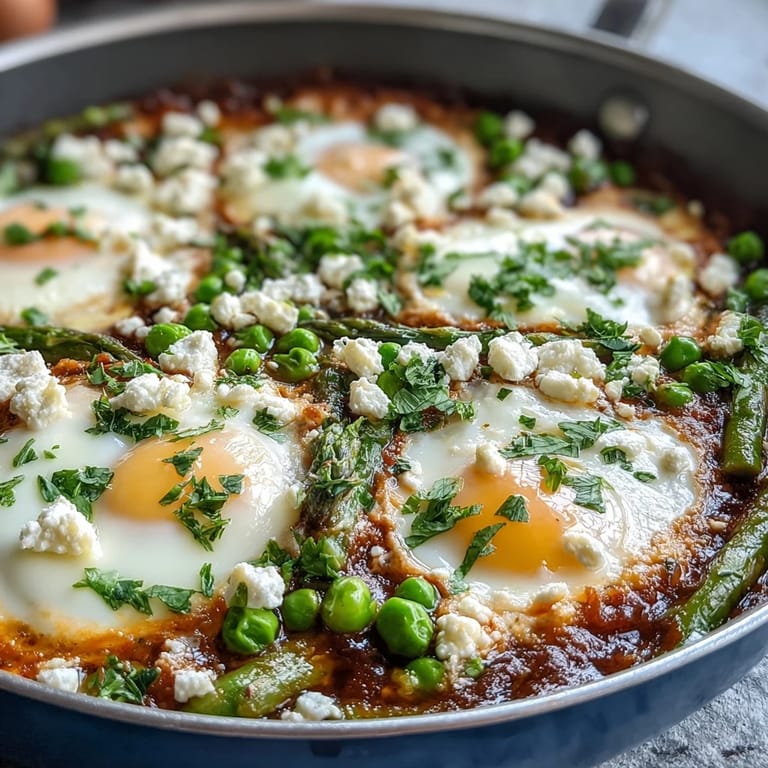
Save One soggy spring morning while flipping through a Middle Eastern cookbook, I discovered shakshuka could be more than just tomatoes and eggs. The rain tapped against my kitchen window as I imagined bright green peas and broad beans nestled in that fragrant sauce. I scribbled modifications in the margins, replacing the traditional bell peppers with spring vegetables from my weekly market haul. That improvisation became this vibrant green-flecked version that now signals the arrival of spring in my kitchen.
Last April, my friend Sasha visited after moving abroad, and I wanted to make something special without spending the entire evening in the kitchen. We opened a bottle of crisp white wine while this bubbled away on the stove, the scent of cumin and tomatoes filling the apartment. When I cracked those eggs into their little nests, Sasha gasped at how beautiful it looked, and we photographed it from every angle before diving in with chunks of crusty bread.
Ingredients
- Fresh or frozen peas and broad beans: The star ingredients that transform traditional shakshuka into a spring celebration, with fresh varieties offering slightly more texture and sweetness if you can find them.
- Asparagus: Adds a wonderful earthy undertone that complements the sweet peas perfectly, but make sure not to overcook them or they'll lose their delightful bite.
- Smoked paprika: This is my secret weapon that adds depth without heat, creating that authentic Middle Eastern warmth that makes people wonder what your secret ingredient might be.
- Feta cheese: The salty finish that balances all the sweetness from the vegetables, and I've learned that Bulgarian feta tends to be creamier and less overpowering than some other varieties.
Tired of Takeout? 🥡
Get 10 meals you can make faster than delivery arrives. Seriously.
One email. No spam. Unsubscribe anytime.
Instructions
- Prep your spring vegetables:
- Blanch those beautiful peas and broad beans just until they brighten in color, then plunge them into ice water to preserve their vibrant green. Youll thank yourself for this extra step when you see how it makes the final dish pop with color.
- Build your flavor base:
- Let the onions and peppers slowly soften until they release their sweetness, then watch how the spices bloom in the oil, filling your kitchen with their warm fragrance. This foundational layer is where all the magic begins.
- Create the tomato sauce:
- The sauce will gradually transform from bright red to a deeper, more complex color as it simmers. You want it thick enough to cradle the eggs but not so reduced that it becomes paste-like.
- Add the spring greens:
- When you fold in those vibrant vegetables, the contrast against the red sauce is absolutely stunning. Treat them gently so they maintain their shape and fresh bite.
- Nestle in the eggs:
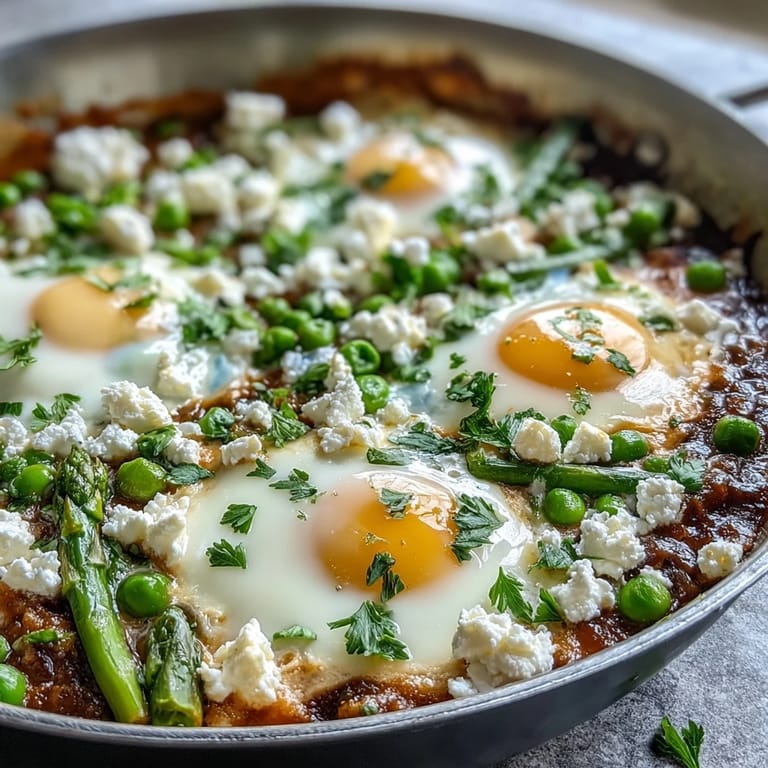
- Use the back of a spoon to create four perfect little wells for your eggs to rest in. The whites should seep slightly into the sauce while the yolks remain proudly perched on top.
- The perfect finish:
- Watch closely as the eggs cook with the lid on, looking for that perfect moment when whites are set but yolks remain gloriously runny. A minute can make all the difference between perfection and disappointment.
 Save
Save The first time I served this at our neighborhood potluck, three people asked for the recipe before they'd even finished their plates. My neighbor Maria, whose Palestinian grandmother made traditional shakshuka every Sunday, told me she appreciated this fresh take that honored the original while celebrating seasonal produce. That moment of cultural connection through food innovation made me realize recipes are living things that grow and adapt with us.
Serving Suggestions
This dish practically begs for good bread to sop up the sauce, but Ive found it also pairs beautifully with lemony couscous or quinoa if youre looking for something more substantial. One evening when I had leftover shakshuka but no bread, I spooned it over steamed rice and discovered it was equally delicious, proving its versatility beyond brunch.
Storage Tips
The vegetable base keeps beautifully for up to three days in the refrigerator, actually improving in flavor as the ingredients meld together. Ive learned to make a double batch of just the tomato-vegetable mixture, storing half without eggs for quick weeknight dinners where I can crack fresh eggs into the reheated sauce and have dinner ready in minutes.
Customization Ideas
This recipe welcomes adaptation based on whatever looks fresh at your market or what needs using up in your crisper drawer. Ive made autumn versions with butternut squash and kale, summer versions with zucchini and corn, and even winter versions with roasted red peppers and spinach.
- For meat-eaters, add small chunks of chorizo or merguez sausage when sautéing the onions for a heartier version that my husband adores.
- Replace the feta with soft goats cheese for a creamier, tangier finish that melts beautifully into the hot sauce.
- Stir in a spoonful of harissa paste along with the spices if you prefer a fiery kick that wakes up your taste buds.
 Save
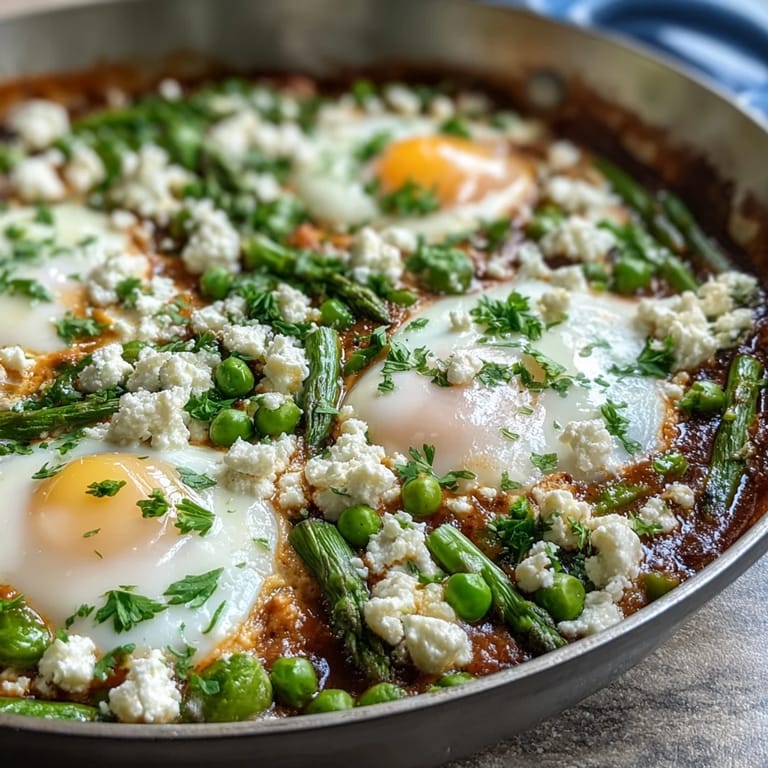
Save This bright, verdant shakshuka has become my signature contribution to spring gatherings, a dish that feels both special and somehow effortless. May it bring the same joy to your table as you gather around its colorful bounty, spoons poised to break into those perfect runny yolks.
Common Questions
- → Can I use frozen peas and broad beans?
Yes, frozen vegetables work perfectly in this dish. Blanch them briefly in boiling water before adding to the tomato sauce to ensure they cook through evenly with the asparagus.
- → How do I know when the eggs are done?
The whites should be fully set and opaque while the yolks remain slightly runny when you gently jiggle the pan. This typically takes 7-10 minutes over low heat with the lid on.
- → What can I serve with this shakshuka?
Crusty bread, flatbreads, or pita are traditional accompaniments for scooping up the sauce. A crisp white wine or sparkling water with lemon complements the spiced tomato flavors beautifully.
- → Can I make this ahead?
The vegetable base can be prepared a day in advance and refrigerated. Reheat gently before adding eggs—the fresher they're cooked, the better the texture and presentation.
- → How can I make this vegan?
Omit the eggs and feta cheese. Add chickpeas or white beans during the simmering stage for protein, and finish with toasted nuts or seeds instead of cheese for texture.
- → Can I add other vegetables?
Spring vegetables like spinach, artichokes, or zucchini work well. Adjust cooking times accordingly—leafy greens need just minutes, while root vegetables require longer simmering.