 Save
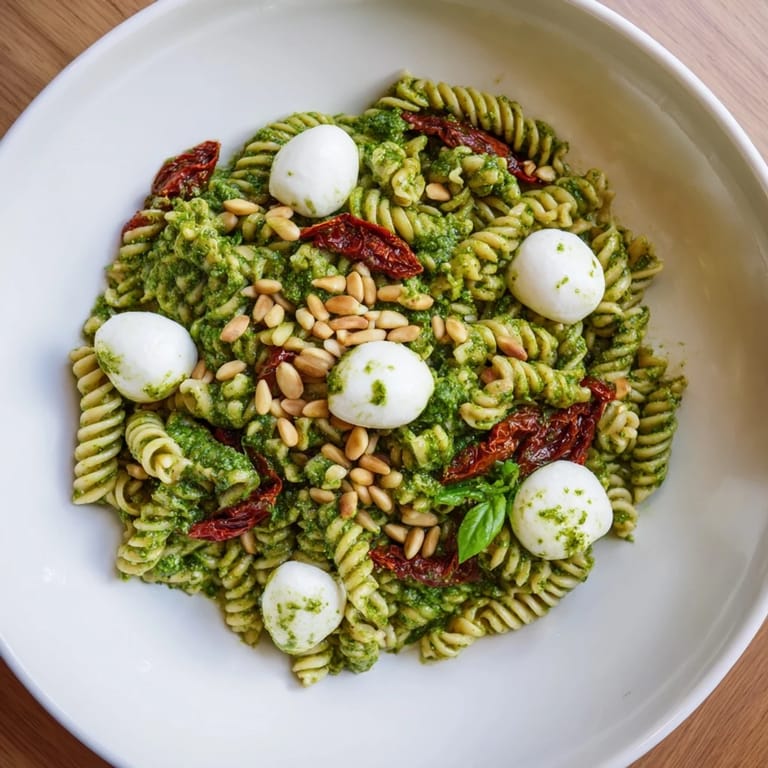
Save There's something about summer that makes you crave bright, uncomplicated food, and this pesto pasta salad arrived in my kitchen on one of those sweltering afternoons when turning on the oven felt like a betrayal of the season. My neighbor had just brought over a bunch of basil she'd grown—so much that it was practically falling out of her hands—and I knew immediately what needed to happen. The salad came together with barely any fuss, and by evening, it was empty. I've made it countless times since, always with that same feeling of lightness and satisfaction.
I brought this to a Fourth of July picnic years ago, and I watched people go back for seconds without even thinking about it—no one left any behind. That's when I realized this wasn't just a side dish; it was the kind of thing people actually want to eat on a hot day, something that feels substantial without being heavy.
Ingredients
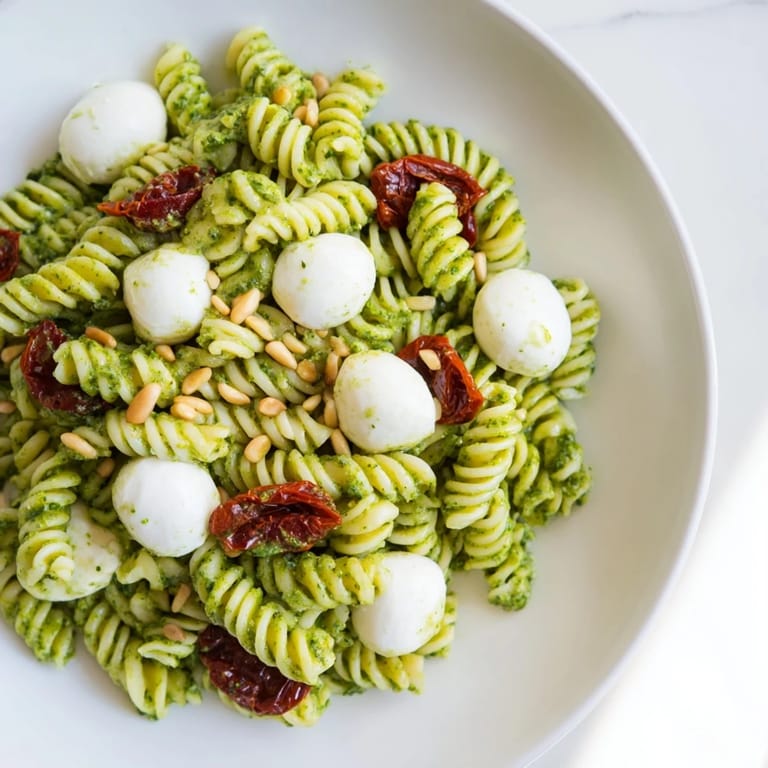
- Short pasta (fusilli, penne, or farfalle), 350 g: The shapes catch pesto and little bursts of sun-dried tomato in every bite; avoid long pasta, which slides off your fork.
- Basil pesto, 100 g: Store-bought works perfectly here, but if you make your own, go easy on the garlic—it gets sharper as the salad sits.
- Sun-dried tomatoes, 100 g, drained and sliced: They add a chewy sweetness that balances the basil; buy them in oil if you can.
- Fresh mozzarella balls, 200 g: Bocconcini is ideal because they stay whole and creamy; if you use regular mozzarella, cut it small so it doesn't overwhelm.
- Pine nuts, 40 g, lightly toasted: Toasting them yourself brings out a nutty depth that makes all the difference; skip this step and you'll taste the absence.
- Fresh baby spinach, 50 g (optional): It wilts slightly from the warm pasta, adding earthiness without changing the salad's light character.
- Extra virgin olive oil, 2 tbsp: This is where quality matters; a good oil carries the whole dish forward.
- Lemon zest and salt and pepper: The zest brightens everything just before serving; taste as you go because pesto is already salty.
Tired of Takeout? 🥡
Get 10 meals you can make faster than delivery arrives. Seriously.
One email. No spam. Unsubscribe anytime.
Instructions
- Cook the pasta until it's just shy of soft:
- Drop it into a pot of salted boiling water and pull it out a minute or two before the package says it's done. Drain it quickly, then run cold water over it while you shake the colander—you want it cool enough to handle, not ice cold. This matters because warm pasta drinks up the pesto differently than cold pasta does.
- Coat everything in pesto and oil:
- In a big bowl, toss the pasta with the pesto and olive oil until every strand glistens. This is the moment the salad comes alive; don't skip the coating step thinking you'll add more later.
- Add the vegetables and cheese gently:
- Fold in the sun-dried tomatoes, mozzarella, pine nuts, and spinach with a light hand. You want them distributed, not crushed into the pasta.
- Season and taste, then adjust:
- Scatter the lemon zest over everything and add salt and pepper bit by bit, tasting after each addition. Remember that the pesto is already salted, so you might need less than you think.
- Chill if you have time, serve right away if you don't:
- An hour in the refrigerator lets the flavors settle and get better acquainted, but this salad is good the moment it comes together.
 Save
Save There was a moment during a lazy Sunday lunch when my partner took a bite, closed his eyes, and said it tasted like summer itself. That's the thing about simple food done well—it stops being a recipe and becomes a memory you eat.
The Pine Nut Difference
I used to skip toasting the pine nuts, thinking the extra step was unnecessary, but the first time I actually toasted them, I understood. They go from bland little grains to something with real presence and warmth. If you can't find pine nuts or they're too expensive, walnuts or almonds work, but toast them well—that warmth is what you're after, not just a crunchy texture.
Playing with Flavors
This is a salad that welcomes small changes without falling apart. Some people add arugula or fresh basil at the last moment, which adds a peppery note that's lovely. Others have thrown in roasted red peppers or even a handful of cherry tomatoes. The core—pasta, pesto, mozzarella—holds everything together, so you have room to play around if something calls to you.
Make Ahead and Storage
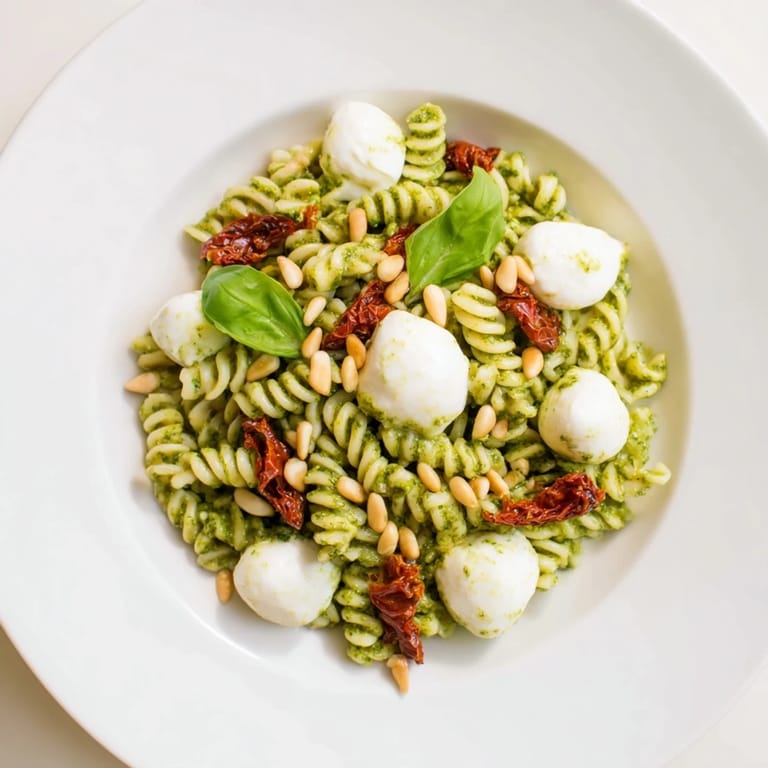
This salad genuinely improves after an hour or two in the refrigerator, when the flavors have time to mingle and soften into each other. If you're making it for a gathering, assemble it the morning of and keep it cold. It stays fresh for a couple of days, though the pasta will absorb more oil and pesto over time—which some people love and others prefer to freshen with a little extra pesto and olive oil before serving.
- If you're transporting it, keep the lemon zest separate and add it just before serving so the brightness doesn't fade.
- Store any leftovers in an airtight container and give it a gentle stir before eating again.
- On the second day, it might need a small drizzle more olive oil to feel fresh.
 Save
Save This salad is proof that you don't need complicated techniques or endless ingredients to make something memorable. It's the kind of thing you come back to again and again, each time grateful for its simplicity.
Common Questions
- → What pasta types work best for this salad?
Short pasta shapes like fusilli, penne, or farfalle hold the sauce and ingredients well, providing ideal texture and bite.
- → Can I use homemade pesto for this dish?
Absolutely, homemade basil pesto enhances freshness and can be adjusted to personal taste, balancing garlic, nuts, and cheese.
- → How can I make this salad nut-free?
Replace pine nuts with toasted walnuts or almonds, or omit nuts altogether to suit dietary restrictions.
- → Is it better served chilled or at room temperature?
Both work well; chilling for about an hour melds flavors and offers a refreshing experience, while room temperature preserves pesto aroma.
- → What wine pairs complement the salad?
Crisp white wines like Sauvignon Blanc or Pinot Grigio highlight the freshness and balance the richness of mozzarella and pesto.