 Save
Save There's something about the smell of lemon and capers hitting hot butter that instantly transports me back to a Tuesday night when I needed dinner ready before my sister's flight story got too elaborate at the table. I'd bought chicken on impulse, found these tiny brined capers lurking in the pantry, and suddenly had thirty minutes to pull off something that felt like actual cooking. The result was so bright and tangy it made everyone slow down mid-sentence to taste what was on their fork.
My neighbor once asked what smelled so good wafting over the fence, and when I served her this the next week, she admitted she'd been standing at her kitchen window like a creep, hoping for an invitation. Now it's become the dish I make when I want to feel like I have my life together but also want to spend minimal time stressed about timing.
Ingredients
- Chicken breasts: Two large ones that you'll butterfly horizontally—this trick alone changes everything because thin cutlets cook through before the edges toughen.
- Salt and black pepper: Season the chicken generously; this is where most home cooks hold back and then wonder why their food tastes flat.
- All-purpose flour: A light dredge, not a thick coating; shake off the excess or you'll get a pasty layer instead of a golden crust.
- Olive oil and butter: The oil gets you heat, the butter brings flavor; together they're what makes the chicken sing.
- Garlic: Three cloves minced fine, because chunky garlic in a delicate sauce feels wrong somehow.
- Dry white wine: Use something you'd actually drink, or swap it for chicken broth if wine feels like too much.
- Fresh lemon juice: Bottled juice changes the entire character of this dish; squeeze it yourself and taste the difference immediately.
- Capers: Rinse them to cut the brine, or don't if you like things sharper; they're what makes this dish memorable and not just another lemon chicken.
- Chicken broth: Low-sodium matters here because you're building the sauce and don't want it to turn salty halfway through simmering.
- Unsalted butter: Two tablespoons stirred in at the end transforms the sauce from thin to glossy and rich.
- Fresh parsley: Chop it right before serving so it stays bright green instead of turning dark and tired-looking.
- Pasta: Spaghetti or linguine; thin noodles work better than thick ones for clinging to this delicate sauce.
- Lemon slices and extra parsley: For garnish if you're feeling the part; they're optional but they make people think you're fancier than you actually are.
Tired of Takeout? 🥡
Get 10 meals you can make faster than delivery arrives. Seriously.
One email. No spam. Unsubscribe anytime.
Instructions
- Start the pasta first:
- Boil a big pot of salted water while you're prepping everything else. Cook the pasta to al dente—that moment when it still has a tiny bit of resistance—because it'll finish cooking slightly when you toss it with the hot sauce.
- Butterfly and season the chicken:
- Lay a breast on the cutting board and slice it in half horizontally to create two thin cutlets from each breast. Season both sides generously and coat lightly in flour, shaking off the excess so it's not clumpy.
- Sear the chicken until golden:
- Heat olive oil and butter in a large skillet over medium-high heat. Once it's shimmering, add the chicken cutlets and don't touch them for 3 to 4 minutes; let them develop a proper golden crust before flipping. Cook the other side until cooked through, then move them to a plate and cover loosely with foil.
- Build the sauce with garlic:
- In that same skillet with all the flavorful browned bits still there, add minced garlic and let it sizzle for just 30 seconds; any longer and it turns bitter.
- Deglaze with wine:
- Pour in the white wine and scrape the bottom of the pan with a wooden spoon to loosen all those crusty bits of chicken and flavor. Let it bubble away for a minute, then add the lemon juice, capers, and broth.
- Simmer until it reduces slightly:
- Let everything bubble gently for 2 to 3 minutes so the flavors meld and the sauce concentrates a bit.
- Finish the sauce with butter:
- Lower the heat and whisk in the remaining butter until it melts completely and the sauce turns silky. Return the chicken to the skillet and spoon the sauce over top so it soaks in.
- Combine with pasta:
- Add your drained pasta to the skillet and toss everything gently together. If it feels dry, pour in some of that reserved pasta water a splash at a time until the sauce coats everything.
- Plate and serve:
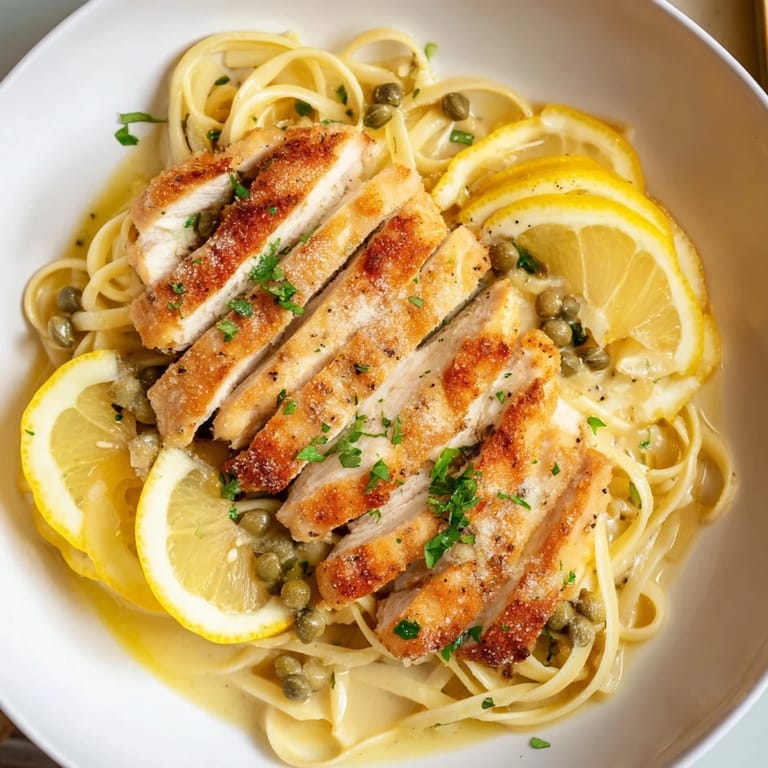
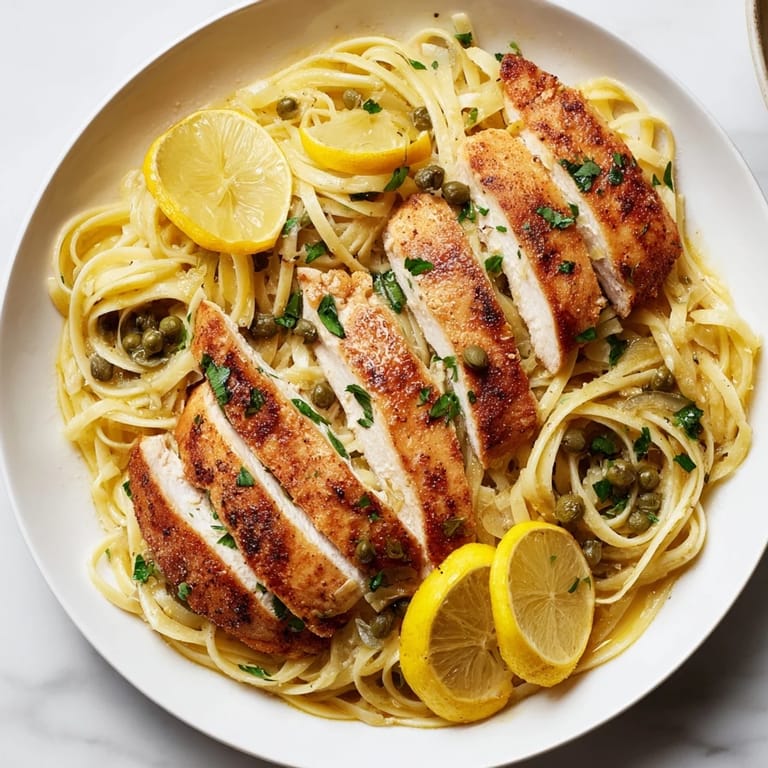
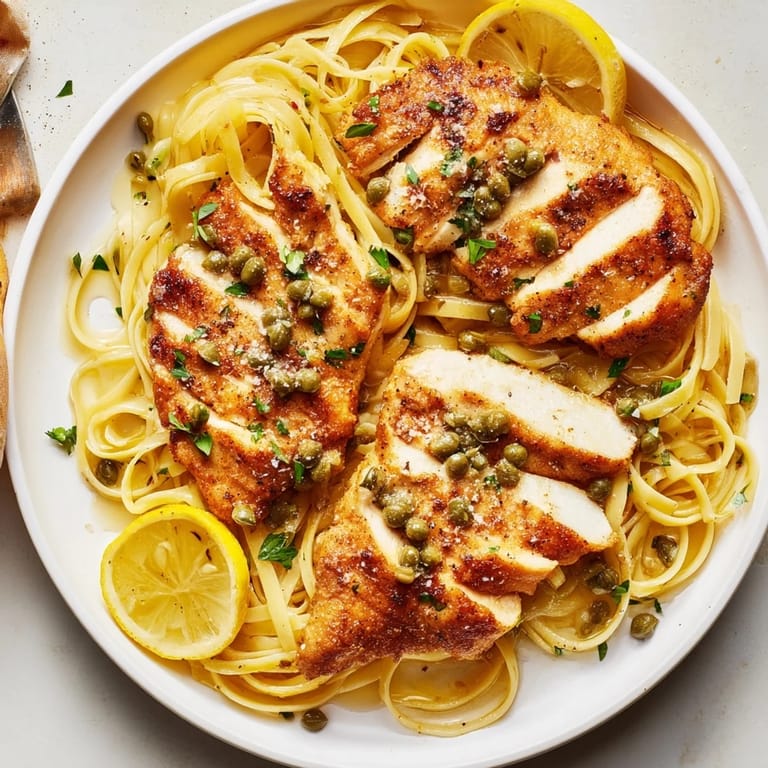
- Mound pasta on a plate with a chicken cutlet leaning against it, spoon extra sauce over the top, and garnish with parsley and a lemon slice if you're feeling it.
 Save
Save I made this dish for my mom once when she was recovering from surgery and didn't want to eat anything, and somehow the brightness of it made her actually finish her plate. That's when I realized this wasn't just a recipe that worked; it was one that could shift someone's mood just by tasting it.
Why This Dish Deserves a Spot in Your Weeknight Rotation
The beauty of chicken piccata is that it feels restaurant-quality but doesn't require restaurant-level stress or time. Every component comes together in one skillet without a pile of dirty dishes waiting for you after dinner. It's the kind of dish that makes you feel capable in the kitchen, which is half the battle on a night when you're too tired to think clearly.
The Science Behind the Silky Sauce
The magic happens when butter emulsifies with the acidic lemon juice and the starchy pasta water, creating a sauce that clings to noodles instead of pooling at the bottom of the bowl. This is why whisking the butter in at the end—when the heat is lower—matters; high heat breaks the emulsion and you end up with separated, greasy sauce. Once you understand this one technique, you'll find yourself using it in other dishes because it's genuinely transformative.
Small Variations That Open New Doors
Some nights I add a splash of cream at the very end for richness, or toss in fresh dill instead of parsley when I'm feeling it. Other times I've added sliced mushrooms to the pan after the chicken comes out, or a handful of spinach that wilts right into the pasta. The skeleton of this recipe is strong enough to handle gentle adjustments without falling apart.
- Try angel hair pasta if you want something lighter and more delicate than spaghetti.
- Fresh dill or basil work beautifully if parsley feels boring to you.
- A gluten-free flour blend works perfectly for the dredge if you need it, and the outcome is identical.
 Save
Save This is the dish I come back to when I want to cook something that feels special without making it complicated. It's proof that good food doesn't have to be precious.
Common Questions
- → What type of pasta works best for this dish?
Spaghetti or linguine are ideal to hold the light, tangy sauce and complement the tender chicken slices.
- → Can I substitute wine in the sauce?
Yes, dry white wine can be replaced with low-sodium chicken broth for a similar depth of flavor without alcohol.
- → How do I ensure chicken remains tender?
Slicing the chicken breasts thinly and sautéing them quickly over medium-high heat helps maintain juiciness and tenderness.
- → What is the purpose of capers in this preparation?
Capers add a briny, tangy burst that balances the lemon’s brightness and enriches the overall flavor profile.
- → Can I use gluten-free pasta for this dish?
Absolutely, substituting with gluten-free pasta and flour works well to accommodate dietary needs without sacrificing texture.