 Save
Save There's something about butter lettuce that made me rethink lunch entirely. I was standing in the produce section one afternoon, holding a head of it, when I realized how perfectly those tender leaves could cradle a simple tuna salad instead of sitting on a plate. That small shift—from fork-and-plate to hand-held wraps—turned a weekday lunch into something that felt like a treat. The first time I assembled these, my kitchen smelled like lemon and fresh herbs, and I knew I'd stumbled onto something I'd keep making.
I made these for my sister who'd just started a new diet, and she looked genuinely surprised when I set them down in front of her. She expected something boring, something that tasted like punishment. Instead, she found herself folding lettuce leaves and grinning, asking for the recipe before she'd even finished eating. That moment taught me that food doesn't have to be complicated to feel special.
Ingredients
- Canned tuna (2 cans, 5 oz each, drained): The backbone of this whole thing—buy the good stuff packed in water and squeeze it dry with your hands or a paper towel, otherwise you'll end up with a soupy mess.
- Mayonnaise (1/4 cup): Binds everything together with richness; this is where the creaminess lives, so don't skip it or substitute it without thinking.
- Dijon mustard (1 tablespoon): A small amount brings sharpness and depth that keeps the salad from tasting flat.
- Celery (1 stalk, finely diced): The crunch factor that makes each bite interesting, and it keeps the salad from feeling mushy.
- Red onion (1/4 small, finely diced): Adds a whisper of bite and color without overpowering the delicate tuna.
- Fresh parsley (2 tablespoons, chopped): Brightens everything with a fresh, herbal note that makes it taste homemade.
- Lemon juice (1 tablespoon): The secret ingredient that wakes everything up and keeps the flavors from tasting canned.
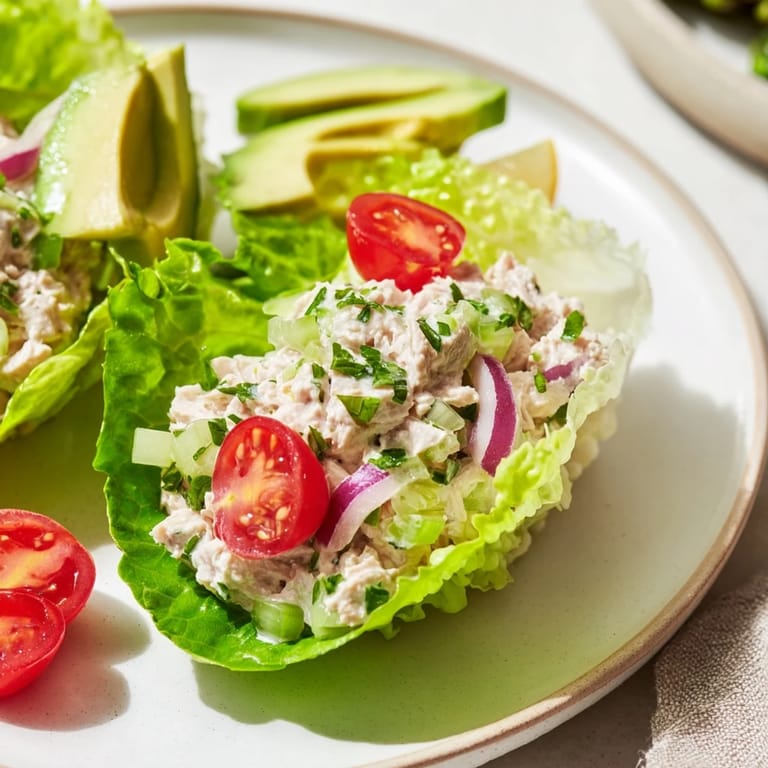
- Butter lettuce leaves (1 head, separated and washed): Your edible vessel—choose leaves that are sturdy enough to hold filling but tender enough to fold without cracking.
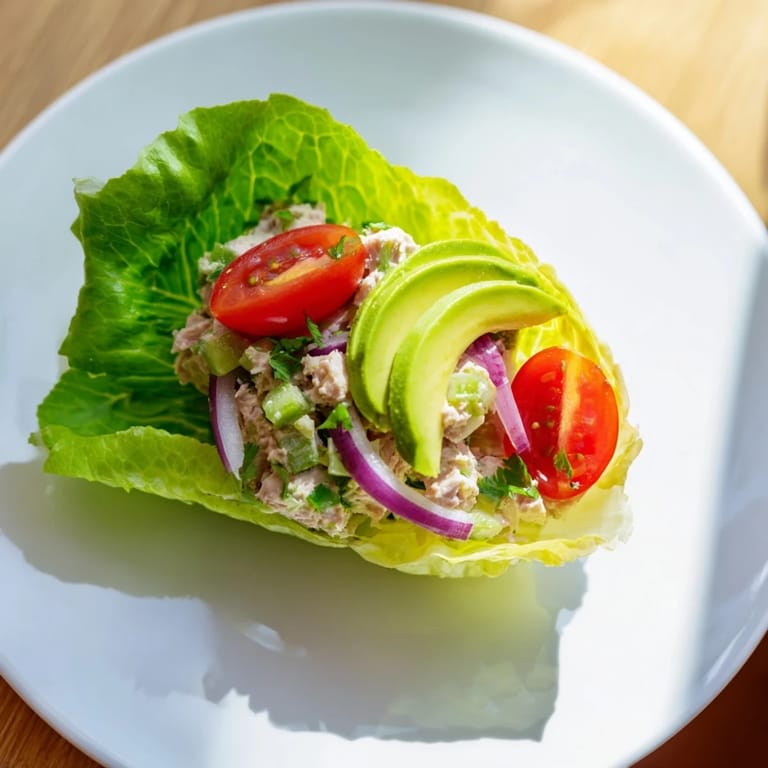
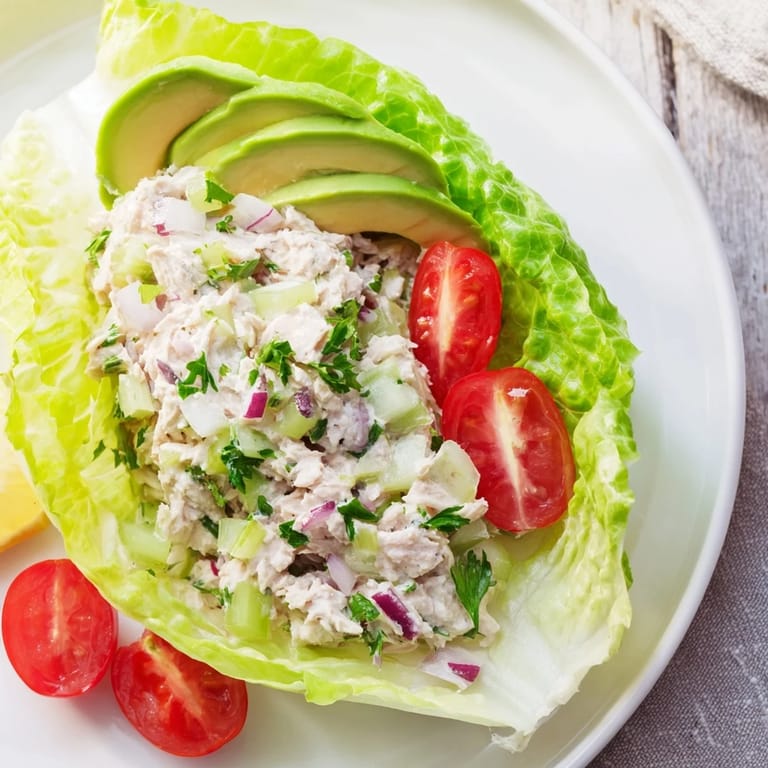
- Optional toppings: Avocado, cherry tomatoes, or radishes add layers of texture and color that transform the wraps into something almost restaurant-worthy.
Tired of Takeout? 🥡
Get 10 meals you can make faster than delivery arrives. Seriously.
One email. No spam. Unsubscribe anytime.
Instructions
- Build the base:
- In a medium bowl, combine your drained tuna, mayonnaise, Dijon mustard, diced celery, red onion, parsley, and lemon juice. Mix everything together with a fork or spoon until it looks creamy and cohesive, then taste it and adjust the salt and pepper until it tastes right to you.
- Prepare your lettuce:
- Peel off the butter lettuce leaves carefully, rinse them gently, and pat them dry with a paper towel. Arrange them on a serving platter, cradled slightly so they're ready to receive the filling.
- Fill and assemble:
- Spoon the tuna salad into the center of each lettuce leaf, then top with avocado slices, halved cherry tomatoes, or thin radish slices if you're using them. Fold the lettuce leaves around the filling like you're wrapping a small gift, and serve right away while the lettuce is still crisp.
 Save
Save My neighbor asked me how I stayed so hungry for lunch, and I realized it was because eating these wraps felt like taking a break rather than rushing through a meal. The lettuce stays crisp, the tuna stays cool, and somehow sitting with something you made yourself—even if it took only minutes—changes how it tastes.
Why This Becomes Your Go-To Lunch
Once you've made these a few times, you'll stop thinking of them as a diet food or a light meal, and start seeing them as your answer to "what should I eat?" on busy days. They're the kind of dish that rewards small improvements—a better quality of tuna, fresher herbs, a squeeze of lime instead of lemon—without ever becoming complicated. The beauty is in the simplicity, and the satisfaction is immediate.
Variations to Keep It Interesting
I've found that this base tuna salad is flexible enough to play with different accents depending on what I'm in the mood for. Sometimes I swap half the mayo for Greek yogurt to lighten it, or I add a pinch of cayenne for heat. Other times I fold in capers or chopped dill pickle for brine-forward brightness, or add a small handful of sunflower seeds for crunch. The formula stays the same, but small changes keep it from ever feeling repetitive.
Serving Ideas and Pairings
These wraps work beautifully on their own, but they also shine when you think about what surrounds them. A cold glass of white wine, a simple side salad, or a handful of baby carrots turn it into a complete meal. I've also served them at casual outdoor gatherings where people can assemble their own wraps and choose their own toppings, which always feels more interactive and friendly than plating up individual servings.
- Pair with crisp Sauvignon Blanc or a light pilsner beer if you want a beverage match.
- Serve alongside sliced cucumber, carrot sticks, or a simple green salad to round out the meal.
- Make it a build-your-own-wrap situation by setting ingredients out separately and letting guests customize their own.
 Save
Save These wraps taught me that the best recipes are the ones you reach for without thinking, the ones that taste good enough to feel like self-care but simple enough to make on a Tuesday afternoon. That's all this needs to be.
Common Questions
- → What is the best type of tuna to use?
Canned tuna in water is recommended for a light and fresh flavor, but quality packed tuna ensures the best texture.
- → Can I substitute mayonnaise for a lighter option?
Yes, Greek yogurt can replace mayonnaise for a lighter, tangier taste without sacrificing creaminess.
- → How do I prepare the lettuce for wraps?
Use butter lettuce or Bibb leaves, gently separated and washed, to create tender, sturdy wraps ideal for holding the tuna filling.
- → What toppings enhance the flavors best?
Adding avocado slices, cherry tomatoes, or radishes brings additional freshness and texture to complement the tuna mix.
- → Is this suitable for low-carb diets?
Yes, using lettuce leaves instead of bread makes this an excellent low-carb, gluten-free meal option.