 Save
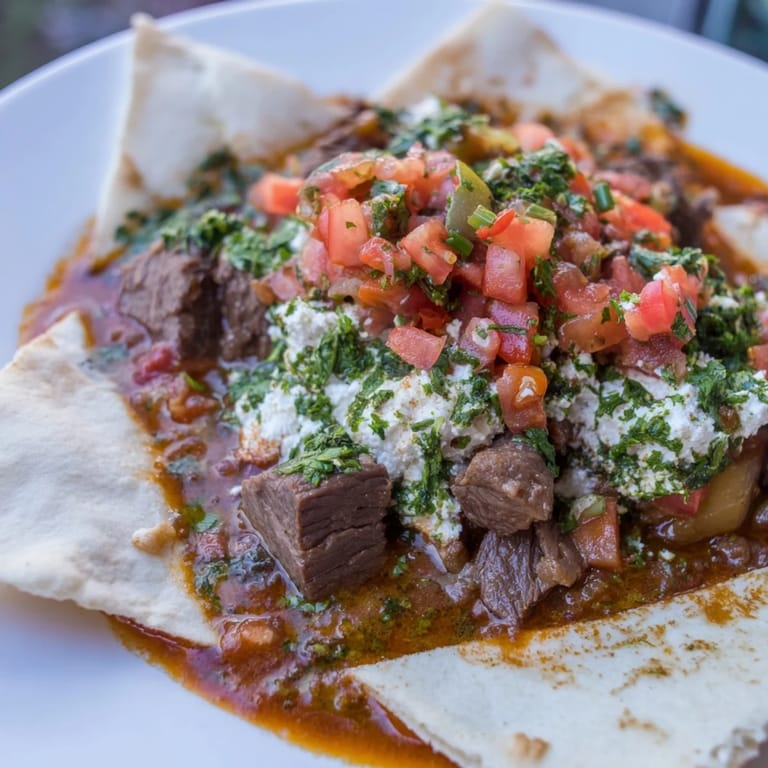
Save The first time I tasted Saltah, I was sitting in a crowded kitchen in Sana'a with steam rising from a communal pot, and the whole room smelled like cumin and something floral I couldn't name. My host's grandmother was whisking something furiously in a bowl, creating this ethereal foam, and when she spooned it onto my bowl of stew-soaked bread, I understood why this dish had survived centuries of Yemeni cooking. It wasn't fancy or fussy—just honest, layered comfort that built flavor with every spoonful.
I made this for my roommate on a cold Thursday when she was exhausted from work, and watching her face light up as she mixed those fragrant layers together reminded me that food doesn't need to be complicated to be memorable. She asked for the recipe immediately, and now when she makes it, she texts me photos of her hulbah foam like she's created something magical—which, honestly, she has.
Ingredients
- Beef or lamb (500 g, cubed): The meat is your foundation—choose pieces with a little marbling because they'll become impossibly tender after an hour in the broth, and that tenderness is non-negotiable.
- Vegetable oil (2 tbsp): Keep it neutral so the spices can shine.
- Onion and garlic: These are your aromatic base; don't rush the onions, let them turn golden and sweet.
- Tomatoes (2 medium, chopped): Fresh tomatoes give you brightness; canned works too but add them halfway through cooking so they don't disappear.
- Green chili (optional but encouraged): Even mild green chilies add a whisper of heat and complexity that rounds everything out.
- Potato and carrot: They soften into the stew and add body; cut them smaller than the meat so they cook at the same pace.
- Water or beef broth (4 cups): Broth deepens flavor dramatically, but water works if that's what you have on hand.
- Cumin, coriander, black pepper, turmeric, ground fenugreek (the spice blend): This isn't a guess—measure carefully because these spices are the soul of Saltah, each one playing a distinct note.
- Ground fenugreek seeds (2 tbsp for hulbah): This is the star of the topping; don't skip it or substitute it, because nothing else creates that particular floral, slightly sweet foam.
- Yemeni flatbread (malawah or lahoh): If you can find them, use them; if not, pita works, though it won't have quite the same tender chew.
Tired of Takeout? 🥡
Get 10 meals you can make faster than delivery arrives. Seriously.
One email. No spam. Unsubscribe anytime.
Instructions
- Build Your Flavor Base:
- Heat oil in a large pot and let the onions turn golden and caramelized—this takes about 5 minutes and is worth not rushing. Add garlic and chili, then brown the meat on all sides until it's got a deep crust; don't crowd the pot or the meat will steam instead of sear.
- Layer In the Spices and Vegetables:
- Stir in tomatoes, potato, carrot, and all your spices, cooking for about 5 minutes so the spices toast slightly and release their essential oils. You'll smell everything shift from raw to alive at this moment.
- Build the Stew:
- Pour in your broth, bring it to a hard boil, then immediately reduce heat to low and cover the pot. Simmer gently for 1 to 1.5 hours, until the meat falls apart with a spoon and the vegetables have surrendered completely to the broth.
- Whisk the Hulbah:
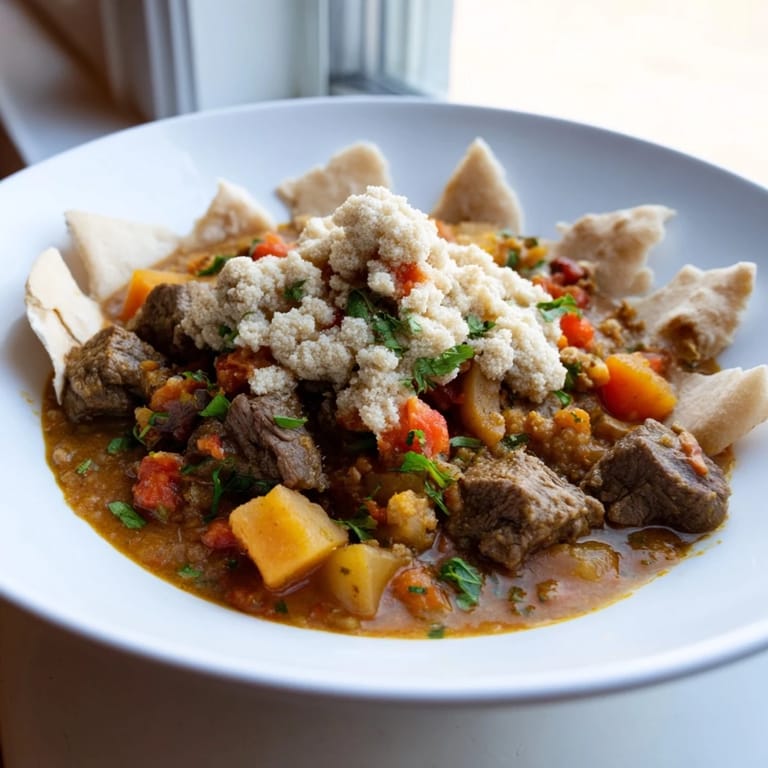
- While the stew simmers, soak ground fenugreek in cold water for an hour, then drain thoroughly. This is the secret: whisk or beat it vigorously with a fork until it becomes light and foamy, almost cloud-like—this takes patience but creates the texture that makes Saltah special.
- Finish the Hulbah:
- Fold fresh tomato, cilantro, chili, lemon juice, and salt into your fenugreek foam gently so you don't deflate all that aeration you just created.
- Assemble in Bowls:
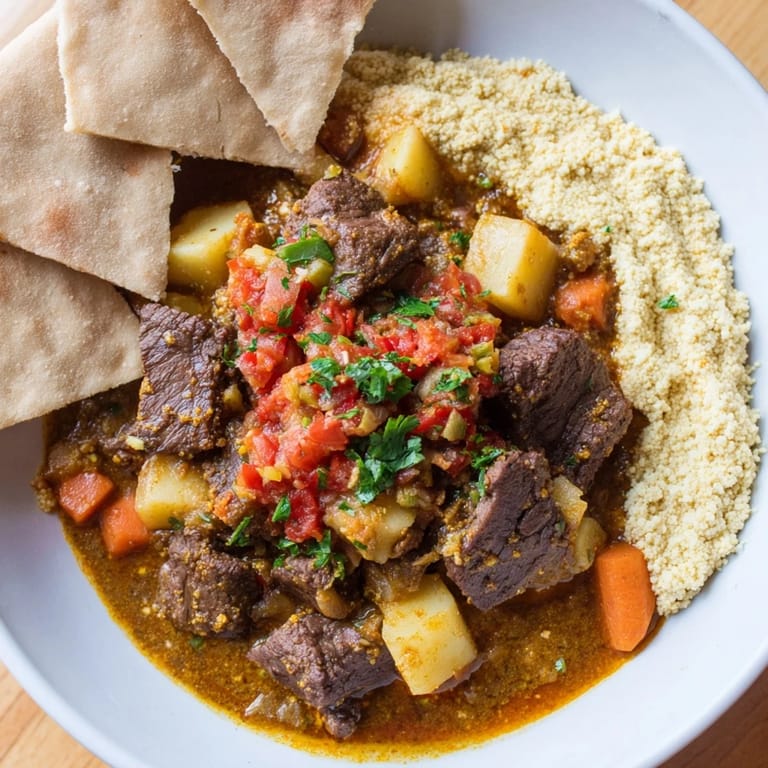
- Tear your flatbread into pieces and distribute among serving bowls, then ladle the hot stew over top so the bread soaks up the broth but isn't completely submerged. Crown each bowl with a generous spoonful of hulbah foam.
- Serve and Mix:
- Bring everything to the table while it's steaming hot; let people stir their own bowls so each spoonful captures bread, stew, and foam together.
 Save
Save I'll never forget my friend's grandfather tasting my version and saying simply, 'You understand this dish,' which meant more to me than any compliment about my cooking skills. That's when Saltah stopped being a recipe I was following and became a way of saying I was thinking of someone while I cooked.
About Fenugreek and Its Magic
Fenugreek seeds have this subtle sweetness and earthiness that's nearly impossible to describe until you taste it foamed into hulbah, and then suddenly you understand why this topping has been central to Yemeni cooking for so long. The flavor is floral but savory, almost maple-like in its complexity, and it bridges the gap between the rich, spiced stew and the tender bread. I learned to respect fenugreek after my first attempt without it, when the Saltah tasted fine but felt incomplete—like a song missing its middle note.
Building Layers and Texture
What makes Saltah different from any other meat stew is the intentional contrast between soft bread that's been kissed by hot broth, tender vegetables and meat, and that ethereal hulbah foam on top. Each spoonful should have all three elements, and if you assemble it properly, you're creating a meal where texture matters as much as flavor. I used to make Saltah without thinking about assembly, but once I started laying the bread first, spooning carefully, and adding hulbah as the final touch, everything changed.
Variations and Flexibility
A vegetarian version works beautifully if you skip the meat and add extra root vegetables, chickpeas, or lentils; the spices and hulbah topping are flavorful enough to carry the dish completely. Some families finish their Saltah with a drizzle of zhug, a bright green Yemeni herb sauce that adds sharpness and heat. This dish invites adaptation while staying true to itself, and I've learned that respect for tradition doesn't mean rigidity—it means understanding the principles and letting them guide you.
- For vegetarian versions, add chickpeas or lentils 30 minutes before the stew finishes to give them time to soften.
- If you can't find Yemeni flatbread, pita soaks up broth beautifully, though the texture will be slightly different.
- Zhug, if you make or find it, should be drizzled just before serving so its brightness isn't lost in the heat of the stew.
 Save
Save Every time I make Saltah, it tastes like gratitude and home, even though home is somewhere I've never lived. That's the particular magic of learning someone else's tradition and cooking it with care.
Common Questions
- → What cuts of meat work best for this dish?
Beef or lamb cut into 2 cm cubes are preferred for a tender and flavorful result after slow simmering.
- → How is the fenugreek foam prepared?
Ground fenugreek seeds are soaked in water for an hour, then whipped until light and fluffy, then mixed with tomato, cilantro, chili, lemon juice, and salt.
- → Can other breads be used instead of traditional flatbreads?
Yes, pita or naan breads are suitable substitutes if Yemeni flatbreads like malawah or lahoh are unavailable.
- → How long does the stew need to simmer?
The meat and vegetables should simmer for about 1 to 1.5 hours until tender and the flavors meld beautifully.
- → Is it possible to make a vegetarian version?
Yes, omit the meat and increase root vegetables or beans to maintain a hearty texture and taste.
- → What spices give this dish its distinctive flavor?
Key spices include cumin, coriander, turmeric, black pepper, and ground fenugreek, creating a warm, earthy blend.