 Save
Save The first time I arranged food in a circle instead of a line, something clicked. My friend Sarah had just bought this gorgeous marble platter, and I'd promised to bring something beautiful for her dinner party. I stood in my kitchen at dusk, fruit scattered everywhere, and realized I could make something that wasn't just tasty but actually stopped people mid-conversation. That's when the kaleidoscope idea took shape, and honestly, I've never looked back.
I made this platter for my cousin's engagement party last spring, and three different people asked me for the recipe before dessert was even served. What struck me was that it wasn't about fancy ingredients—it was about the patterns, the colors, the way the light hit the berries. Food doesn't always need to be complicated to feel special.
Ingredients
- Seedless red grapes (1 cup): These catch the light beautifully and hold their color through the whole gathering.
- Fresh strawberries (1 cup, hulled and halved): Buy them the day before if possible—they taste better when they've had time to settle.
- Kiwi (1 cup, peeled and sliced into wedges): The bright green is non-negotiable for the kaleidoscope effect.
- Pineapple (1 cup, cut into small wedges): A hint of tropical sweetness that balances the creamy cheeses.
- Blueberries (1 cup): These fill gaps and deepen the visual contrast without any extra effort.
- Orange (1 small, peeled and segmented): A subtle citrus note that ties the whole platter together.
- Aged cheddar (100 g, cut into triangular wedges): The slight sharpness prevents this from feeling too sweet.
- Manchego (100 g, sliced into thin wedges): This Spanish cheese has a smooth, nutty quality that surprised me the first time I tried it.
- Brie (100 g, cut into small wedges): The creamy texture creates a luxurious moment in every bite.
- Goat cheese (100 g, sliced into rounds): A tangy contrast that keeps your palate from getting tired.
- Fresh mint leaves (optional): One or two leaves tucked between segments adds color and aroma.
Tired of Takeout? 🥡
Get 10 meals you can make faster than delivery arrives. Seriously.
One email. No spam. Unsubscribe anytime.
Instructions
- Prep everything first:
- Wash and cut all fruits and cheeses into similar-sized wedges or rounds. This takes about fifteen minutes, but you'll be grateful when you're actually building the platter and not juggling a knife.
- Find your center:
- Place your platter on a stable surface and locate the middle—this is your anchor point. I usually use the largest piece of brie as my psychological center, even if it's not technically in the middle.
- Start the outer ring:
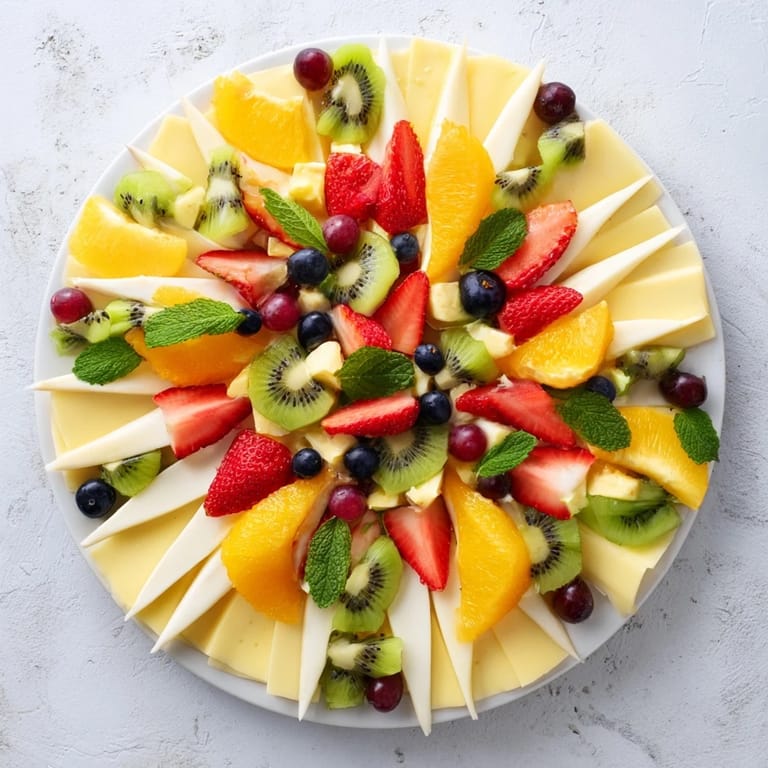
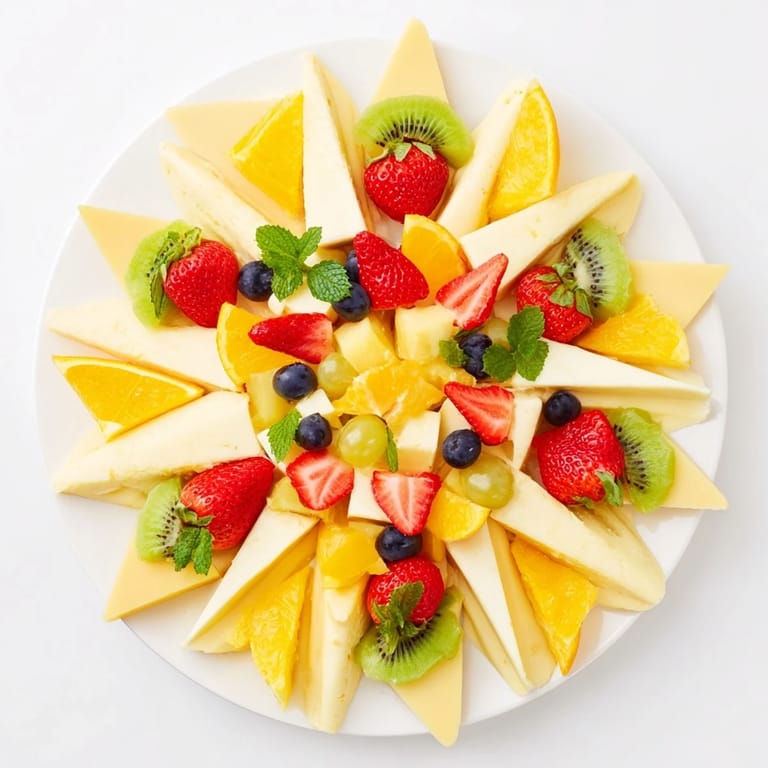
- Begin at the very edge with one type of fruit wedge—maybe strawberry—and angle each piece so it leans slightly toward the center. Alternate immediately with a cheese wedge, creating a pattern that your eye can follow.
- Build your circles:
- Work inward, repeating your pattern with different fruits and cheeses. The rhythm becomes almost meditative once you find your spacing. If a piece doesn't look right, it's perfectly fine to swap it out.
- Fill the gaps:
- Use blueberries and grapes like confetti to fill any awkward spaces. This is where you can be creative—there's no wrong way to fill a gap, only a less interesting way.
- Final touches:
- Tuck a few mint leaves between segments if the mood strikes. Step back, squint at it, and adjust anything that catches your eye as slightly off-balance.
 Save
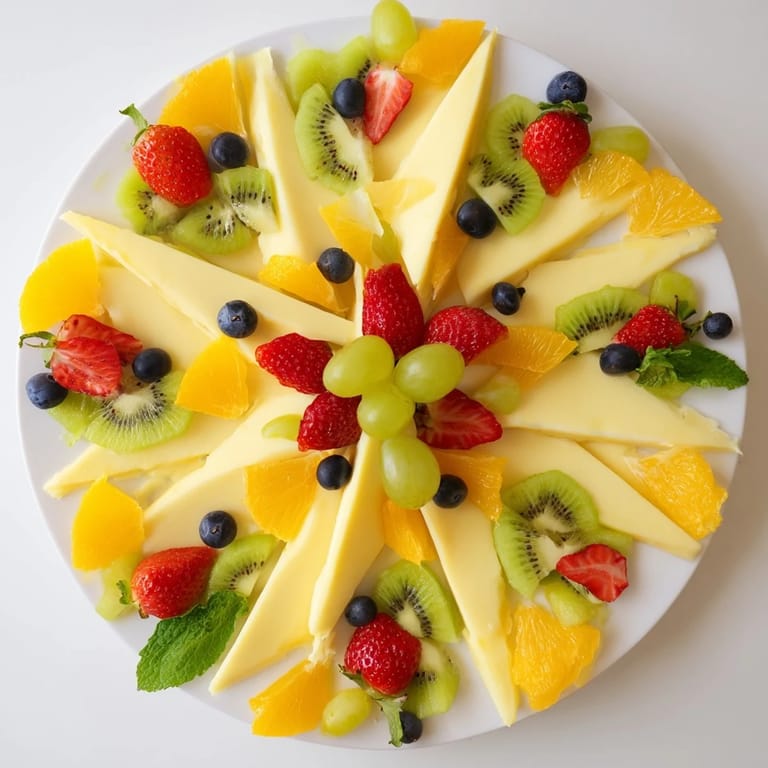
Save One evening, my nephew sat in front of this platter for a solid minute before touching anything. He just stared at it, turning his head like he was seeing different patterns depending on the angle. That's the moment I understood why I keep making this—it's not really about feeding people, it's about making them pause.
Why This Works as Appetizer Theater
The beauty of a platter like this is that it does two jobs at once. It sits there looking gorgeous while guests mingle, and then it quietly disappears as people naturally graze. You're not interrupting conversation with service, you're just providing an excuse for people to gather in one spot. The cheeses warm slightly at room temperature, which actually improves their flavor, so this gets better the longer it sits out.
Seasonal Swaps That Keep This Fresh
The real power of this platter is how adaptable it is. In summer, I lean harder into berries and stone fruits. In winter, I might use persimmon slices, pomegranate arils, and darker cheeses like aged gouda. The structure stays the same, but it never feels repetitive because the colors shift with the seasons. I've even done versions with apple slices in fall, and they're just as striking.
The Cheese Selection Secret
The magic of mixing four different cheeses is that you're not asking your guests to have a sophisticated palate—you're giving them options. Someone might not love goat cheese but will reach for the manchego. Someone else will come back for the brie three times. By offering contrasts in texture and intensity, everyone finds something that speaks to them. I've learned to think of the cheese selection like a conversation—each one has a different tone, and together they tell a more interesting story.
- Buy cheeses from a proper cheese counter if possible, not the pre-wrapped section.
- If one of these cheeses doesn't appeal to you, swap it for something you actually love.
- This platter is only as good as the ingredients you choose, so don't settle.
 Save
Save This platter has become my go-to when I want to show up for someone without spending hours in the kitchen. It's a reminder that elegance doesn't require complexity.
Common Questions
- → What fruits work best for this platter?
Use a variety of colorful fruits like grapes, strawberries, kiwi, pineapple, blueberries, and orange segments for visual appeal and balanced flavors.
- → How should the cheeses be prepared?
Slice cheeses such as aged cheddar, Manchego, brie, and goat cheese into wedges or rounds matching the fruit shapes for a harmonious presentation.
- → Can I prepare the platter ahead of time?
It’s best served fresh, but you can assemble and refrigerate it covered for a short time before serving to maintain freshness.
- → How do I create the kaleidoscope effect?
Arrange alternating wedges of fruit and cheese in concentric circles on a round platter, ensuring symmetry and repeating patterns for the visual impact.
- → Are there any garnish suggestions?
Fresh mint leaves add a pop of color and a refreshing aroma, enhancing the overall presentation and flavor balance.
- → Is this suitable for special diets?
The platter is vegetarian and gluten-free, but check cheeses for animal rennet if strict vegetarian adherence is required.