 Save
Save My kitchen window was fogged up from the steam, and I could hear rain drumming on the roof when I realized I had a glut of tomatoes turning soft on the counter. I wasn't in the mood for anything complicated, just something warm that would fill the house with the kind of smell that makes you want to stay inside all day. This soup came together almost by accident, but the pesto swirl on top turned it from simple comfort into something I actually got excited about. Now it's my rainy afternoon ritual, the kind of meal that asks for nothing but gives everything back. I've made it dozens of times since, and it never gets old.
I made this for my sister one winter afternoon when she came over feeling worn out and hungry. She sat at the kitchen table wrapped in a blanket while I blended the soup, and when I set the bowl in front of her with that green swirl on top, she looked at me like I'd done something magic. We didn't talk much, just ate and listened to the quiet hum of the heater. She texted me later that night asking for the recipe, which is how I knew it had done its job. Food like this doesn't need an occasion, it creates one.
Ingredients
- Olive oil: Use a good one for sauteing the onions, it's the base flavor that carries everything else and you'll taste it if you skimp.
- Onion: Finely chopped so it melts into the soup and adds sweetness without chunks, I've learned patience here pays off.
- Garlic cloves: Minced fresh, never jarred, because that one minute of fragrance in the pot is half the reason this soup smells so good.
- Ripe tomatoes: Fresh if you have them, canned if you don't, both work beautifully as long as they're good quality and not mealy.
- Tomato paste: This deepens the color and adds a concentrated richness that makes the soup taste like it simmered all day.
- Vegetable broth: Homemade is lovely, but a good store bought one does the job and no one will know the difference.
- Sugar: Just a teaspoon to balance the acidity, it's not about making it sweet but rounding out the flavor.
- Salt and black pepper: Season as you go and taste at the end, every batch of tomatoes is different and needs adjusting.
- Heavy cream: Stir it in at the very end for that silky, luxurious texture that makes each spoonful feel indulgent.
- Fresh basil leaves: The star of the pesto, use the brightest, greenest leaves you can find and don't skimp on the amount.
- Pine nuts: They add a buttery richness to the pesto, but walnuts or cashews work too if that's what you have.
- Parmesan cheese: Freshly grated, please, the pre shredded stuff doesn't melt into the pesto the same way.
- Extra virgin olive oil: For the pesto, use your best bottle because it doesn't get cooked and the flavor shines through.
Tired of Takeout? 🥡
Get 10 meals you can make faster than delivery arrives. Seriously.
One email. No spam. Unsubscribe anytime.
Instructions
- Start with the aromatics:
- Heat the olive oil in a large pot over medium heat and add the chopped onion, stirring occasionally until it softens and turns translucent, about five minutes. You'll know it's ready when the kitchen smells sweet and inviting.
- Wake up the garlic:
- Stir in the minced garlic and let it cook for just one minute, stirring constantly so it doesn't brown. The moment it becomes fragrant, move on.
- Build the tomato base:
- Add the chopped tomatoes and tomato paste, stirring everything together and letting it cook for five minutes. This step concentrates the flavors and starts breaking down the tomatoes.
- Simmer the soup:
- Pour in the vegetable broth, then add the sugar, salt, and pepper, bringing everything to a boil before reducing the heat to a gentle simmer. Let it cook uncovered for twenty minutes, stirring occasionally and watching it thicken and deepen in color.
- Blend the pesto:
- While the soup simmers, toss the basil, pine nuts, garlic, and Parmesan into a food processor and pulse until finely chopped. Drizzle in the olive oil with the motor running until the pesto is smooth and vibrant, then season with a pinch of salt.
- Make it silky:
- Once the soup has finished simmering, use an immersion blender to puree it until completely smooth, or carefully blend it in batches in a countertop blender. Be cautious with hot liquids and don't fill the blender more than halfway.
- Finish with cream:
- Stir in the heavy cream and taste, adjusting the salt and pepper if needed. Warm it through gently without letting it boil, which can cause the cream to separate.
- Serve with a swirl:
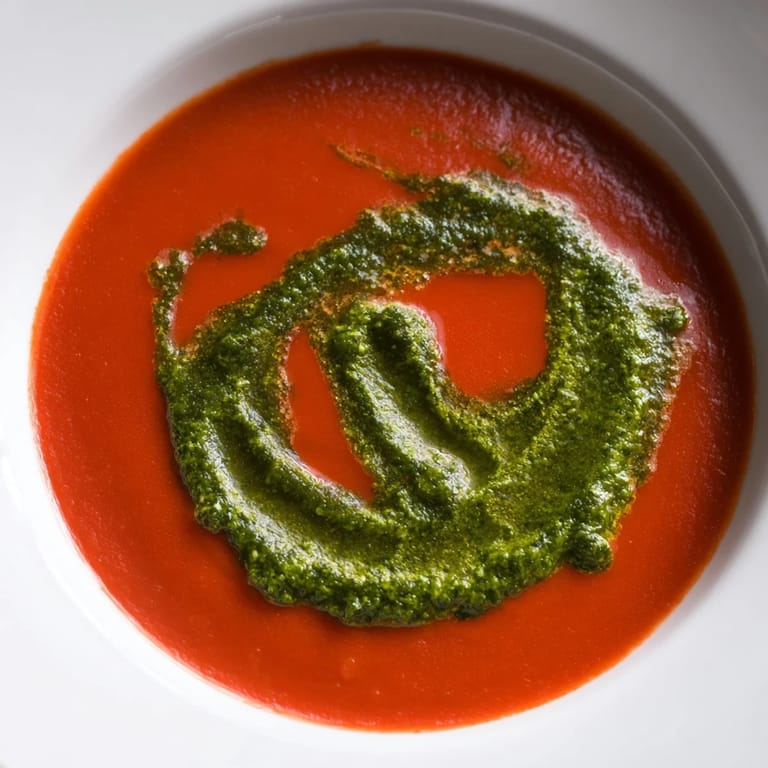
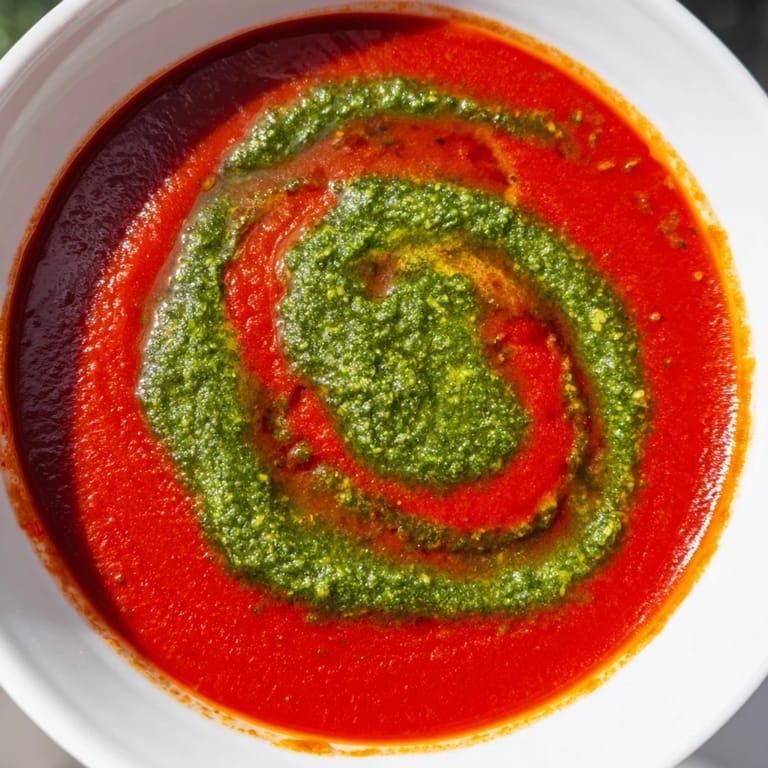
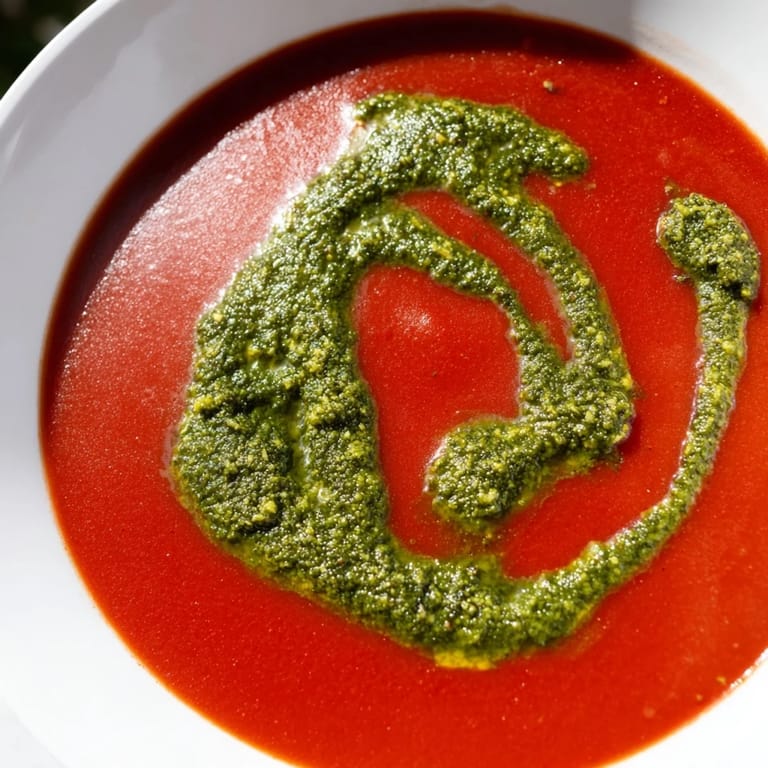
- Ladle the soup into bowls and drizzle each one with a generous swirl of the basil pesto. Serve immediately while it's hot and the pesto is still bright green on top.
 Save
Save The first time I served this at a casual dinner, someone asked if I'd trained as a chef, and I almost laughed because I was still learning not to burn garlic. But that's the thing about this soup, it looks and tastes like you put in hours of work when really it's just good ingredients treated with a little care. I've brought it to friends recovering from colds, served it to kids who swore they hated tomatoes, and eaten it alone on nights when I needed something gentle. It's become one of those recipes I don't think about anymore, I just make it, and it never lets me down.
Making It Your Own
This soup is forgiving and flexible, which is part of why I come back to it so often. If you want it vegan, swap the cream for coconut milk and use nutritional yeast or vegan parmesan in the pesto, it's just as luscious. I've also stirred in a pinch of smoked paprika when I wanted a deeper, earthier flavor, and added a handful of spinach to the blender for extra greens without changing the texture. Sometimes I make a double batch of pesto and keep it in the fridge for pasta, sandwiches, or scrambled eggs the next morning. The soup itself freezes beautifully, though I always make the pesto fresh when I'm ready to serve it.
What to Serve Alongside
I almost always serve this with crusty bread, the kind with a chewy crust that's perfect for dipping and soaking up every last bit. Grilled cheese sandwiches are the classic pairing, and if you make them with good butter and sharp cheddar, it's basically the coziest meal you can put together. I've also served it with a simple green salad dressed in lemon and olive oil when I wanted something lighter, or topped it with croutons for extra crunch. Once I garnished it with chili flakes and extra basil leaves, and it looked so restaurant perfect that I took a picture before diving in. Honestly, this soup doesn't need much, but it plays well with whatever you're in the mood for.
Storage and Reheating
I always make extra because this soup tastes even better the next day after the flavors have had time to settle and marry. Store it in an airtight container in the fridge for up to four days, or freeze it for up to three months if you want to stash some away for a future rainy day. When reheating, do it gently on the stovetop over low heat, stirring occasionally so the cream doesn't split. The pesto is best made fresh, but you can keep it in the fridge for a few days with a thin layer of olive oil on top to prevent browning.
- Reheat only what you'll eat, the soup doesn't love being heated and cooled repeatedly.
- If the soup thickens too much in the fridge, thin it with a splash of broth or water when you reheat it.
- Always add the pesto swirl right before serving, not when storing, so it stays bright and fresh.
 Save
Save This soup has earned its place in my regular rotation, not because it's fancy or complicated, but because it's exactly what I need when I want something warm, nourishing, and a little bit special. I hope it finds a spot in your kitchen too.
Common Questions
- → Can I use canned tomatoes instead of fresh?
Yes, absolutely. Two 800g cans of whole peeled tomatoes work perfectly and save prep time. Use the same quantity called for in the fresh tomato option.
- → How do I make this soup vegan?
Substitute heavy cream with coconut cream for richness. Use a vegan Parmesan alternative or omit it entirely from the pesto. All other ingredients are naturally plant-based.
- → Can I make the pesto ahead of time?
Yes, prepare pesto up to 24 hours in advance. Store in an airtight container in the refrigerator. Add a thin layer of olive oil on top to prevent browning.
- → What can I substitute for pine nuts?
Walnuts, cashews, or almonds work wonderfully. Use the same quantity. Each nut variety adds subtle flavor variations while maintaining the pesto's texture.
- → Is this soup freezer-friendly?
The soup base freezes well for up to 3 months. Freeze before adding cream. Thaw overnight in the refrigerator and reheat gently. Prepare fresh pesto after thawing for best flavor.
- → How do I adjust the consistency?
For thicker soup, simmer longer or use less broth. For thinner consistency, add more broth or cream. Blend longer for extra silkiness.