 Save
Save There's something about the smell of maple and mustard hitting hot chicken skin that stops me mid-thought every time. I discovered this combination almost by accident—I had a half-empty jar of Dijon in the fridge, a bottle of maple syrup left over from breakfast, and exactly forty minutes before people were coming over. What started as improvisation became the dish I make whenever I need to feel like I've got things under control in the kitchen.
I made this for my neighbor once on a Tuesday when she'd just moved in, and she came over with her kids who are notoriously picky about food. Watching them actually eat the vegetables without complaining felt like winning some kind of parenting lottery. She's been asking me for the recipe ever since, which is funny because it's so simple she probably could've figured it out herself.
Ingredients
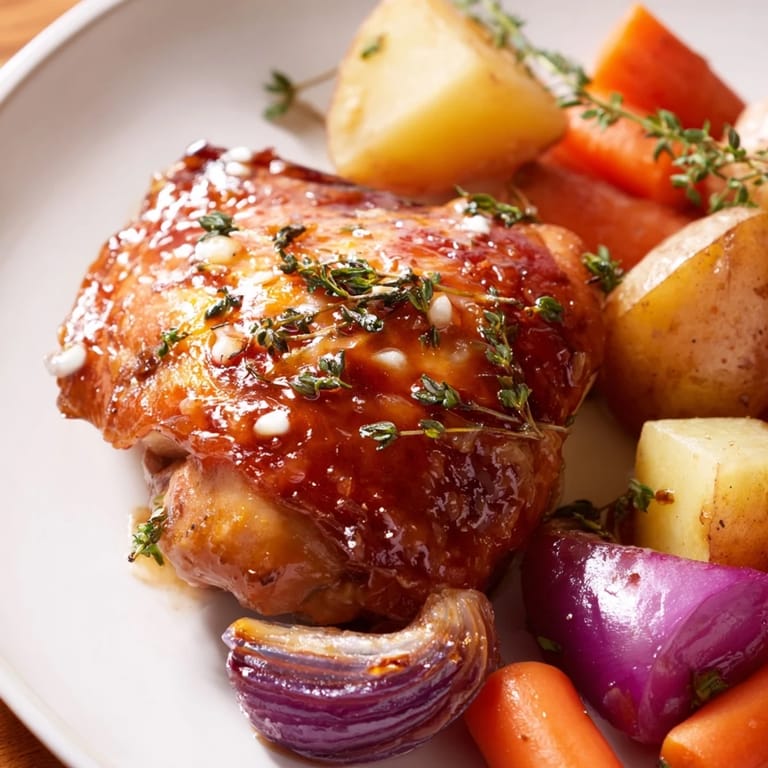
- Bone-in, skin-on chicken thighs (8 pieces, about 1.2 kg): These are your secret weapon—the bone conducts heat and keeps everything moist while the skin crisps up like a dream. Don't skip this for boneless; it genuinely makes the difference.
- Kosher salt (1/2 tsp) and freshly ground black pepper (1/2 tsp): Season your chicken right before roasting so the salt doesn't pull moisture out and the pepper stays flavorful.
- Pure maple syrup (1/4 cup): Real maple syrup matters here—the fake stuff burns differently and tastes thin by comparison.
- Dijon mustard (3 tbsp): This is what cuts through the richness and keeps the glaze from cloying. It also prevents the whole thing from being one-note sweet.
- Olive oil (2 tbsp): Helps the glaze coat evenly and adds a silky texture.
- Apple cider vinegar (2 tbsp): The tanginess that makes your mouth water and balances all that maple.
- Garlic (2 cloves, minced): Mince it small so it distributes throughout the glaze instead of sitting in chunks.
- Fresh thyme (1 tbsp, or 1 tsp dried): Fresh is better here because it adds a brightness that dried can't quite match, though dried works fine if that's what you have.
- Smoked paprika (1/2 tsp): This quiet addition adds depth and a hint of smokiness that people always ask about.
- Baby potatoes (400 g, halved): Halving them ensures they roast through at the same speed as the chicken.
- Carrots (250 g, cut into 2-inch pieces): Cut them thicker than you think—they need those thirty minutes to get tender.
- Red onion (1, cut into wedges): The slight sweetness complements the maple, and the color stays vibrant even after roasting.
Tired of Takeout? 🥡
Get 10 meals you can make faster than delivery arrives. Seriously.
One email. No spam. Unsubscribe anytime.
Instructions
- Heat your oven and prep your pan:
- Get your oven to 220°C (425°F) and line a large baking sheet with parchment or foil. This temperature is high enough to get the skin crackling but not so high that your vegetables burn before the chicken cooks through.
- Dry and season the chicken:
- Pat your thighs very dry with paper towels—this is what gets you that crispy skin you're after. Season both sides generously with salt and pepper right before you put them on the pan.
- Make your glaze:
- Whisk together the maple syrup, Dijon mustard, olive oil, apple cider vinegar, minced garlic, thyme, and smoked paprika in a small bowl. Taste it—it should taste bold and balanced, with the mustard standing up to the maple.
- Arrange your vegetables:
- Spread the potatoes, carrots, and red onion across your baking sheet in a single layer. Drizzle lightly with olive oil, sprinkle with salt and pepper, and toss everything until coated. Push them to the edges to make room for the chicken.
- Add the chicken and brush with glaze:
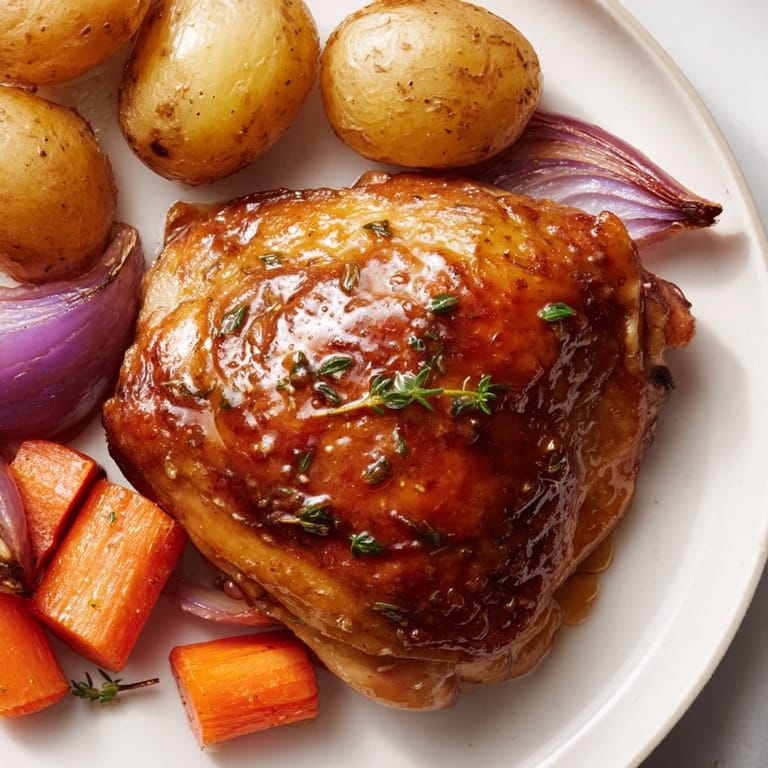
- Nestle the chicken thighs skin-side up among the vegetables—they'll roast together and the chicken fat will season everything. Brush each thigh generously with the glaze, saving about two tablespoons for halfway through.
- Roast and refresh:
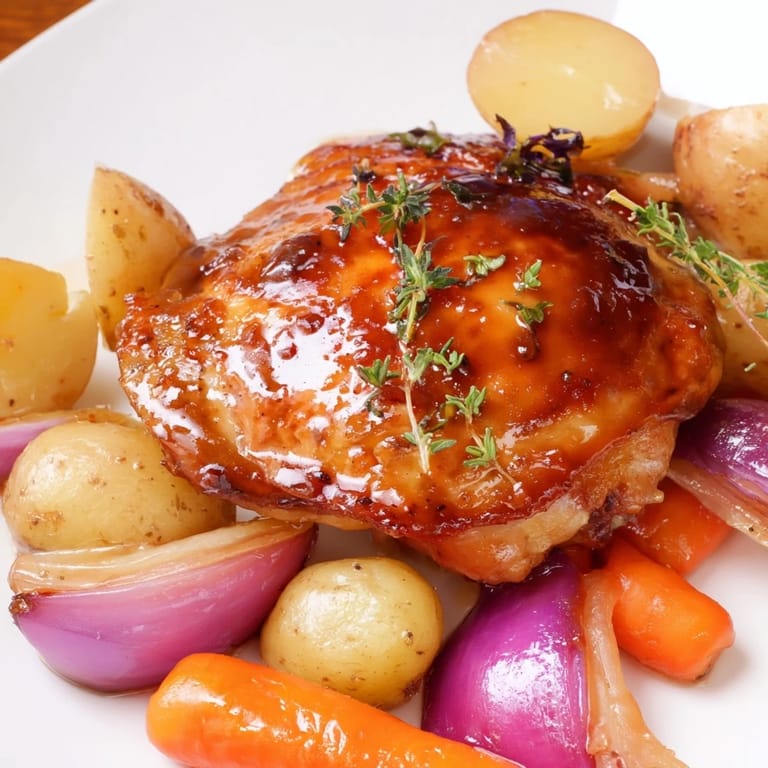
- Roast for thirty minutes, then pull the pan out, brush the chicken with the reserved glaze, and put it back for another five to ten minutes. You're looking for skin that's deep golden and an internal temperature of 74°C (165°F).
- Rest and serve:
- Let everything sit for five minutes—this lets the juices redistribute through the meat instead of running all over your plate. Garnish with extra thyme if you want to feel fancy.
 Save
Save The best version of this dinner happened on a rainy Sunday when I made it just for myself and ate it standing up at the kitchen counter, reading something on my phone and not thinking about anything in particular. There's something about food that tastes this good but doesn't require performing for anyone that feels genuinely luxurious.
Why This Glaze Works
The magic is in how the maple syrup, Dijon mustard, and apple cider vinegar play together. Maple brings sweetness and richness, but on its own it would be cloying and one-dimensional. The Dijon adds a sharp, tangy edge that wakes up your palate and prevents the glaze from tasting like you just painted your chicken with pancake syrup. The vinegar cuts through everything and adds brightness. It's a simple formula, but each ingredient is essential—remove any one and the whole thing falls apart.
Vegetable Flexibility
I've made this with whatever vegetables I had on hand, and honestly, it works with almost anything that can handle a hot oven. Sweet potatoes get creamy inside, parsnips caramelize into something almost candy-like, Brussels sprouts get crispy at the edges. The common thread is that you want pieces roughly the same size so they cook evenly, and you want them chunky enough that they don't disappear into nothing after thirty-five minutes. The vegetables aren't an afterthought here—they roast in the chicken fat and the glaze drippings, so they end up tasting like part of the same dish.
Timing and Temperature
The only real way to know if your chicken is done is with a meat thermometer—165°F (74°C) in the thickest part, not touching bone. Cooking by time works fine until it doesn't, and the difference between juicy and dry chicken is literally about three minutes. If you don't have a thermometer, invest in one. I resisted for years and then bought one and wondered why I'd wasted so much time and chicken being uncertain.
- Start checking the temperature around the twenty-eight-minute mark so you're not caught off guard.
- Remember that the pan is extremely hot when it comes out of the oven—use thick mitts or you'll spend the next week explaining burn marks on your hands.
- If your vegetables look like they might burn before the chicken is done, pull the pan out, stir them, and move them to the edges before returning it to the oven.
 Save
Save This is the kind of dinner that feels like it belongs on a weeknight because it actually fits into real life, but tastes like something you'd order at a restaurant and spend the rest of the week thinking about. Make it when you want to feel like you've got something figured out.
Common Questions
- → What cut of chicken works best for this dish?
Bone-in, skin-on chicken thighs provide the juiciest texture and help achieve a caramelized skin, but boneless thighs can be used with slightly reduced cooking time.
- → Can I substitute the vegetables?
Yes, sweet potatoes, parsnips, or Brussels sprouts make great alternatives to the baby potatoes, carrots, and red onion.
- → How should I check if the chicken is cooked through?
The internal temperature should reach 74°C (165°F) for safe consumption, ensuring the chicken is fully cooked yet juicy.
- → Is it important to let the chicken rest after roasting?
Allowing the chicken to rest for about 5 minutes helps retain juices and improves flavor before serving.
- → What kind of wine pairs well with this dish?
A crisp Chardonnay or a dry Riesling complements the sweet and tangy flavors of the glaze beautifully.