 Save
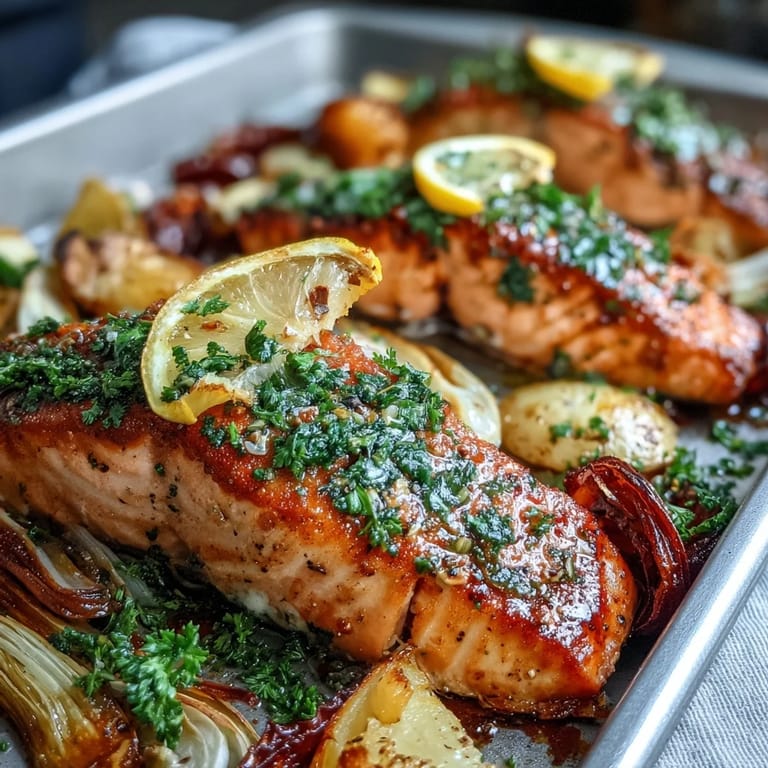
Save My kitchen window was cracked open one spring evening when I realized I had salmon thawing, a bundle of leeks wilting in the crisper, and zero energy for multiple pans. I tossed everything onto one sheet, slid it into the oven, and made a quick parsley dressing while it roasted. The smell of caramelizing onions and buttery fish filled the apartment, and when I pulled it out, I couldn't believe something so simple looked so restaurant-worthy. That night taught me that the best meals don't require complexity, just good timing and a willingness to let the oven do the work.
I made this for a friend who was convinced she didn't like leeks. She eyed them suspiciously as I plated everything, but after one bite, she asked why they tasted sweet and almost creamy. Roasting transforms leeks completely, mellowing their sharpness and coaxing out a gentle caramelized flavor that pairs beautifully with the salmon. She went home with the recipe scribbled on a napkin, and now she texts me photos every time she makes it. It's become her go-to for impressing her in-laws, which I find endlessly amusing.
Ingredients
- Salmon fillets: Skin-on keeps the fish moist and prevents it from sticking to the pan, plus it crisps up beautifully if you give it a quick sear afterward.
- Leeks: Trim off the dark green tops and slice into thick rounds so they hold their shape during roasting and develop those sweet, caramelized edges.
- Red onion: Cut into wedges instead of thin slices so they char slightly without burning, adding a subtle smokiness to the dish.
- Olive oil: Use it generously on the vegetables to encourage browning and prevent them from drying out in the oven.
- Lemon slices: They infuse the salmon with brightness as it cooks and look gorgeous on the finished plate.
- Fresh parsley: Flat-leaf has more flavor than curly, and chopping it fine releases its oils into the dressing.
- Garlic: Mince it small so it distributes evenly, adding a sharp bite that balances the richness of the olive oil.
- Dijon mustard: Just a touch gives the dressing body and a subtle tang that ties everything together.
- Capers: Chop them so their briny pop is in every spoonful, not just isolated bursts.
- Lemon zest and juice: Zest first, then juice, and you'll get both the fragrant oils and the acidity you need.
Tired of Takeout? 🥡
Get 10 meals you can make faster than delivery arrives. Seriously.
One email. No spam. Unsubscribe anytime.
Instructions
- Get the oven ready:
- Preheat to 400°F so the vegetables start roasting immediately when they hit the pan. A hot oven is key to getting caramelization without steaming everything.
- Prep the vegetables:
- Spread leeks and red onion on a large baking sheet, drizzle with olive oil, season with salt and pepper, and toss until every piece is lightly coated. Roast for 10 minutes to give them a head start.
- Add the salmon:
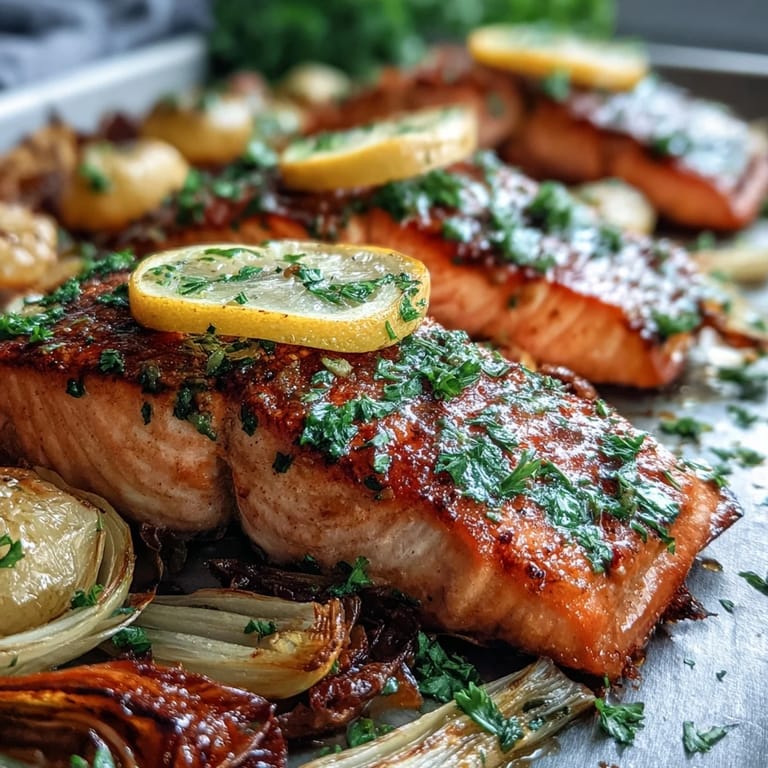
- Pull the pan out, nestle the salmon fillets skin-side down among the vegetables, and top with lemon slices. Return to the oven and roast for 12 to 15 minutes until the fish flakes easily and the vegetables are tender.
- Make the dressing:
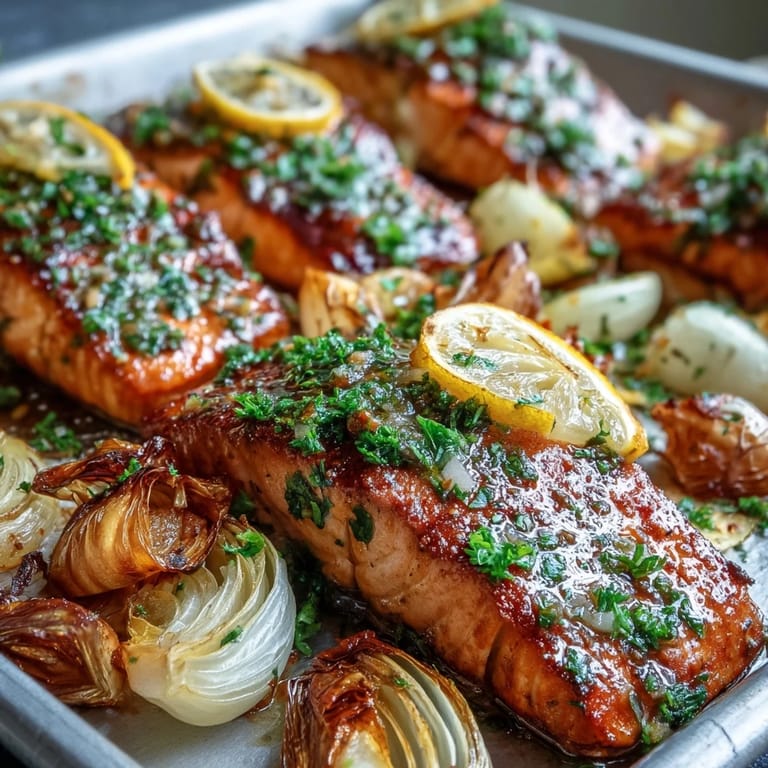
- While the salmon bakes, combine parsley, garlic, Dijon, capers, lemon zest, olive oil, and lemon juice in a small bowl. Stir well and season with salt and pepper to taste.
- Plate and serve:
- Transfer salmon and vegetables to plates, then spoon the parsley dressing generously over the top. Serve immediately while everything is still warm and fragrant.
 Save
Save The first time I served this, my partner scraped every last bit of dressing off his plate with a piece of bread, then asked if I'd made extra. I hadn't, but now I always double the parsley mixture because it's that good. It's become our Sunday night ritual when we're too tired to think but still want something that feels special. There's something quietly comforting about a meal that tastes this vibrant but requires so little fuss.
Choosing Your Salmon
I've learned to look for fillets that are similar in thickness so they cook evenly, and I always ask the fishmonger which piece was cut most recently. Skin-on is non-negotiable for me because it protects the delicate flesh from drying out, and if you're feeling ambitious, you can flip the fillets skin-side up for the last two minutes to crisp it. Wild-caught has a firmer texture and deeper flavor, but farmed salmon works beautifully too and tends to be more forgiving if you accidentally overcook it. Trust your eyes and nose, fresh salmon should smell like the ocean, not fishy.
Making the Dressing Shine
The parsley dressing is where this dish goes from simple to special, and I've found that chopping the parsley by hand instead of using a food processor keeps the texture lively. If you love heat, a pinch of crushed red pepper flakes or a few drops of hot sauce will wake everything up without overpowering the lemon. I sometimes add an extra tablespoon of olive oil if the dressing feels too sharp, or a tiny bit more mustard if I want it creamier. Taste as you go and adjust, this is your chance to make it exactly how you like it.
Serving and Storing
This dish is best eaten right away while the salmon is warm and the vegetables are still slightly crisp at the edges. If you have leftovers, store the fish and vegetables separately from the dressing, and reheat gently in a low oven to avoid drying out the salmon. I've also flaked leftover salmon into a grain bowl the next day, drizzled with extra dressing, and it was just as satisfying.
- Serve with roasted potatoes, steamed rice, or crusty bread to soak up the dressing.
- Swap salmon for trout, cod, or even thick white fish fillets if that's what you have.
- Double the parsley dressing and keep extra in the fridge for drizzling over grilled chicken or roasted vegetables later in the week.
 Save
Save This recipe has become my answer to the question of what to make when I want something nourishing without the drama. It's proof that a handful of good ingredients and a hot oven can turn a regular Tuesday into something worth sitting down for.
Common Questions
- → Can I use frozen salmon fillets?
Yes, just ensure they are fully thawed and patted dry before roasting to achieve the best texture and even cooking.
- → What can I substitute for leeks?
You can use sliced fennel, shallots, or additional red onions. Adjust cooking time slightly based on your chosen vegetable's density.
- → How do I know when the salmon is done?
The salmon is ready when it flakes easily with a fork and reaches an internal temperature of 145°F. The flesh should be opaque and moist.
- → Can I make the parsley dressing ahead?
Absolutely. Prepare the dressing up to 24 hours in advance and store it covered in the refrigerator. Stir well before serving.
- → What sides pair well with this dish?
Roasted potatoes, steamed rice, quinoa, or a simple green salad complement the salmon beautifully without overwhelming the flavors.
- → Can I use other fish varieties?
Yes, trout, arctic char, or cod work wonderfully. Adjust cooking time based on fillet thickness—thinner fillets need less time.