 Save
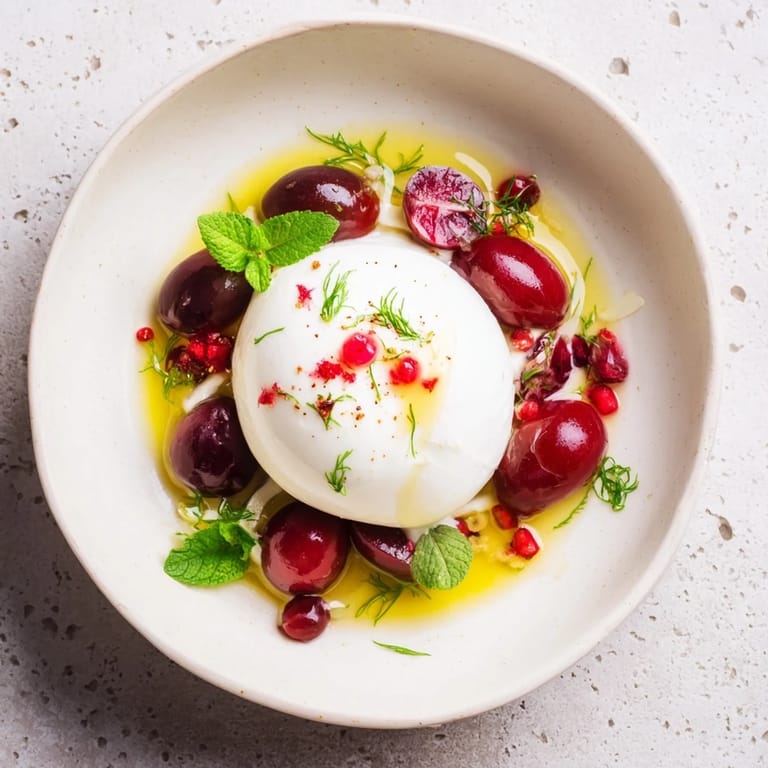
Save I discovered this salad by accident on a warm evening when my farmer's market trip yielded an embarrassing haul of berries and a gorgeous ball of burrata that I'd been wanting to use. Instead of tossing everything into a standard bowl, I remembered a moment from a trip to Italy where food wasn't just arranged—it was composed, like art. That night, I arranged the grapes and blueberries in a circle, placed the creamy burrata in the center, and suddenly a dish was born that felt both simple and show-stopping.
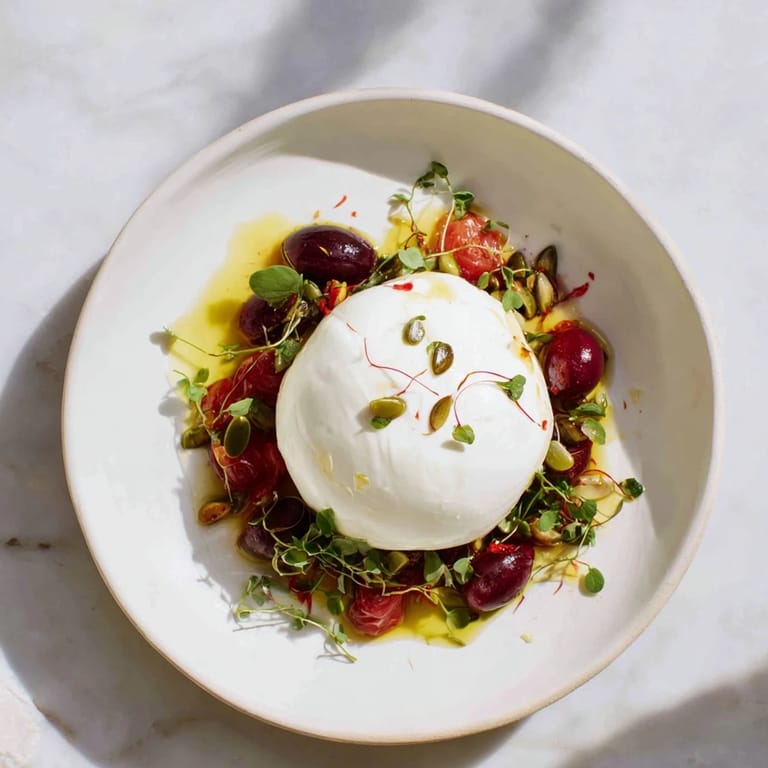
I served this at a small dinner party last summer, and the first person to taste it went quiet for a moment—not in a critical way, but like they were actually experiencing something. They cut into the burrata and watched the creamy center spill slightly onto the berries, and I realized that's when this dish became magic. The "moon" metaphor suddenly made sense: something luminous and unexpected surrounded by dark, sweet jewels.
Ingredients
- Fresh blueberries (1 cup): These need to be ripe and at room temperature; cold berries can taste muted, so pull them from the fridge a few minutes before serving.
- Seedless purple grapes (1 cup, halved): The halving creates more surface area for the dressing to cling to, and it makes each bite feel more intentional.
- Burrata cheese (1 large ball, about 200 g): This is the star, so buy it from a good source and use it the same day if possible—the creaminess degrades quickly.
- Fresh basil leaves (1/3 cup, torn): Tearing by hand prevents bruising and keeps the basil looking vibrant; scissors can crush the delicate leaves.
- Baby arugula or mixed greens (1 cup, optional): This creates a slight cushion and adds a subtle peppery note that complements the sweetness beautifully.
- Extra-virgin olive oil (2 tbsp): Don't use regular olive oil here—the grassy, fruity notes of extra-virgin make a real difference in the final taste.
- Balsamic glaze (1 tbsp): Use actual glaze, not vinegar; the reduced syrupy version has a sweetness that balances the fruit.
- Sea salt and freshly ground black pepper: These aren't afterthoughts; they amplify every other flavor.
- Lemon zest (from 1 lemon, optional): A tiny amount lifts everything and adds brightness without making the dish taste citrusy.
Tired of Takeout? 🥡
Get 10 meals you can make faster than delivery arrives. Seriously.
One email. No spam. Unsubscribe anytime.
Instructions
- Create your canvas:
- If using greens, spread them in an even, relaxed layer across a wide shallow bowl or platter—think of this as the background that lets everything else shine. A larger surface area is better than a deep bowl because it gives the dish space to breathe.
- Build the ring:
- Scatter the halved grapes and blueberries in a loose circle around the outer edge of your greens, leaving a clear space in the center. The arrangement doesn't need to be perfect; slight imperfection actually looks more inviting and natural.
- Crown your creation:
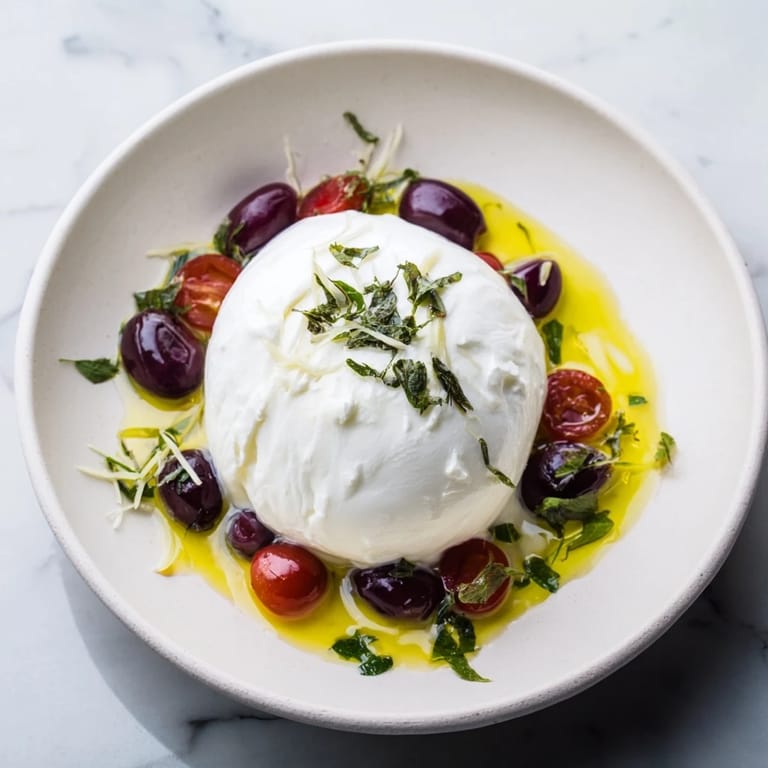
- Place the burrata ball in the very center like a luminous moon. Let it sit for a moment before adding any dressing so you can see the full effect.
- Dress with intention:
- Drizzle the olive oil in a thin, even stream over both the fruit and the burrata, then follow immediately with the balsamic glaze in the same delicate manner. The warmth of the oil helps the glaze become glossy and enticing.
- Add the final flourishes:
- Scatter the torn basil across the entire dish, add lemon zest if you're using it, and finish with a pinch of sea salt and several grinds of fresh black pepper. This is where taste comes alive, so don't skip the seasoning.
- Serve straight away:
- Bring this to the table immediately while the textures are distinct and the fruit is still cool. The burrata will start to warm and soften the moment it's plated, so timing matters.
 Save
Save There's something almost meditative about arranging this salad. After that summer dinner party, I started making it not just for guests but for quiet afternoons when I wanted to slow down and remember that food can be simple, beautiful, and deeply satisfying all at once. It became the dish I reach for when I need to remind myself why I love cooking.
Why This Salad Works
The beauty of this dish lies in its balance of contrasts: creamy against juicy, sweet against savory, delicate against bold. The burrata's mild richness doesn't compete with the fruit; instead, it acts as a buffer that lets every other flavor come through more clearly. Basil adds an herbaceous note that prevents the whole thing from feeling too dessert-like, while the balsamic glaze ties everything together with a subtle acidity and deep color that makes the presentation pop.
Serving Suggestions and Pairings
I've learned that this works beautifully as a standalone appetizer or as a light course before something more substantial. It also makes a stunning side dish at a summer table, especially alongside grilled fish or chicken. The dish pairs wonderfully with crisp white wines—a Sauvignon Blanc or dry rosé complements the fruit without overwhelming the delicate cheese. For a non-alcoholic option, sparkling water with fresh mint feels equally refreshing and sophisticated.
Variations and Helpful Thoughts
Once you understand the framework of this salad, you can play with it. I've made versions with blackberries, raspberries, and even diced stone fruits depending on the season. Some friends add toasted pistachios for crunch, which absolutely works; others drizzle with a tiny bit of aged balsamic vinegar instead of glaze for extra depth. The real trick is respecting the simplicity—don't overcomplicate it with too many additions.
- Toast pistachios or walnuts lightly to bring out their flavor, then let them cool before sprinkling over the finished dish.
- If you can't find burrata, fresh mozzarella works as a substitute, though you lose some of that luxurious creamy center.
- Make sure your olive oil and balsamic are genuinely good quality because there's nowhere to hide in such a simple dish.
 Save
Save This salad has become my favorite kind of cooking: food that tastes like celebration without any fuss. Serve it with crusty bread and watch it disappear.
Common Questions
- → What is the best way to prepare the fruit?
Use fresh, firm blueberries and halved seedless purple grapes for a juicy, balanced sweetness that complements the creamy cheese.
- → Can I substitute the burrata with another cheese?
Yes, fresh mozzarella or soft goat cheese can be used, but burrata provides a creamier, richer texture ideal for this dish.
- → How does the basil enhance the salad?
Torn fresh basil adds a fragrant, slightly peppery lift that brightens the sweet fruit and creamy cheese flavors.
- → What is the role of the balsamic glaze?
The balsamic glaze brings a tangy sweetness and glossy finish that ties together the fruit and cheese beautifully.
- → Are there optional ingredients to customize the salad?
Yes, adding baby arugula for peppery greens or lemon zest for a citrusy aroma can enrich the overall flavor profile.
- → How should this dish be served for best results?
Serve immediately after assembly, either on its own or with crusty bread, for a fresh and vibrant presentation.