 Save
Save I discovered these phyllo nests while wandering through a farmers market on a crisp autumn morning, where a vendor was arranging golden strands of kataifi like delicate hay. Something about the way they caught the light made me think of miniature haystacks, and I couldn't resist asking what they were for. She mentioned cheese, and suddenly I was imagining a whole appetizer built on that rustic, countryside charm. That afternoon, I spent an hour in my kitchen recreating that feeling, and it became one of those dishes that makes people pause mid-bite and ask what it is.
I remember serving these at a dinner where someone's grandmother was visiting from the countryside. She picked one up skeptically, then her whole face changed. She told me these reminded her of something her mother made decades ago, and spent the next twenty minutes describing a recipe she'd forgotten she even had. Sometimes food does that—it unlocks a memory you didn't know you were carrying.
Ingredients
- Shredded phyllo dough (kataifi): This is the delicate, hair-thin pasta you'll find in the freezer section, and it's essential to thaw it gently so the strands stay separate and don't clump together.
- Unsalted butter and olive oil: The combination gives the nests both richness and a slight structural crispness; butter alone can brown too quickly, while the oil helps everything bake evenly.
- Sea salt: A pinch while the phyllo is still damp helps the seasoning stick instead of sliding off.
- Farmhouse cheddar: Look for something aged and funky with real personality—this isn't the time for mild supermarket blocks.
- Aged gouda: The slightly sweet, caramelized notes play beautifully against sharp cheddar and soft tomme.
- Tomme de Savoie or semi-soft farmhouse cheese: This is your texture surprise, creamy where the others are firm, and it grounds the whole thing in comfort.
- Fresh thyme sprigs: The anise-like warmth of thyme against cheese is one of those pairing secrets that feels obvious once you taste it.
- Honey for drizzling: Just a whisper of it—the savory-sweet moment that makes people close their eyes and smile.
- Cracked black pepper: Use a pepper mill and crack it fresh; pre-ground pepper tastes like dust next to this delicate dish.
Tired of Takeout? 🥡
Get 10 meals you can make faster than delivery arrives. Seriously.
One email. No spam. Unsubscribe anytime.
Instructions
- Preheat and prepare:
- Heat your oven to 180°C (350°F), and line a baking sheet with parchment paper. This matters more than it sounds—cold baking sheets can make the bottoms of your nests soggy.
- Loosen and dress the phyllo:
- Gently separate the shredded phyllo with your fingers until the strands feel almost fluffy, then place it in a bowl and drizzle with melted butter, olive oil, and salt. Toss with the tenderness you'd use on a salad—you want every strand coated, but you're not trying to break them into submission.
- Form your nests:
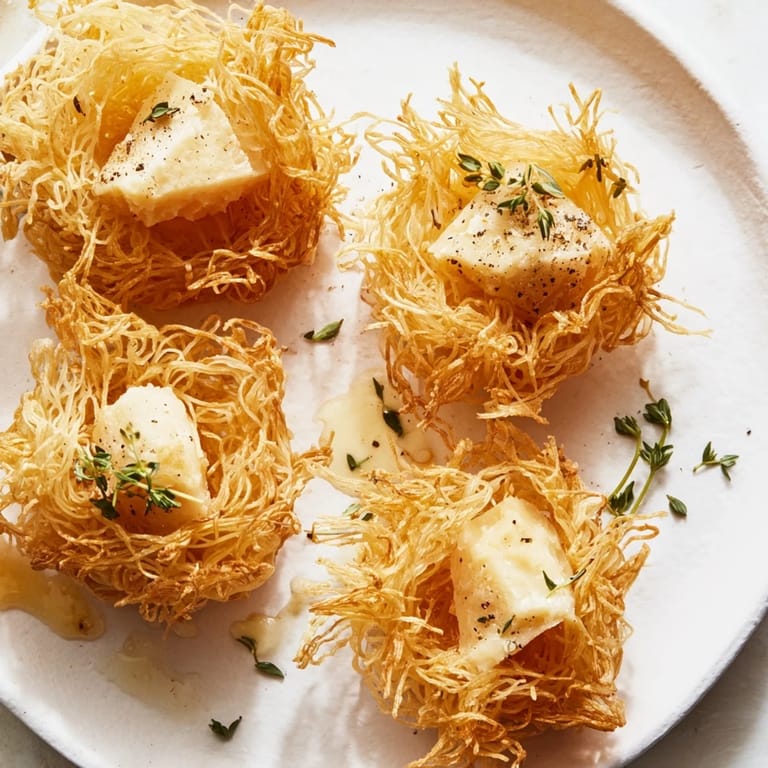
- Using your hands, make small piles of phyllo about 5–6 cm wide on your parchment paper, pressing lightly so they stay together. They'll look loose and precarious, and that's exactly right—they firm up as they bake.
- Bake until golden:
- Slide them into the oven for 10–12 minutes, watching for that moment when they shift from pale to deeply golden. The kitchen will smell like toasted butter and hay in the best possible way.
- Cool and assemble:
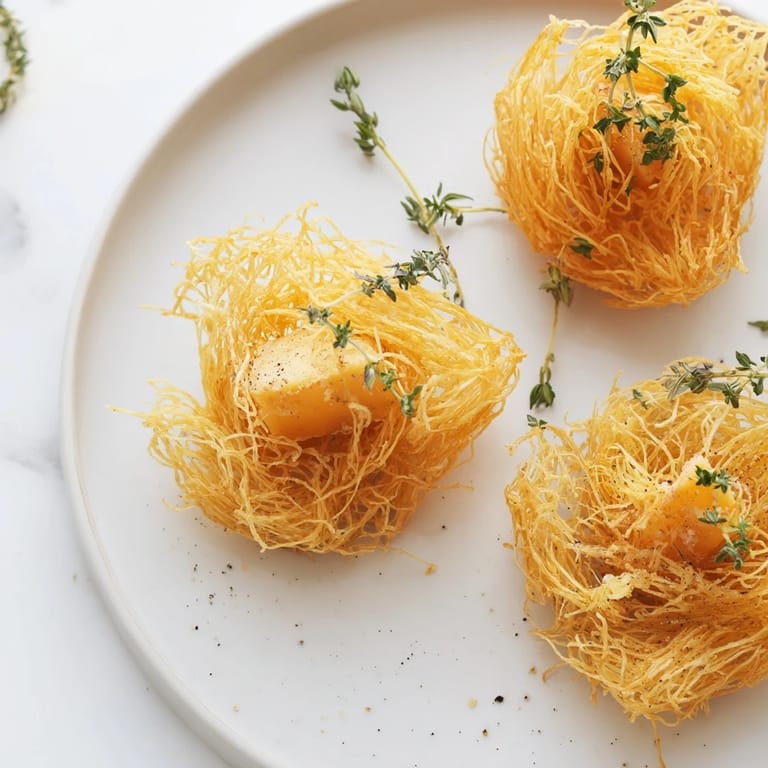
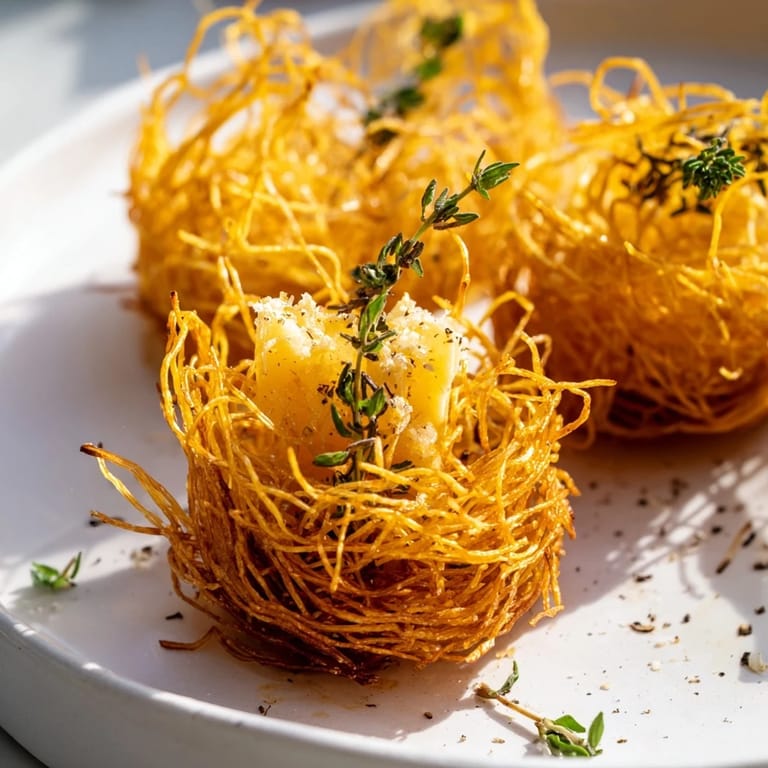
- Let the nests cool to room temperature so they crisp up completely, then arrange them on a serving board. Top each one with a generous hunk of cheese, then finish with thyme, a drizzle of honey, and a crack of black pepper.
 Save
Save What surprised me most was how these became the dish people asked me to make again and again. It's not complicated, but it feels thoughtful—like you've invited someone into a moment that matters. There's something about offering real cheese and real care in such a small package that changes how people experience it.
Cheese Matters More Than You Think
I used to think any cheese would work, then I stood in a specialty market and tasted five different farmhouse cheddars. The difference was staggering—some tasted sharp and clean, others had nutty, caramel notes that made everything around them taste better. Spending a moment finding cheeses with personality completely transforms this dish from nice to memorable. Ask the person behind the counter what's aged longest and most interesting; they usually light up and give you exactly what you need.
Timing and Temperature
Phyllo is temperamental about temperature—too hot and it burns in seconds, too cool and it stays pale and chewy. I learned this by burning my first batch and salvaging my ego with the second. The 180°C temperature is genuinely important because it lets the butter brown slowly while the strands toast evenly. If your oven runs hot, start checking around the 9-minute mark.
Variations and Last-Minute Thoughts
Once you understand the base, these nests become a canvas for whatever's in your market that morning. Some days I add herbes de Provence to the phyllo before baking for a more savory edge, other times I try a smoked cheddar or a blue cheese tucked into the nest for surprise. The honey-and-black-pepper finish is sacred, but everything else flexes. Serve these alongside apple slices or grapes if you want to give your guests a fresh contrast, and always have them at room temperature—cold cheese is dull cheese.
- Make the nests a few hours ahead and store them in an airtight container; they'll stay crisp and you'll have only assembly left when guests arrive.
- If phyllo dough tears while you're working, don't panic—it bakes into an even crispier nest, and no one will know the difference.
- Experiment with Manchego, Comté, or other farmhouse cheeses you find; this dish is forgiving enough to celebrate almost any cheese you love.
 Save
Save These nests live in that perfect space between easy and impressive, where a little effort becomes something people remember. Serve them with wine, watch people's faces, and feel like the kind of person who knows something about life.
Common Questions
- → What type of phyllo dough works best for this dish?
Shredded phyllo dough, also known as kataifi, creates the delicate hay-like nests that bake to a crisp texture, ideal for this preparation.
- → Can I substitute the cheeses?
Yes, similar semi-soft or aged farmhouse cheeses like Manchego, Comté, or smoked varieties add complementary flavors without altering the dish's rustic appeal.
- → How do I prevent the phyllo nests from becoming soggy?
Ensure the phyllo is well coated with melted butter and olive oil before baking, and bake until golden and crisp to maintain a crunchy texture.
- → What garnishes enhance flavor and presentation?
Fresh thyme sprigs, a drizzle of honey, and cracked black pepper add aromatic, sweet, and spicy notes that elevate each bite.
- → Are there any recommended accompaniments?
Serve alongside fresh apple slices or grapes to add a refreshing contrast that complements the richness of the cheeses.