 Save
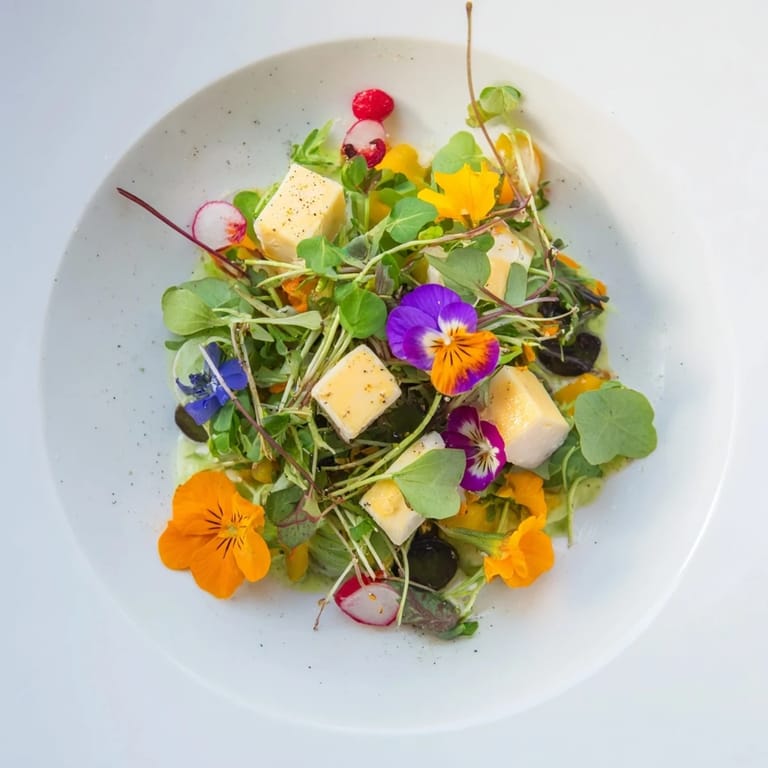
Save I discovered this dish entirely by accident at a friend's garden party last summer, where someone had casually arranged cheeses and flowers on a board without much fanfare. What struck me wasn't the elegance—it was watching guests lean in, searching for hidden treasures like they were kids again, their faces lighting up when they found a cube of sharp cheddar nestled under a violet. That moment taught me that the best appetizers aren't always about complexity; sometimes they're about creating a little adventure right on the plate.
I've made this now for three dinner parties, and each time the conversation naturally shifts when it's served—people stop scrolling, stop multitasking, and actually notice what they're eating. There's something about edible flowers that makes people feel like they're being treated specially, even though the preparation is laughably simple.
Ingredients
- Aged cheddar, cut into small cubes (100 g): The sharpness cuts through the delicate flowers and grounds the whole arrangement in something bold and familiar.
- Goat cheese, cut into small cubes (100 g): Its creamy tanginess provides contrast and feels luxurious on the palate.
- Gruyère, cut into small cubes (100 g): This adds a nutty, complex note that elevates the whole composition.
- Microgreens, mixed varieties (75 g): Pea shoots are my favorite for their sweetness, but radish greens add a pleasant bite if you want something peppery.
- Edible flowers, assorted (1 cup): Nasturtiums taste peppery, pansies are mild and pretty, violets feel delicate—choose based on flavor as much as color, and always verify they're pesticide-free.
- Extra virgin olive oil (1 tbsp, optional): A whisper of good oil adds richness without overwhelming the subtle flavors.
- Flaky sea salt and freshly ground black pepper: These finish the dish and let the natural flavors of the cheeses and flowers shine.
Tired of Takeout? 🥡
Get 10 meals you can make faster than delivery arrives. Seriously.
One email. No spam. Unsubscribe anytime.
Instructions
- Prepare your canvas:
- Lay out your cheeses on a large board or platter, giving them breathing room so each type claims its own territory. This spacing makes it easier for guests to discover the different varieties as they explore.
- Create the foliage cover:
- Scatter microgreens generously across the board, letting them tumble over and partially hide the cheese cubes. Think of it like dressing a salad, but with intention to conceal little treasures.
- Arrange the flowers:
- Tuck edible flowers among the greens, layering them so the board looks like a tiny secret garden. Some flowers should rest directly on cheese, others nestled into the microgreens.
- Add brightness if desired:
- Drizzle olive oil lightly across the greens and flowers if you want to add shine and subtle richness to the arrangement.
- Season mindfully:
- Sprinkle flaky sea salt and black pepper across the board so some lands on cheese, some on greens—this variation keeps each bite from being identical.
- Serve and invite discovery:
- Present the board and let guests forage with their hands or small tongs, making the eating an interactive experience rather than a passive one.
 Save
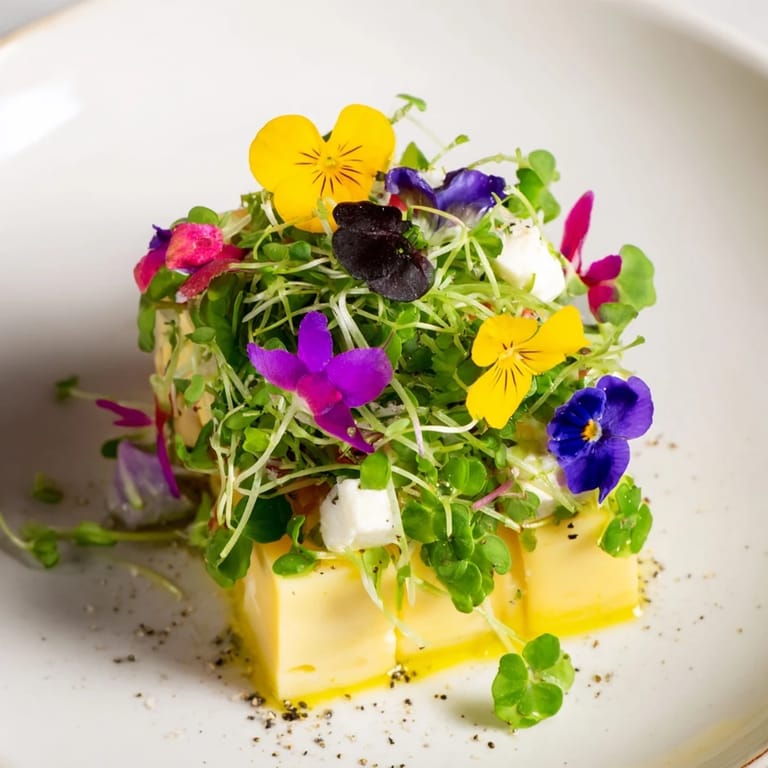
Save I'll never forget watching my mother's face when she tried this at a family gathering—she's not one for fancy presentations, but she actually smiled and said the combination of the creamy cheese with the peppery nasturtium was oddly perfect. That's when I realized this dish works because it's not trying too hard; it's just honest ingredients arranged with care.
Choosing Your Cheeses
The beauty of this dish is that you can swap cheeses based on what you have or what you prefer. I've used Manchego for a Spanish angle, feta for something briny and sharp, and once even a creamy Camembert that felt almost indulgent against the delicate flowers. The rule I follow is having at least one mild, one sharp, and one earthy option so there's genuine variety as guests taste their way through.
Sourcing Edible Flowers
This is genuinely the most important part of making this dish, and it's worth taking time to get right. Farmers markets are your best bet—you can talk to the grower directly about whether pesticides were used. Online specialty food sites also work well if you're in a pinch. Once you find a source, you'll be surprised how affordable edible flowers actually are, and you'll start using them in other dishes too.
Serving and Pairings
This appetizer shines alongside crisp white wines like Sauvignon Blanc or Albariño, where the acidity bounces against the cheese. Sparkling rosé adds a celebratory feel. I've also served it with sparkling water infused with cucumber or mint for non-alcoholic guests, and it felt equally elegant.
- Have small plates or napkins nearby since guests will be using their hands to forage.
- Make this the first thing people see when they arrive, before they sit down—the novelty of it encourages mingling.
- Double the recipe if you're expecting more than six people; it disappears faster than you'd expect.
 Save
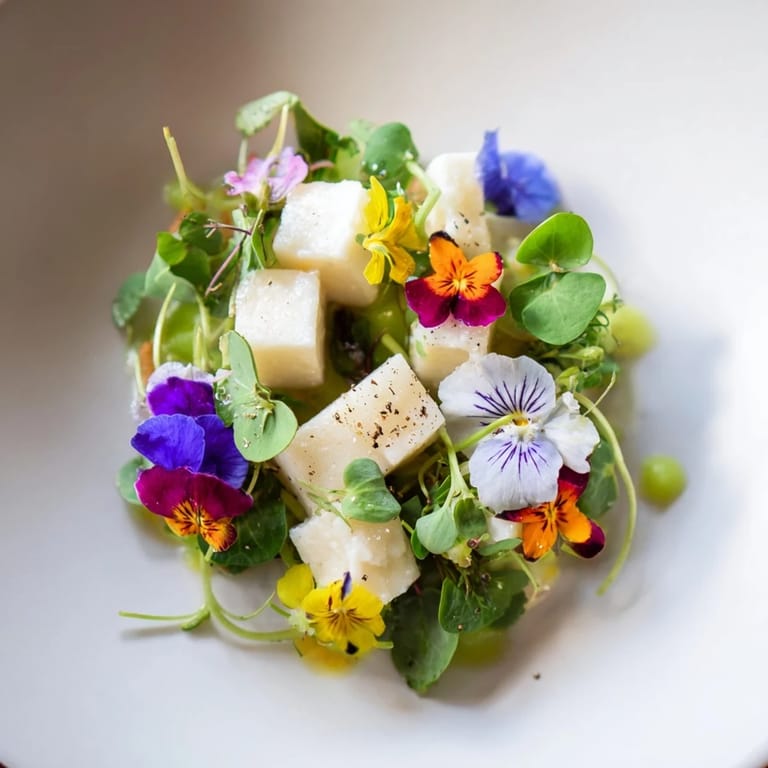
Save This dish taught me that sometimes the most memorable meals aren't the complicated ones—they're the ones that invite people to participate and play a little. Make it whenever you want guests to leave feeling special.
Common Questions
- → What cheeses work best with this appetizer?
Aged cheddar, goat cheese, and Gruyère provide a balanced mix of flavors, but Manchego or feta work well as alternatives.
- → Are the edible flowers safe to eat?
Ensure flowers are pesticide-free and labeled edible. Common options include nasturtiums, pansies, violets, and borage.
- → Can this appetizer suit dietary restrictions?
It's vegetarian and gluten-free. Double-check that flowers and microgreens are sourced safely to avoid allergens.
- → How should this dish be served?
Arrange cheese cubes on a large platter, scatter microgreens and flowers on top, and season just before serving to maintain freshness.
- → What beverages pair well with this dish?
Crisp white wines or sparkling rosé complement the fresh, savory flavors beautifully.
- → Can additional ingredients enhance texture?
Thin slices of radishes or cucumbers add crunch and contrast nicely with cheeses and greens.