 Save
Save My friend Maya handed me a half-sheet of nori one summer afternoon and said, 'Just try it your way,' which somehow turned into the most relaxed sushi experience I'd had in years. There's something liberating about hand rolls, a break from the precision of traditional sushi rolls where everything feels a bit more forgiving and personal. That day, the rice was warm, the avocado was perfectly ripe, and I realized I'd been overthinking sushi the whole time. These little cone-shaped treasures became my go-to when I wanted something that felt special without the fussy technique.
I made these for a potluck once where half the guests were skeptical about raw fish, and by the end, everyone was assembling their own combinations like they'd been doing it forever. Watching people discover that they loved the cucumber crunch paired with creamy avocado, the way the nori shattered between their teeth, those small moments of joy reminded me why food matters beyond just eating.
Ingredients
- Sushi rice: Use authentic short-grain Japanese rice, not regular white rice, because the starch content is what gives sushi rice its signature sticky texture that holds everything together.
- Water: The ratio matters more than you'd think, so measure carefully and don't skip rinsing the rice first.
- Rice vinegar: This is the soul of sushi rice, adding a gentle tang that brightens every bite without overpowering.
- Sugar and salt: These balance the vinegar and season the rice so you don't need to add salt to individual components.
- Avocado: Choose one that yields slightly to gentle pressure, ripe enough to slice cleanly but firm enough not to turn into mush.
- English cucumber: The thin-skinned variety julienned into matchsticks stays crisp and refreshing, providing textural contrast to the soft rice.
- Crab meat: Real crab is luxurious, but quality imitation crab works beautifully if that's what you have on hand.
- Mayonnaise: Just a touch mixed with crab adds moisture and a subtle richness that complements the ocean flavor.
- Sesame seeds: Toasted seeds bring an earthy nuttiness that elevates the whole roll without trying too hard.
- Nori sheets: Buy roasted seaweed from a Japanese grocery store if possible, and store it in an airtight container to keep it crispy.
- Soy sauce, pickled ginger, wasabi: These aren't optional, they're the supporting cast that makes every bite more interesting.
Tired of Takeout? 🥡
Get 10 meals you can make faster than delivery arrives. Seriously.
One email. No spam. Unsubscribe anytime.
Instructions
- Rinse and prep your rice:
- Run the sushi rice under cold water, stirring gently with your fingers until the water runs completely clear, which removes excess starch so the grains stay distinct. This step takes patience but transforms the final texture.
- Cook the rice with intention:
- Combine rinsed rice and water in a saucepan, bring it to a boil, then drop the heat to low, cover, and let it simmer for exactly 15 minutes without peeking. Remove from heat, keep it covered, and let it rest for 10 minutes, which lets the grains finish steaming gently.
- Season while it's warm:
- In a small bowl, dissolve rice vinegar, sugar, and salt together, then fold this mixture into the warm rice using a wooden spoon or paddle with gentle, cutting motions rather than stirring. Spread the rice on a shallow plate to cool to room temperature faster.
- Prepare your crab mixture:
- If you're using mayonnaise, fold it into the shredded crab meat gently so the strands stay intact and the whole thing becomes creamy rather than mushy.
- Assemble your workspace:
- Lay out your nori sheets, sliced avocado, julienned cucumber, crab mixture, and a small bowl of water for sealing, so everything is within arm's reach when you're rolling.
- Build your first hand roll:
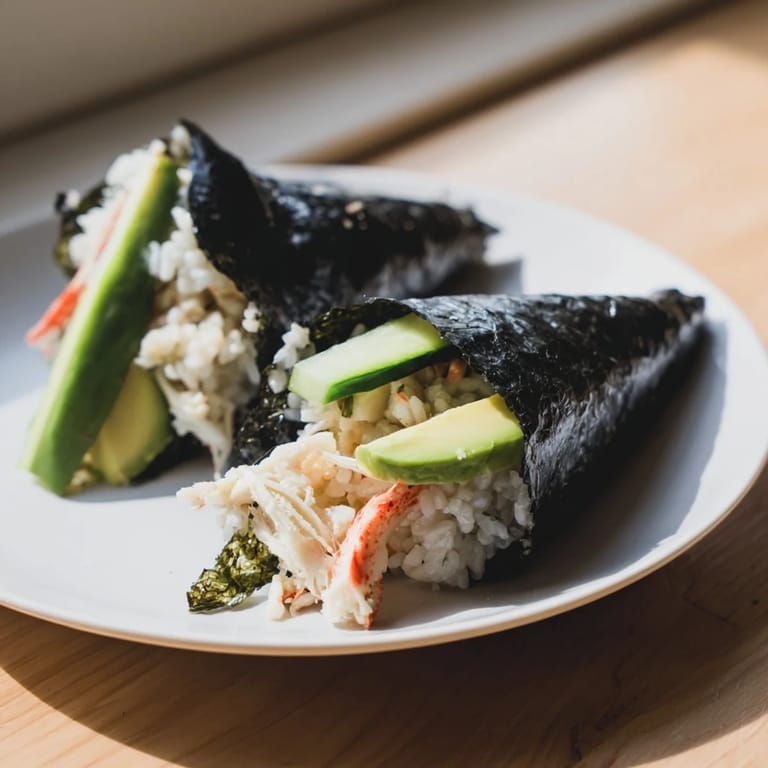
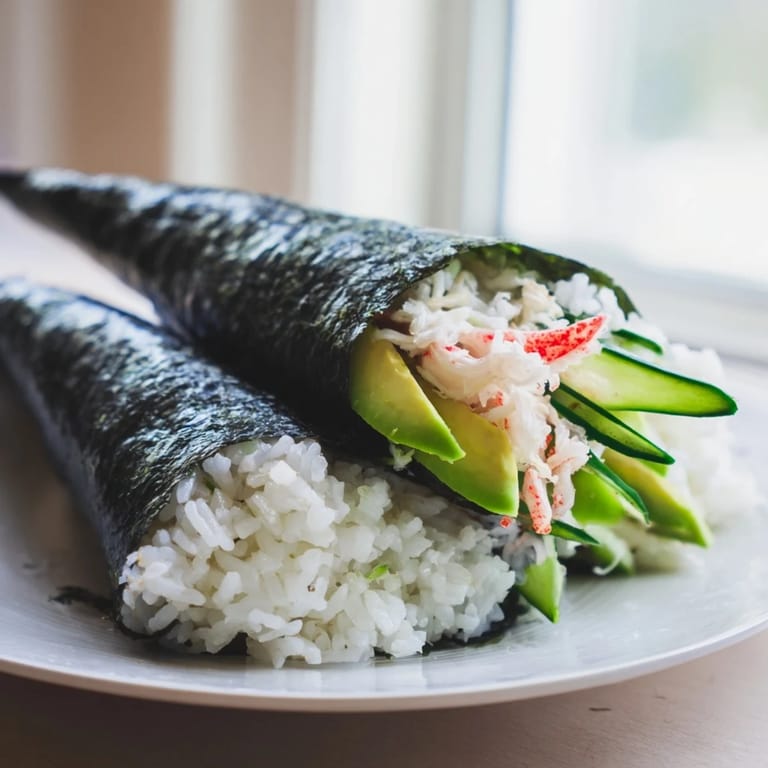
- Place a half-sheet of nori shiny side down in your palm or on a mat, spread about 2 to 3 tablespoons of rice diagonally across one corner in a thin layer, then arrange avocado, cucumber, and crab on top. The rice acts as your glue and flavor base, so don't skimp but don't overload either.
- Roll into a cone:
- Starting from the corner where you placed the rice, roll the nori tightly into a cone shape, then seal the overlapping edge with a few grains of rice moistened with water. The nori will crisp up a bit as it sits, holding everything in place.
- Finish and serve:
- Repeat with remaining ingredients until you've made eight rolls, then serve immediately with soy sauce for dipping, pickled ginger between bites, and wasabi on the side for those who want heat.
 Save
Save There was a moment when my sister, who'd always bought sushi from the restaurant down the street, took a bite of one I'd made and looked genuinely surprised. She asked how I got the rice 'just right,' and I realized that mastering this one technique had given me something I could make again and again, something that never felt like a chore.
The Rice is Everything
Getting sushi rice right is the difference between hand rolls that feel authentic and ones that fall apart or taste grainy. The vinegar seasoning is delicate, so don't be tempted to use more than the recipe calls for, and definitely don't use regular white vinegar because it tastes harsh and industrial. I learned this the hard way by grabbing whatever was in the cupboard, and the rice tasted sharp and unpleasant, reminding me that shortcuts rarely pay off with Japanese cooking.
Fillings You Can Improvise
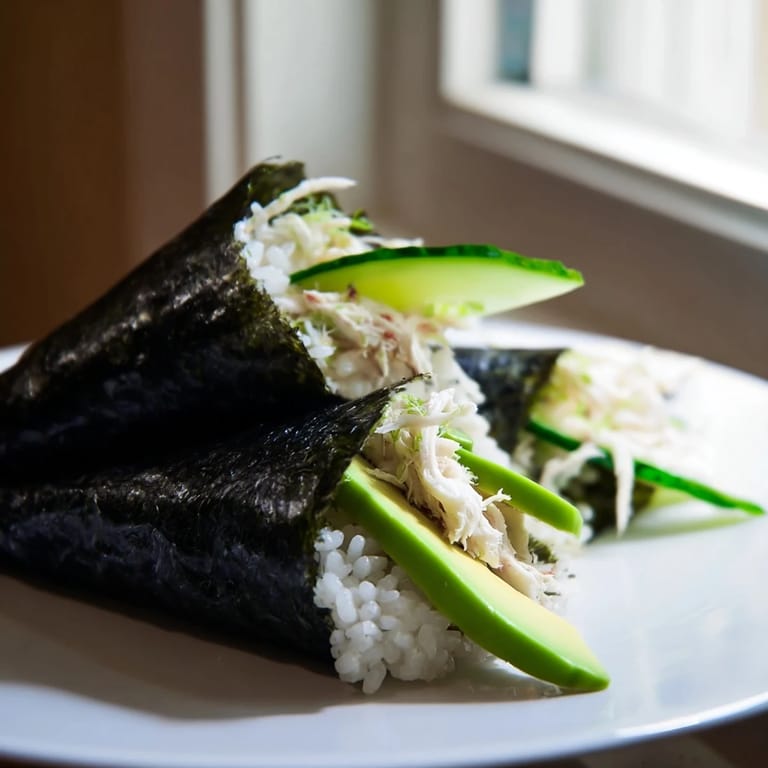
While the classic trio of avocado, cucumber, and crab is reliable, the beauty of hand rolls is that you can swap things around based on what's fresh and what you're craving. Cooked shrimp brings a different sweetness, smoked salmon adds smoke and richness, and even grilled chicken works if you're moving away from seafood entirely. I've made batches where half were traditional and half were experiments, and honestly, the experimentation often leads to discovering your own favorite combination.
Make It Your Own
The moment you stop thinking of hand rolls as something precious that only sushi chefs can make, you free yourself to enjoy them regularly. I started adding a thin drizzle of sriracha to my crab mixture one night when I wanted heat, and now that's just how I make them, a small tweak that makes them feel like mine rather than something I'm copying.
- Don't assemble all the rolls at once, make them one or two at a time so the nori stays crispy.
- If your avocado is very ripe and hard to slice, freeze it for 10 minutes to firm it up slightly.
- Keep a small bowl of water nearby for dampening your fingers and sealing the nori edges.
 Save
Save Hand rolls are the kind of meal that brings people together without requiring you to be a perfectionist, which is maybe why they've become my favorite thing to make when I want to feel proud of dinner. Every time someone tells me these taste like they got them from a restaurant, I smile because the secret is just paying attention and using good ingredients.
Common Questions
- → How do I prevent the nori from becoming soggy?
Serve the hand rolls immediately after assembling them. Nori will soften as it absorbs moisture from the rice and fillings over time. If preparing in advance, wrap the nori sheets separately and assemble just before serving.
- → Can I make sushi rice ahead of time?
Yes, you can prepare the sushi rice several hours in advance. Cool it completely and store at room temperature in an airtight container. Gently reheat if needed, or use at room temperature for best results when rolling.
- → What's the best way to slice avocado for hand rolls?
Choose a ripe but firm avocado. Cut it in half lengthwise, remove the pit, and scoop the flesh onto a cutting board. Slice lengthwise into thin strips about 1/4-inch thick, which will lay flat on the rice without breaking apart during rolling.
- → Can I substitute other proteins for crab?
Absolutely. Cooked shrimp, smoked salmon, cooked chicken, or tofu all work wonderfully as alternatives. Choose proteins that complement avocado and cucumber while maintaining the delicate balance of flavors typical to Japanese cuisine.
- → Is a bamboo mat necessary for rolling?
While a bamboo mat is traditional and helpful for training, it's optional. You can roll hand rolls directly in your palm or on a clean, flat surface. The mat simply provides structure and helps create even, tight rolls.
- → How should I prepare the rice vinegar seasoning?
Dissolve the sugar and salt in rice vinegar first to ensure even distribution. Gently fold this mixture into the warm cooked rice using a rice paddle, cutting through rather than stirring to maintain the grain integrity and preserve the fluffy texture.