 Save
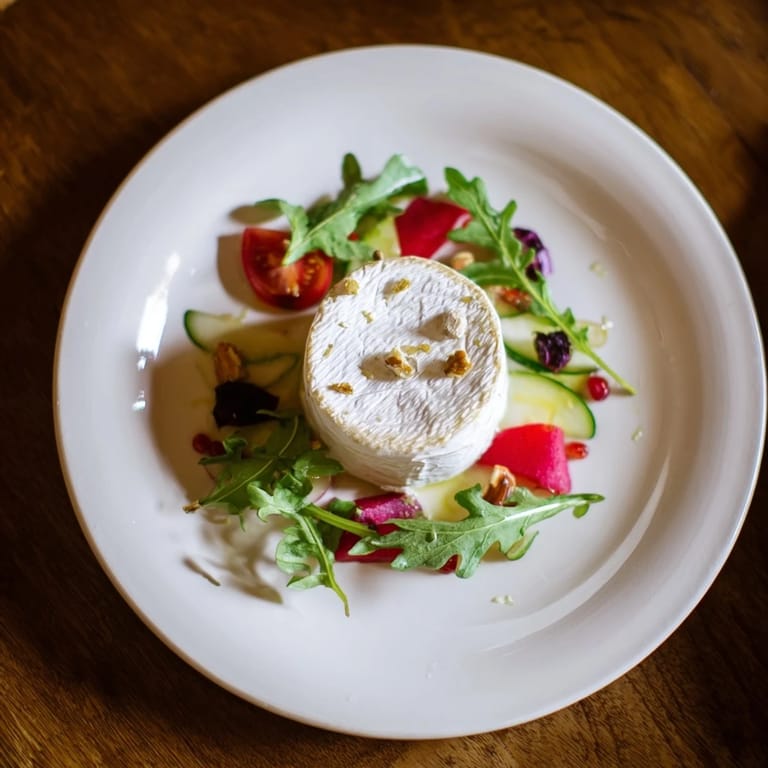
Save I discovered this salad by accident at a dinner party when I ran out of plating ideas and decided to arrange everything toward a wedge of cheese sitting in the center. My guests stopped mid-conversation to photograph it, and suddenly everyone wanted to know how I made something that looked like it belonged in a gallery. The magic wasn't in complexity—it was in surrender to visual geometry and trusting that beautiful ingredients don't need to hide.
Last spring, I made this for a small gathering when someone brought a spectacular Saint-Marcellin cheese, and I realized the cheese deserved to be the main event, not a side character buried in leaves. Everyone orbited that board like it was the only thing that mattered, and for once, I understood what it meant to let simplicity do the heavy lifting.
Ingredients
- Baby arugula (2 cups): This peppery green is the backbone of your geometry—it creates visual lines that lead the eye inward, and its slight bite balances the cheese's richness.
- Cherry tomatoes (1 cup, halved): Their sweetness and jewel-like appearance are non-negotiable, but halving them lets them nestle into the arrangement without rolling away.
- Cucumber (1/2, thinly sliced): The cucumber brings freshness and those pale green circles mirror the tomatoes visually, creating a rhythm across the platter.
- Watermelon radish (1 small, thinly sliced): This is your secret weapon—its pink and white interior adds unexpected drama, and a mandoline slicer keeps them paper-thin.
- Pomegranate seeds (1/4 cup): These jeweled pops of tart sweetness feel luxurious and scatter like finishing touches that catch the light.
- Toasted walnuts (1/4 cup): Toast them yourself if you can—the aroma alone makes the kitchen feel intentional, and they add earthy depth and gentle crunch.
- Extra-virgin olive oil (3 tbsp): This is where you don't compromise; good oil tastes like care, and it carries the mustard and vinegar forward.
- White balsamic vinegar (1 tbsp): It's milder than regular balsamic and won't stain your beautiful vegetables with dark streaks.
- Honey (1 tsp): A whisper of honey rounds out the dressing without making it sweet, binding everything into coherence.
- Dijon mustard (1/2 tsp): This tiny amount emulsifies the dressing and adds a sophisticated sharpness that keeps things from feeling one-dimensional.
- Salt and black pepper: Taste as you build the dressing—this is where your palate becomes the measuring spoon.
- Artisanal cheese wheel (1 small, ~250g): Saint-Marcellin, Brie, or any soft-ripened cheese becomes your focal point; choose one that's ripe but still holds its shape.
Tired of Takeout? 🥡
Get 10 meals you can make faster than delivery arrives. Seriously.
One email. No spam. Unsubscribe anytime.
Instructions
- Anchor your centerpiece:
- Place the cheese wheel on a small pedestal or shallow plate at one corner of your serving board—slightly off-center feels more dynamic than dead middle. This is your north star; everything else radiates from here.
- Create the arugula current:
- Sweep the baby arugula in loose, flowing lines from the cheese outward, like water flowing away from a stone. Let it billow slightly rather than lay flat—this catches light and makes the arrangement breathe.
- Layer in deliberate rows:
- Arrange cherry tomatoes in a gentle curve pointing inward, then cucumber slices in another arc, then watermelon radish slices in a third. Each ingredient should feel like it's being pulled toward the cheese by an invisible force.
- Scatter the jewels:
- Distribute pomegranate seeds and walnuts across the arrangement, honoring the same inward-pointing geometry. Think of them as punctuation marks that reinforce your visual story.
- Build the dressing with intention:
- In a small bowl, whisk the olive oil, white balsamic vinegar, honey, and Dijon mustard together until they emulsify into something silky. Add salt and pepper gradually, tasting as you go—the dressing should taste clean and bright, never harsh.
- Finish with restraint:
- Drizzle the dressing lightly across the arranged vegetables, completely avoiding the cheese wheel itself. The cheese will speak for itself; the dressing is there to amplify the vegetables, not drown them.
- Invite the experience:
- Serve immediately and encourage your guests to cut a wedge of cheese, gather a forkful of vegetables, and combine them as they please. The platter is a canvas; each bite is their creation.
 Save
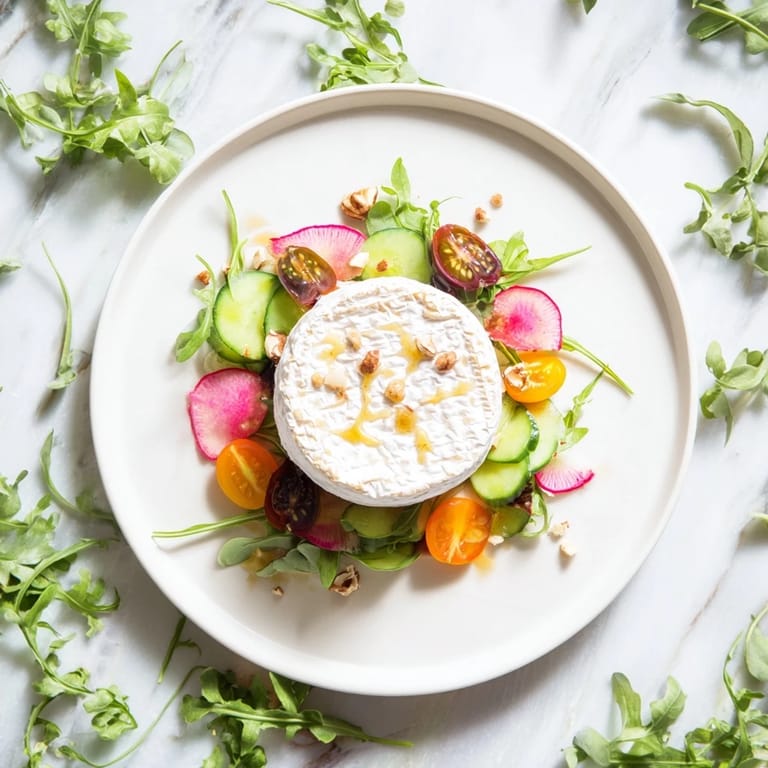
Save I made this salad for someone I hadn't seen in years, and they told me later they almost felt bad eating something that beautiful. That's when I knew this recipe had crossed from food into memory, into the kind of moment people carry with them.
Choosing Your Cheese
The cheese is the entire premise, so choosing it thoughtfully matters more than any other ingredient decision. Saint-Marcellin has an assertive tang and creamy interior that feels sophisticated; Brie is crowd-pleasing and buttery; a local soft-ripened cheese ties the dish to where you live. I've also experimented with Humboldt Fog for its visual drama—the ash stripe down the middle adds another layer of intentional beauty to your centerpiece.
Playing with Color and Contrast
The watermelon radish is doing most of the visual heavy lifting here, but you can substitute other vegetables if they're not in season—thinly shaved beets add earthy depth, shaved fennel brings unexpected texture, or even paper-thin slices of red onion work if you're after different color notes. The principle stays the same: choose ingredients that create contrast and visual intrigue when arranged side by side.
Making It Your Own
This recipe is a framework, not a rulebook, and the most interesting versions I've seen are the ones where someone added their own touch. I've seen pomegranate molasses drizzled instead of regular balsamic, toasted seeds scattered alongside the walnuts, even edible flowers tucked between the vegetables for a whisper of unexpected color.
- If you want to make it non-vegetarian, add thin slices of prosciutto or smoked salmon fanned between the vegetables—their saltiness plays beautifully against the cheese.
- Edible flowers like pansies, borage, or violas add an elegant flourish that transforms this from impressive to restaurant-level.
- Try a blue cheese or goat cheese wheel if you want the flavors to be more assertive and interesting.
 Save
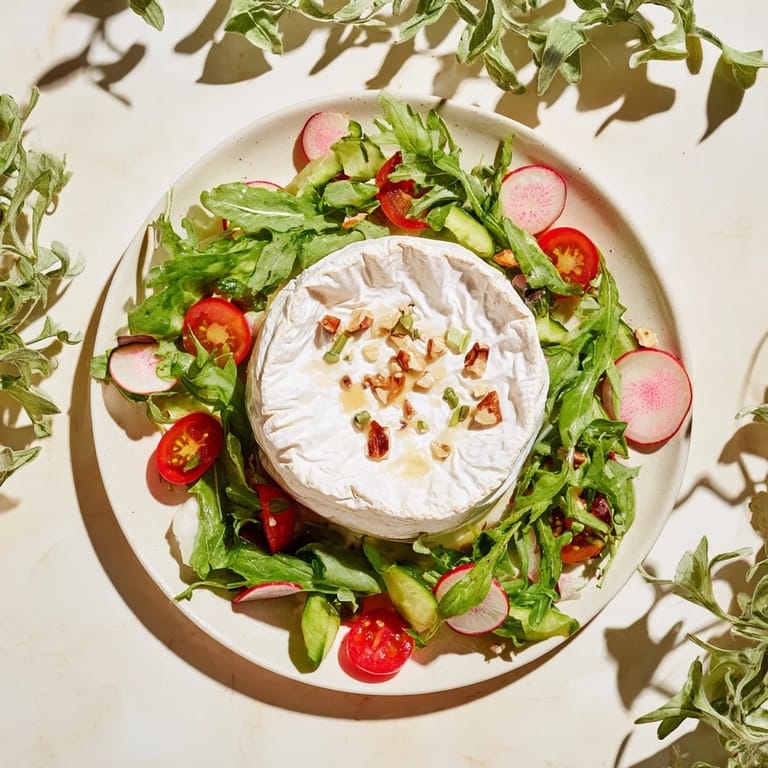
Save This salad taught me that sometimes the most memorable meals aren't about complexity or technical skill—they're about paying attention to how things look and taste together. Every time I make it, I feel like I'm telling a quiet story with ingredients, and that's enough.
Common Questions
- → What type of cheese works best for the centerpiece?
Soft-ripened cheeses like Saint-Marcellin, Brie, or Camembert create a creamy, flavorful focal point for the salad.
- → Can I substitute the nuts in this salad?
Toasted walnuts provide a pleasant crunch, but you can substitute pecans or almonds for a different texture and flavor.
- → How should the dressing be applied?
Lightly drizzle the dressing over the salad ingredients, avoiding the cheese wheel to preserve its texture and flavor.
- → Is this salad suitable for vegetarians?
Yes, the salad uses vegetarian-friendly ingredients, although adding items like prosciutto or smoked salmon can modify that.
- → What is the best way to serve this salad?
Arrange all ingredients artfully with the cheese wheel as a centerpiece, allowing guests to combine as they like.
- → Can I add extra ingredients for more flavor?
Edible flowers or thinly sliced prosciutto can add visual appeal and flavor complexity to the salad.