 Save
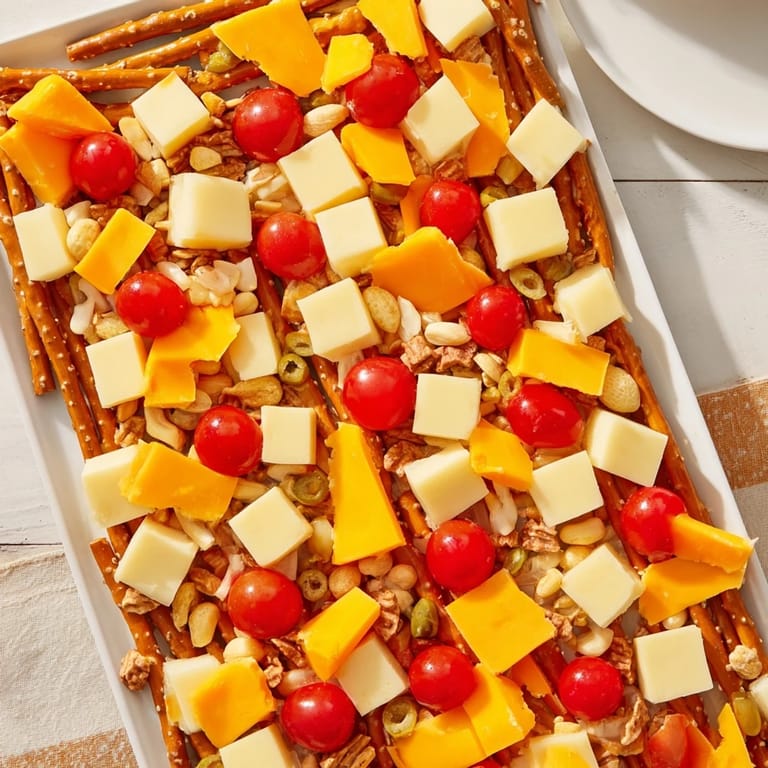
Save I was hosting my first proper dinner party in my tiny apartment, staring down the challenge of feeding eight people in a space barely bigger than a walk-in closet. My mom called to check in, caught the panic in my voice, and said something that shifted everything: "Stop thinking about courses—just build something beautiful they can explore." That night, I laid out pretzel rods in a grid pattern on my grandmother's old cutting board, filled the gaps with cheeses and vegetables, and watched my guests light up like they'd discovered a edible city block. It wasn't fancy, but it was genius in its simplicity.
There's something magical about watching people navigate this platter at a party. My friend Marcus kept making these little flavor combinations—gouda with salami, then mozzarella with tomato and olive, then nuts with hummus like he was solving a puzzle. By the end of the night, the grid was a beautiful chaos of empty spaces, and he turned to me and said, "This is the most fun I've had eating." That's when I realized it wasn't really about the ingredients at all.
Ingredients
- Pretzel rods (20): These are the architecture of everything—they create natural dividers and add that satisfying salt-crunch that makes people want to keep reaching in.
- Mild cheddar, gouda, and mozzarella (100 g each): The trio gives you range without confusion: sharp, smoky, and creamy all in one board.
- Salami and smoked turkey (100 g each, optional): These add protein and umami depth, but honestly the platter sings without them too.
- Cherry tomatoes, cucumber, yellow bell pepper, and baby carrots: Each vegetable brings different texture and brightness—tomatoes give juiciness, cucumber adds coolness, peppers add sweetness, carrots bring earthy crunch.
- Hummus and ranch dip (1/2 cup each): The glue that holds flavor combinations together; hummus bridges savory and nutritious while ranch is the comforting familiar friend everyone reaches for.
- Mixed olives and roasted nuts (1/2 cup each): These are your secret weapons for depth—olives add briny sophistication and nuts give textural contrast that keeps bites interesting.
Tired of Takeout? 🥡
Get 10 meals you can make faster than delivery arrives. Seriously.
One email. No spam. Unsubscribe anytime.
Instructions
- Map your streets:
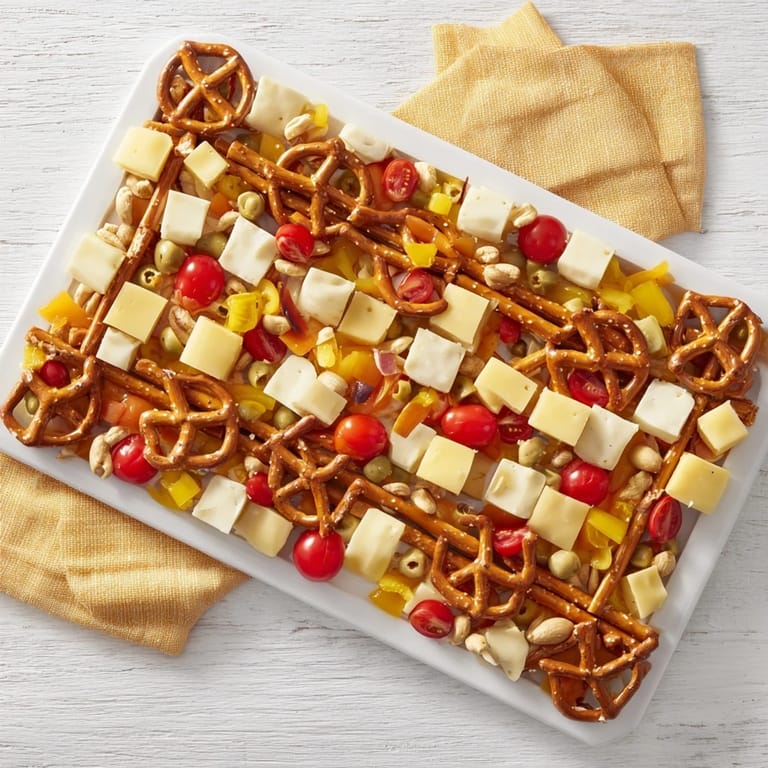
- Lay the pretzel rods in a grid pattern on your platter—think city blocks, not perfection. They don't have to be perfectly straight; in fact, a little organic variation looks more intentional and less sterile.
- Fill the blocks:
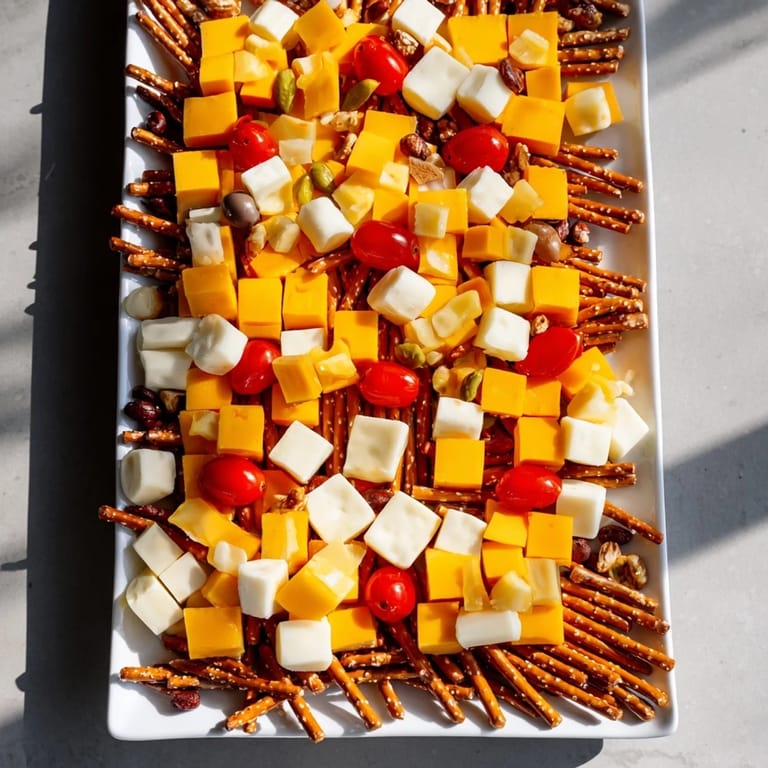
- Start by anchoring each section with a different ingredient: cheese here, vegetables there, olives in a corner, nuts clustered in another spot. This creates natural traffic patterns and prevents everyone from diving for the same corner.
- Settle the dips:
- Place small bowls of hummus and ranch directly on the board or nestle them into the grid itself. If they're sitting separately nearby, they feel forgotten; integrated, they become destinations.
- Present and let it go:
- Step back and let people discover. The beauty is in the chaos of choices, and the moment someone finds an unexpected flavor combination is when this platter becomes an experience instead of just food.
 Save
Save I learned something unexpected serving this platter: people become more generous and playful when food isn't pre-plated. They share bites, make recommendations, collaborate on combinations. It turned snacking into something social in a way that felt different from anything else I'd served.
Variations That Keep It Fresh
The genius of this platter is that it adapts to whatever's in your kitchen or whatever season you're in. In summer, I swap the cherry tomatoes for stone fruits and add fresh berries. In winter, I lean into cured meats and aged cheeses. The pretzel grid stays constant, but the ingredients inside become a conversation between you and what's available.
Making It Vegan or Allergy-Friendly
This platter welcomes substitutions like nothing else. Swap the cheeses for cashew-based ones or nutritional yeast blocks. Use tempeh instead of salami. Load it with marinated vegetables, tofu, or creative dips. The structure remains so strong that the platter never feels like a compromise—it just becomes a different kind of delicious.
The Platter as Conversation
There's a reason this works at every gathering: everyone gets to participate in creating their own experience. One person might build a flavor adventure across the entire board; another might focus on the cheese section and keep coming back to it. Both are right.
- Arrange ingredients in blocks that feel balanced visually, not mathematical—if it looks good, it probably tastes good in combination.
- Keep a small utility bowl nearby for olive pits and discard bits so people don't have to hunt for a place to put them.
- This platter actually improves slightly as people eat and new combinations become visible—it's the anti-static snack board.
 Save
Save This platter became my signature move not because it's complicated, but because it trusts people to know what they want. Every time I make it, something about that permission feels like the real gift.
Common Questions
- → How do you create the grid structure?
Lay pretzel rods parallel and perpendicular on a large platter to form a rectangular grid, resembling city streets for distinct ingredient blocks.
- → Can this snack platter be made vegan?
Yes, by replacing cheeses with plant-based alternatives and omitting meats, the platter suits vegan preferences.
- → What dips pair well with this snack arrangement?
Hummus and ranch dip complement the variety of cheeses, vegetables, and meats with creamy, tangy flavors.
- → How should ingredients be arranged within the grid?
Group similar items like cheeses, vegetables, meats, nuts, and olives in separate blocks formed by the pretzel rods for easy picking.
- → What is the best way to serve this snack platter?
Serve immediately after arranging for fresh textures, allowing guests to mix and match ingredients from different grid sections.
- → Are there allergen concerns to keep in mind?
This dish contains gluten in pretzels, dairy from cheeses, and possibly nuts and meats, so check ingredient labels if needed.